
Cisco Cyber Vision reports a known vulnerability on one servo drive in a newspaper press, matched to that drive's vendor and firmware. No other component is listed. Which reading fits?
Select an answer to reveal the explanation.
Short Explanation
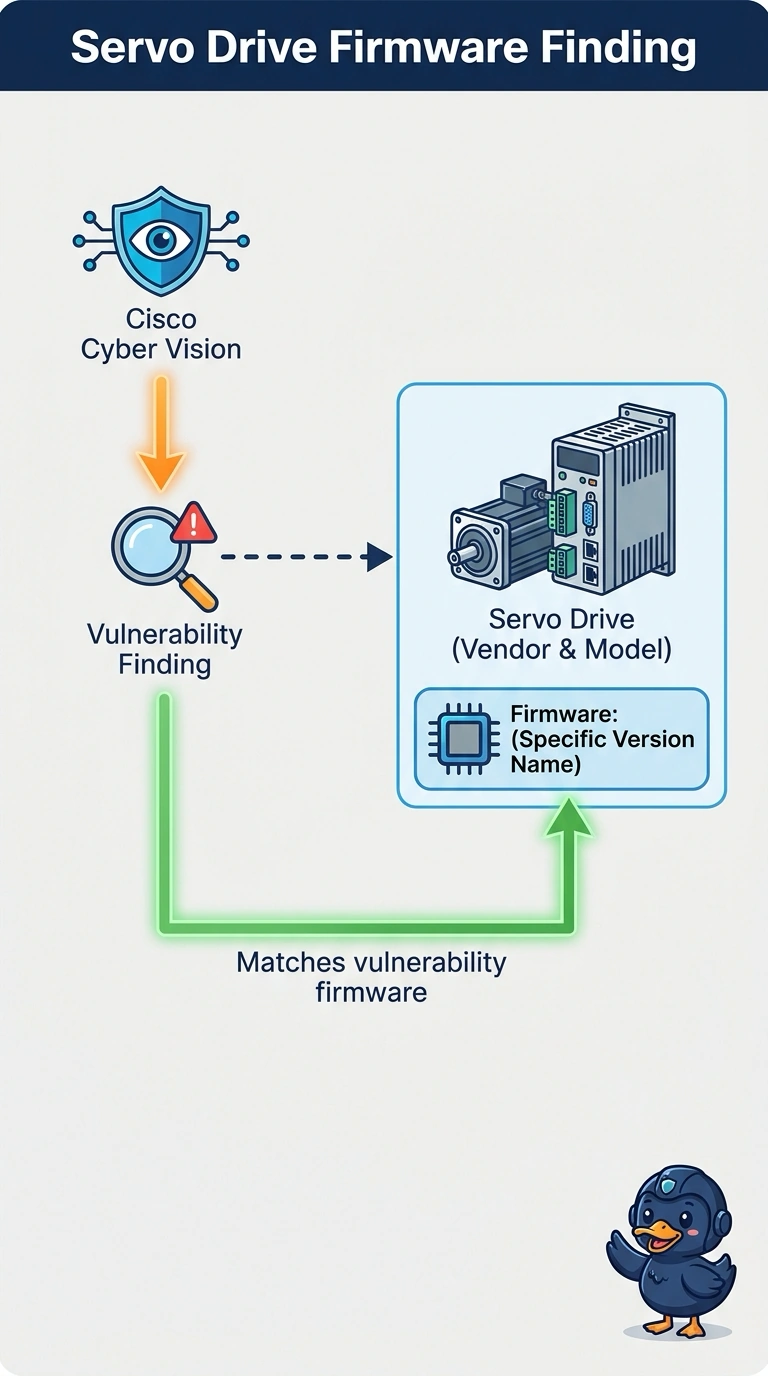
The finding names one drive and the firmware on it, the way a nameplate names one motor. You read that as this press drive matching a known flaw. A missed Windows patch on an HMI is a different event and does not rewrite a servo identity.
Full Explanation
Cisco Cyber Vision ties a vulnerability to the component it observed, using the vendor and firmware it learned for that device. This report names one servo drive on the newspaper press and no other component. The sound reading is that this drive is running a firmware version the finding identifies. The report lists this drive alone, so the reading stays on this drive. A missed domain patch on the press HMIs is a Windows update event. The sensor did not relabel a patch miss as a drive firmware match, and an HMI update does not change the drive identity in this report. A guest-wireless survey records channels. It does not produce a firmware vulnerability on a servo. A historian backup of a spreadsheet restores a file. It has no mechanism that rewrites drive firmware. Exam caveat: a matching firmware string is context for exposure, not proof that someone is using the flaw at this moment. Confirm the version against the press maintenance record before you rank how urgent the finding is. Operational check: open the event, note the drive and the firmware it cites, and compare that pair with the version the engineering station shows for the same drive.