
A pharmaceutical packaging site sends only Windows event logs from its HMIs into the security monitor. Which gap does that leave in the cell?
Select an answer to reveal the explanation.
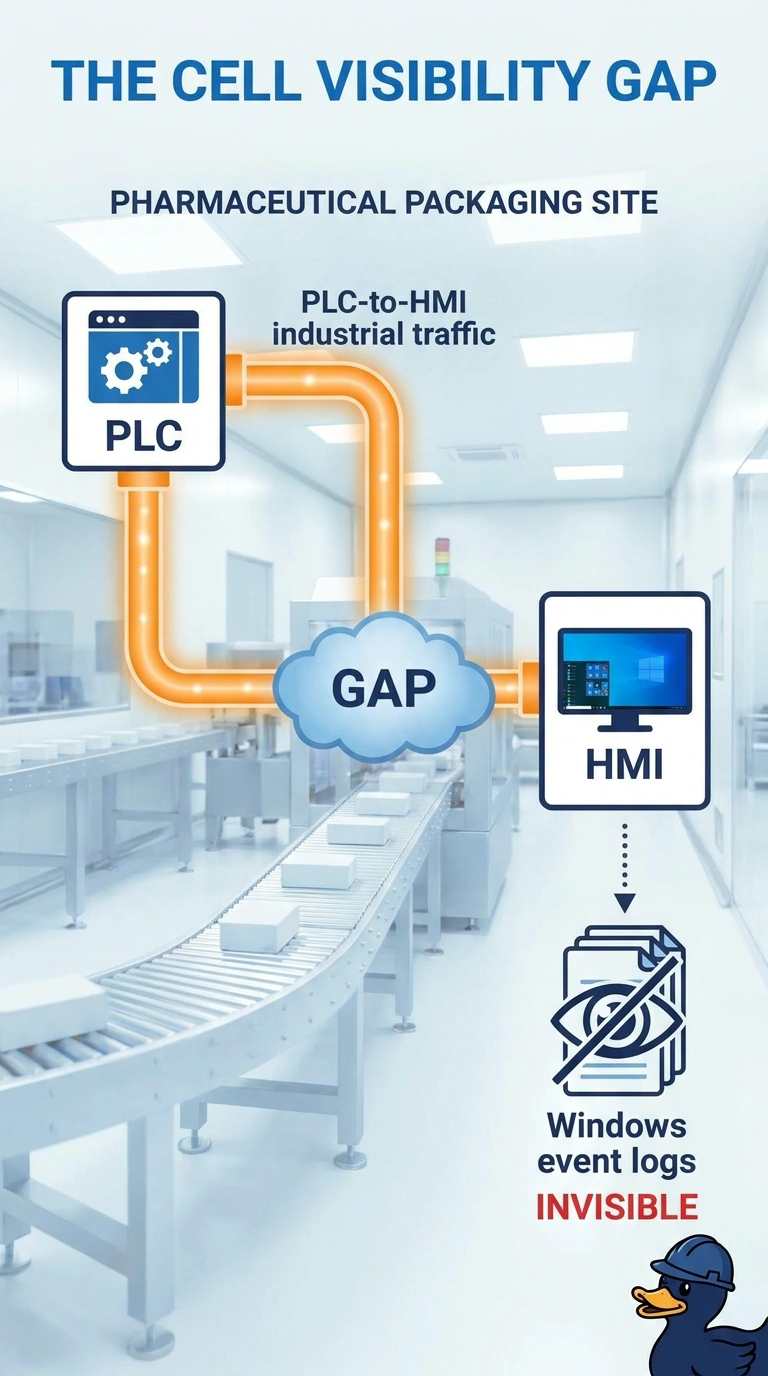
Short Explanation
Windows logs are the diary the HMI keeps about itself, not a transcript of the PLC talking beside it. You can collect every security event on those PCs and still miss a register read. The trap is treating a host log as if it were the industrial protocol.
Full Explanation
Windows event logs record what the HMI operating system chooses to write about itself. They do not decode industrial exchanges between the packaging PLCs and those HMIs, so a monitor fed only those logs can see a logon or a service fault and still miss a register read or write. That missing protocol view is the gap. Treating the logs as a complete store of every function code confuses a host audit trail with a protocol decoder. The codes are not in those events. A wireless site survey measures radios on the packaging floor. It does not show which controller accepted a session. Firewall deny logs at the enterprise edge show traffic the edge refused. They do not inventory conversations that stay inside the cell. A packaging cell can look quiet on a Windows console while the controller exchange runs the whole shift. Exam caveat: keep the Windows logs for the HMI as a computer. They remain useful for host events, and they are not a substitute for watching the industrial protocol when the question is the cell. Operational check: take one known PLC-to-HMI exchange from a passive capture and search the same minute in the monitor. The function code should be absent from the Windows events.