
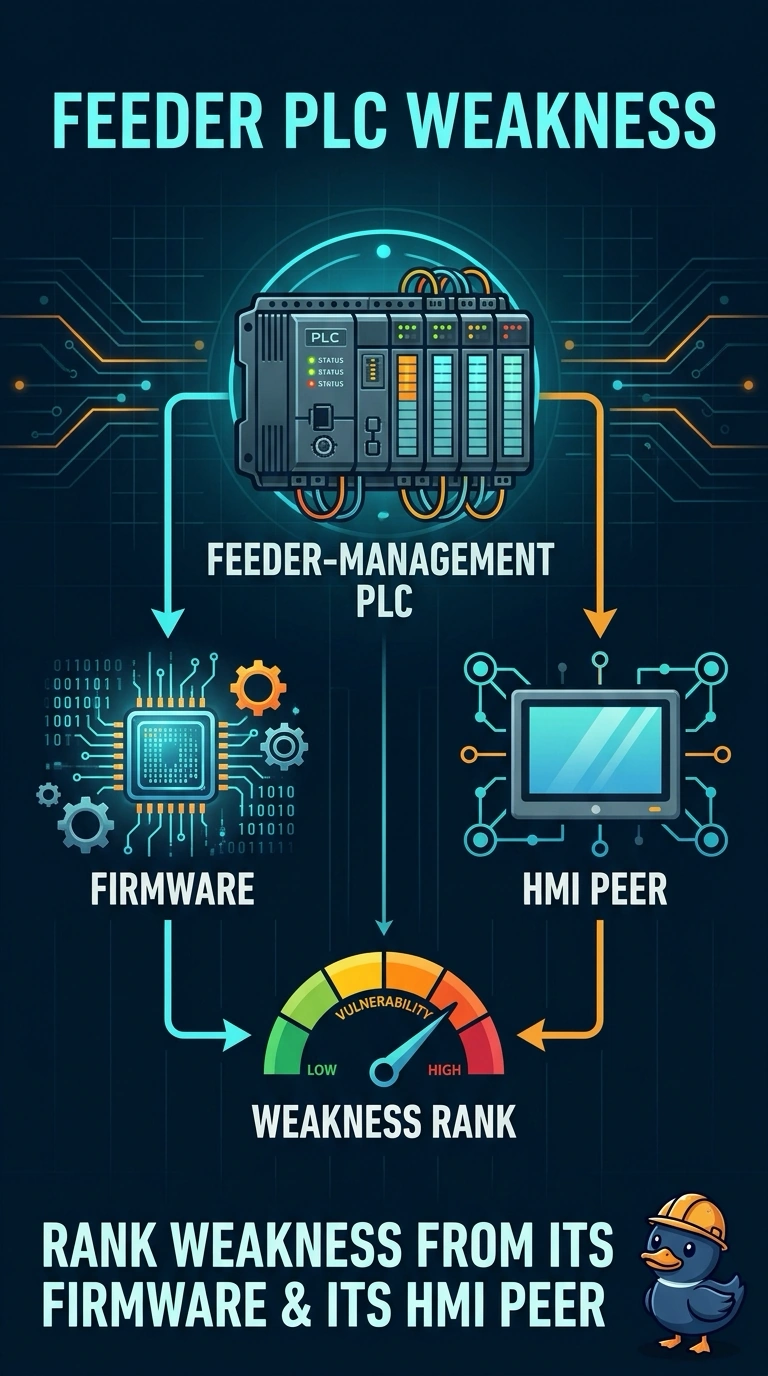
Cisco Cyber Vision ties a known vulnerability to one feeder-management PLC, including that PLC's firmware and the HMI that talks to it. No property change is shown. Which reading fits?
Select an answer to reveal the explanation.
Short Explanation
A vulnerability tied to one feeder PLC is a note on that device’s chart, not a siren that the substation has already fallen. You can use the firmware and the HMI peer as context for ranking this asset’s known weakness. Don’t treat the finding as proof of a completed exploit, a firmware swap, or a patch receipt.
Full Explanation
Cisco Cyber Vision can attach a known vulnerability to the component it observed, here a feeder-management PLC, along with the firmware it learned and the HMI that talks to that PLC. The fitting reading is that this specific device has a known weakness you can rank using its firmware and HMI peer as context. The vulnerability record does not mean an exploit succeeded on the PLC or that the substation is already compromised; it identifies a weakness, not confirmed exploitation. No property change is shown, so the finding does not establish that the firmware changed overnight, nor is the vulnerability line a side effect of such a rewrite. A workstation patch cycle is not what this event describes: a patch receipt would not explain a vulnerability tied to the PLC and its observed firmware and HMI peer. Exam caveat: asset and peer context helps you assess relevance, but it does not show that the flaw is being used or that a firmware update occurred. Practical check: confirm the event identifies the feeder PLC, note its firmware and HMI peer, and compare those details with the advisory before planning work.