
Cisco Cyber Vision matches a known vulnerability to the firmware it observed on one granulation-skid drive at a pharma plant and shows no exploit traffic. Which reading fits?
Select an answer to reveal the explanation.
Short Explanation
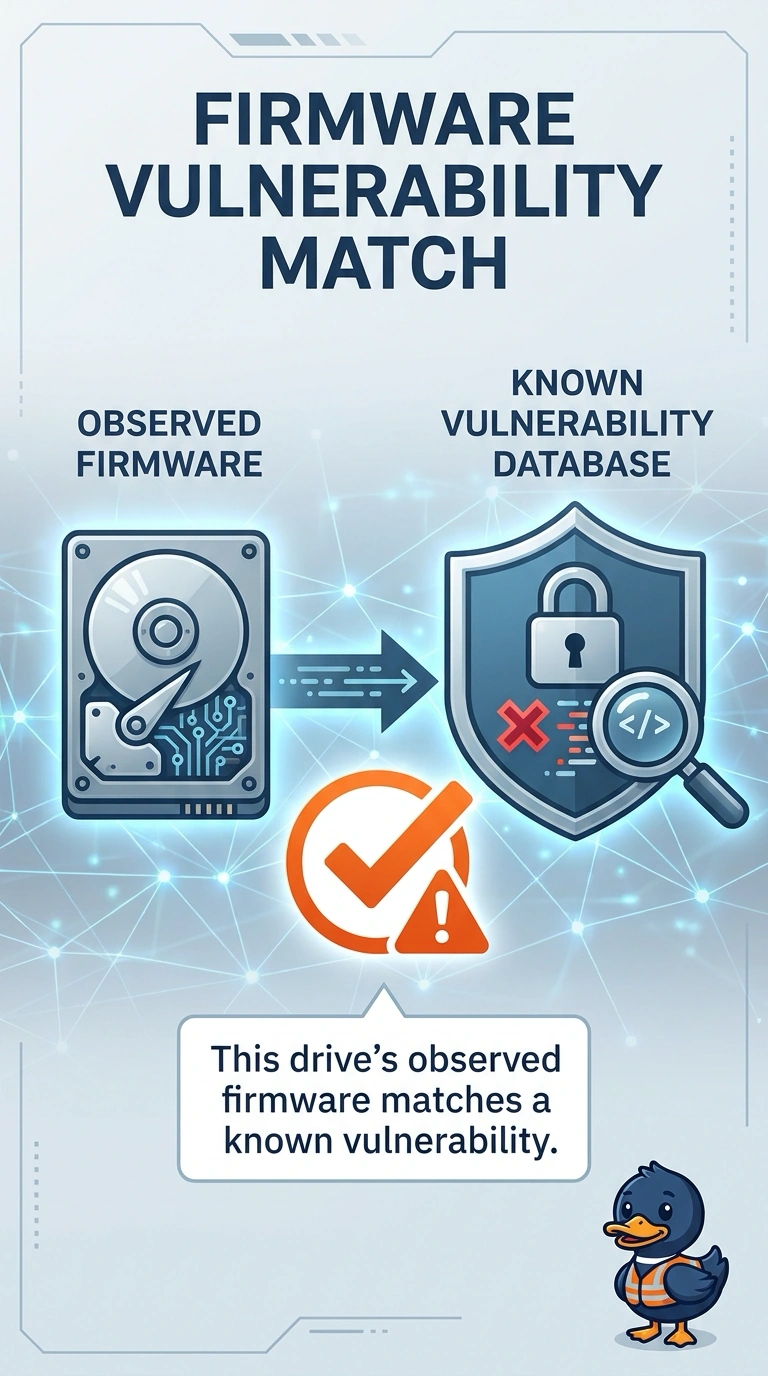
Think of a nameplate matching a recall notice: you tie the finding to that one motor, not to a factory-wide outage. You read this as an association between the granulation-skid drive’s observed firmware and a known vulnerability. Reporting the match does not rewrite firmware, and a spreadsheet backup does not create it.
Full Explanation
Cisco Cyber Vision associates a vulnerability with a component when firmware it has observed on that component matches a known flaw. Here, the finding concerns one granulation-skid drive, so the fitting interpretation is that this drive’s observed firmware matches a known vulnerability; that is the asset to confirm and track. A match links an observed property to a published flaw. It does not establish that production has stopped or that every corporate drive is down: that reading invents a plant-wide outage from one component’s firmware. A visibility sensor records what it observes; storing the match does not rewrite the drive’s firmware. A firmware rewrite would be a change to the image, not this vulnerability association. A laboratory spreadsheet backup restores a file on a computer; it has no mechanism to create a vulnerability record on the industrial drive. Exam caveat: a version match is not evidence that exploit traffic has occurred or that an exploit has run. Practical check: compare the reported firmware string with the version actually running on the drive and with the skid maintenance record, then keep the finding attached to that drive.