
A water-treatment plant needs an inventory of the filtration-cell PLCs and HMIs without interrupting the process. Which visibility approach fits that constraint?
Select an answer to reveal the explanation.
Short Explanation
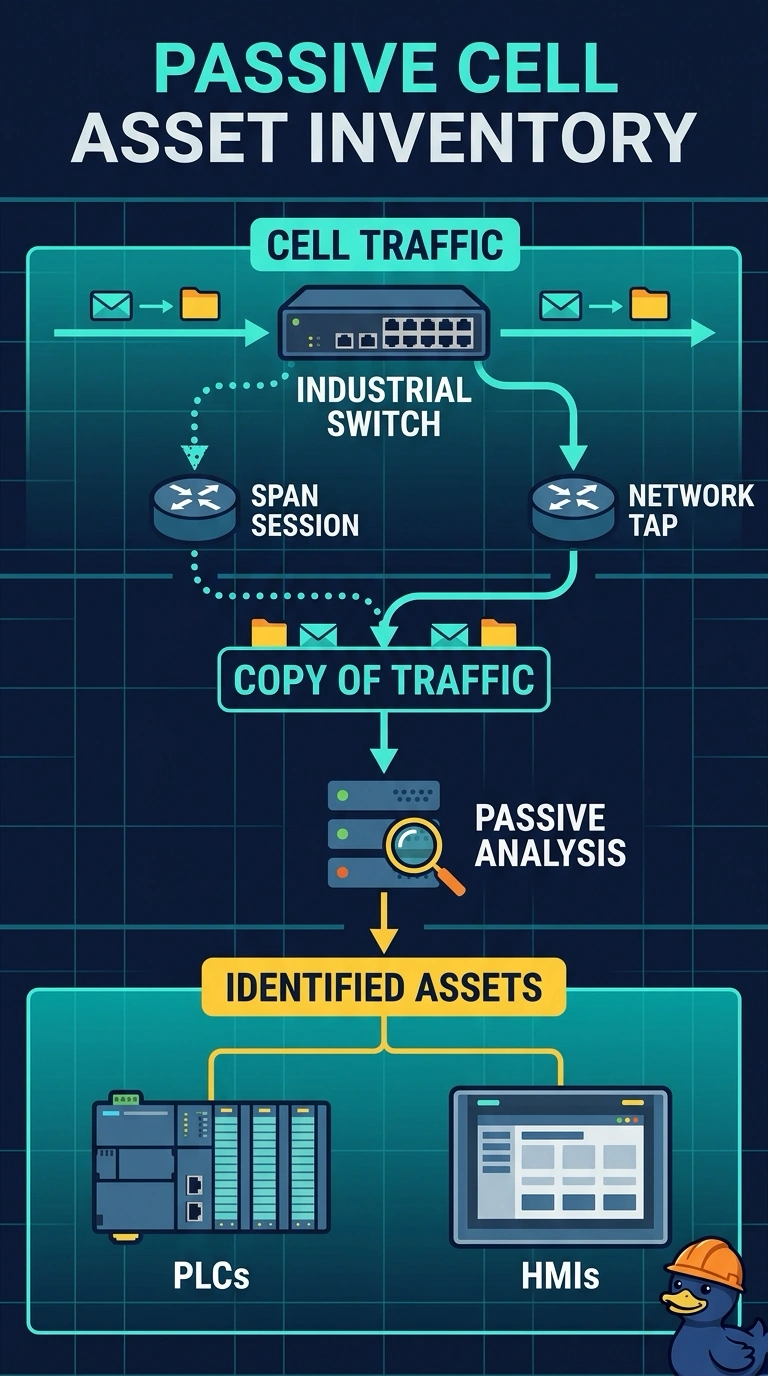
Think of this like reading nameplates through a cabinet window instead of tapping every device on the shoulder. You want a copy of traffic the filtration controllers already send, so the process keeps scanning while you learn what is there. An active sweep is the habit many IT inventory tools taught you, and it is the trap on a live cell.
Full Explanation
A passive OT visibility design takes a copy of frames the cell is already exchanging, typically from a SPAN session or a network tap, and builds the asset list from the industrial protocols in that copy. The filtration PLCs are not connection targets of the inventory job, so their scan cycles stay intact. That is the approach that satisfies a plant that cannot pause treatment just to be counted. An authenticated vulnerability scan during the shift opens probes against the controllers. Many field devices handle unexpected sessions poorly, and a production day is the wrong time to find out. Enterprise firewall deny logs show traffic the edge refused. They do not decode PLC-to-HMI conversations inside the filtration VLAN, so they cannot name those assets. A wireless survey measures channels and signal strength. It does not identify controllers or their process flows. Exam caveat: some visibility products can add a carefully scheduled active probe later, but any packet aimed at a controller is a change operations must approve first. Operational check: confirm the sensor feed is a SPAN or tap on the cell uplink, then match the discovered list to the panel drawings before anyone ranks risk.