
A cement-plant lab still opens a wide Windows dynamic-port range for classic OPC and assumes OPC UA needs that same DCOM path. This deployment uses the OPC UA TCP client-server mapping. Which fact corrects the assumption?
Select an answer to reveal the explanation.
Short Explanation
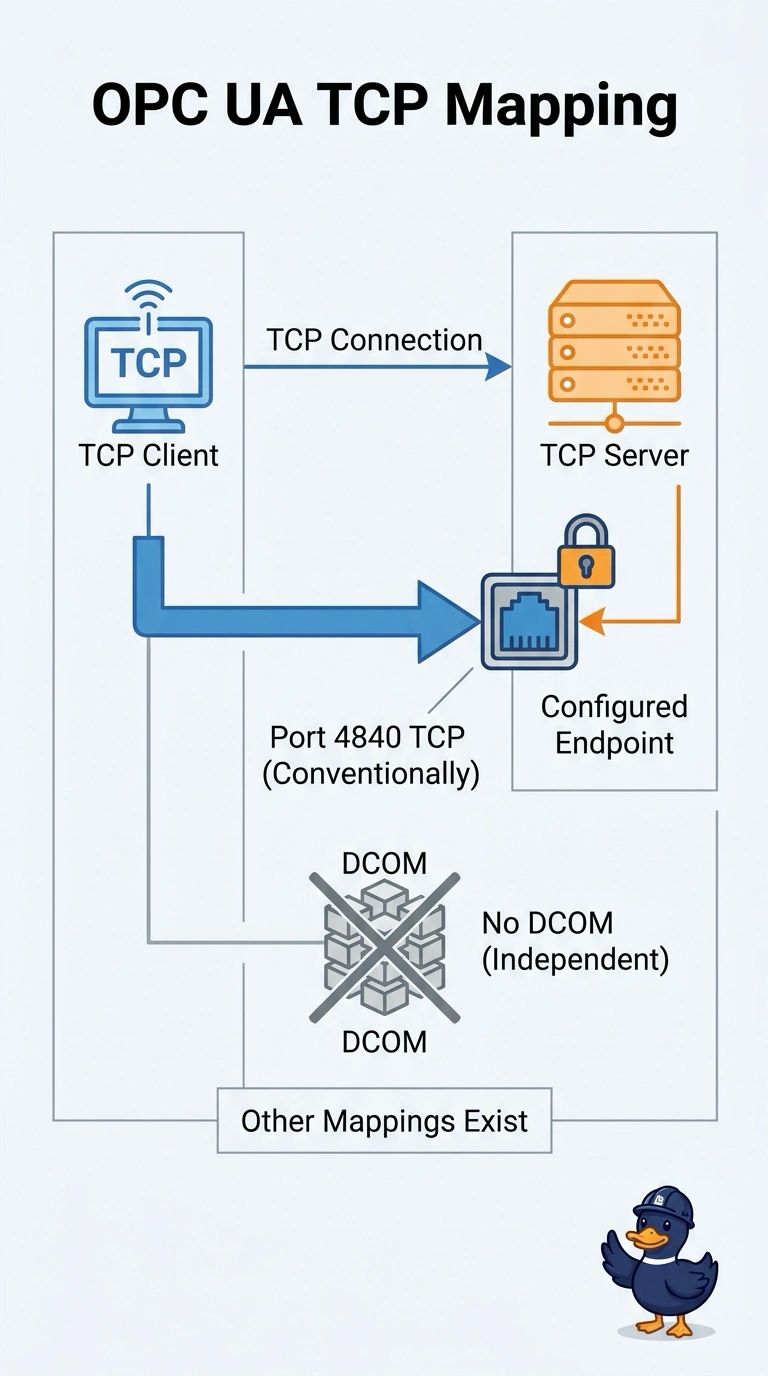
Classic OPC borrowed Windows DCOM and a crowd of dynamic ports. For this TCP client-server mapping, you point the cement lab at its configured OPC UA TCP endpoint, conventionally port 4840. You stop treating that session as DCOM because this mapping does not depend on it.
Full Explanation
OPC Classic used COM and DCOM, which is why labs opened a wide range of Windows dynamic ports and fought remote authentication. For this deployment using the OPC UA TCP client-server mapping, the client uses its configured OPC UA TCP endpoint, conventionally port 4840, and this mapping does not depend on DCOM. The broad dynamic range served classic remote procedure calls, and an OPC UA TCP client does not need that range to read the cement server. Keeping it because the name still contains OPC preserves a Windows exposure the new mapping does not need. The Layer 2 only idea fails because OPC UA over TCP is routable, so a permitted routed path into the lab will forward it. The DCOM-under-a-new-name idea fails because OPC UA is a different protocol, not a rename requiring the same dynamic ports. The MQTT prerequisite idea fails because MQTT is a separate publish-and-subscribe protocol that an OPC UA client does not need to connect. Exam caveat: the listener can be moved off port 4840, so the firewall must match the configured endpoint, and other OPC UA mappings also exist outside this TCP client-server mapping. Operational check: log the connection as TCP to the configured endpoint, then close the DCOM range if no classic server remains.