
A rail operator's target CSF Profile calls for better detection. A vendor says NIST CSF therefore requires one specific sensor. Which reading is sound?
Select an answer to reveal the explanation.
Short Explanation
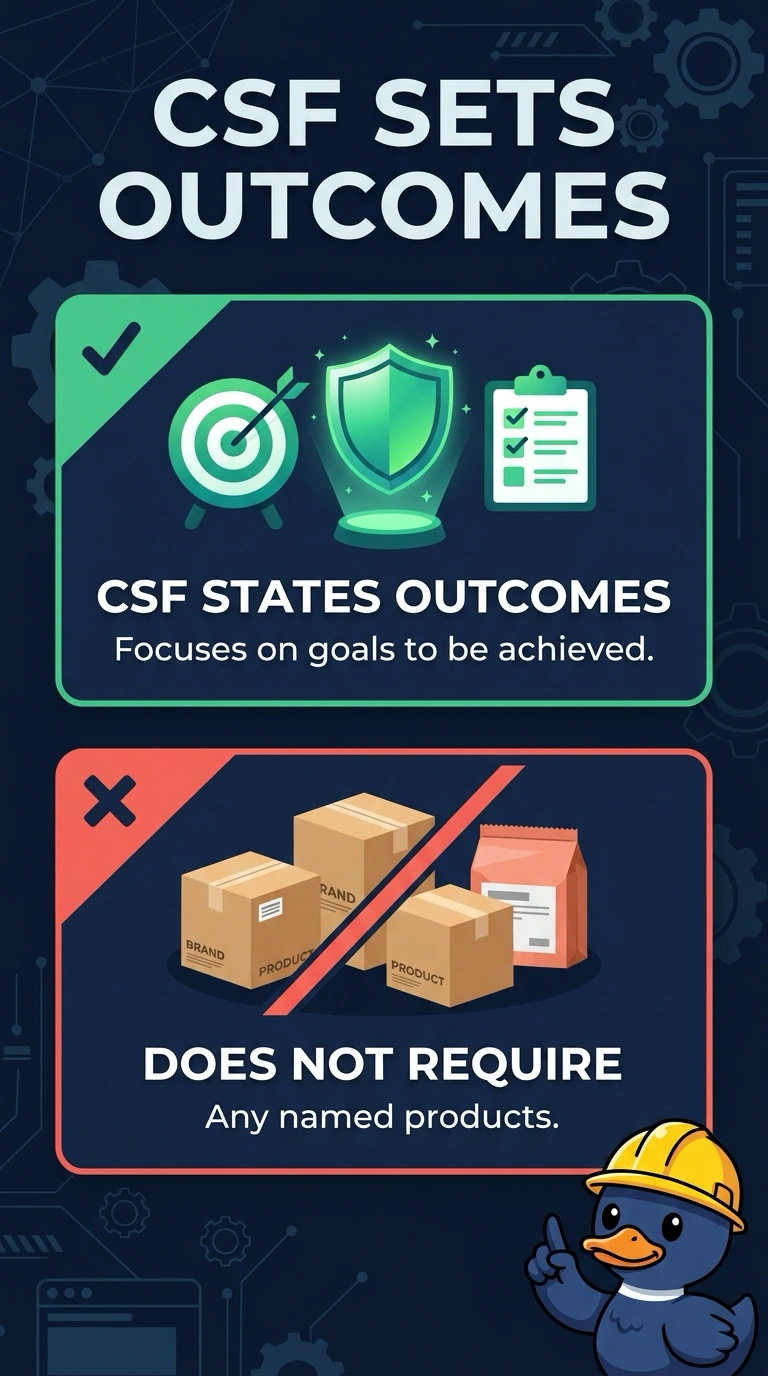
A target on a map is not a purchase order for one brand of compass. You can improve detection without buying the sensor a vendor says is mandatory, because CSF states outcomes and does not name products. A framework tier is not a catalog number.
Full Explanation
A NIST CSF Profile describes outcomes an organization chooses: what it does today in a current profile, and what it intends in a target profile. Better detection is an outcome. CSF specifies cybersecurity outcomes rather than mandating a particular vendor product. The organization can document its selected implementations when planning how to meet those outcomes. The rail operator can improve detection in more than one way, and the framework stays valid without that purchase. Requiring the exact sensor before the target profile counts confuses a sales claim with the framework. A CSF Profile is not an IEC 62443 security level. SL2 is a security level aimed at intentional violation with simple means, not a purchasing instruction. CSF Tiers are Partial, Risk Informed, Repeatable, and Adaptive. They describe how rigorously the organization manages risk, and Adaptive is not a price tier or a product SKU. Exam caveat: the operator may still buy that sensor because it helps meet the detection outcome. The purchase is the operator's choice. CSF did not require that brand. Operational check: the target profile text should name detection outcomes.