
In the Purdue model, where do the dissolved-oxygen probes and basin valves at a wastewater plant belong, relative to the PLC that commands those valves?
Select an answer to reveal the explanation.
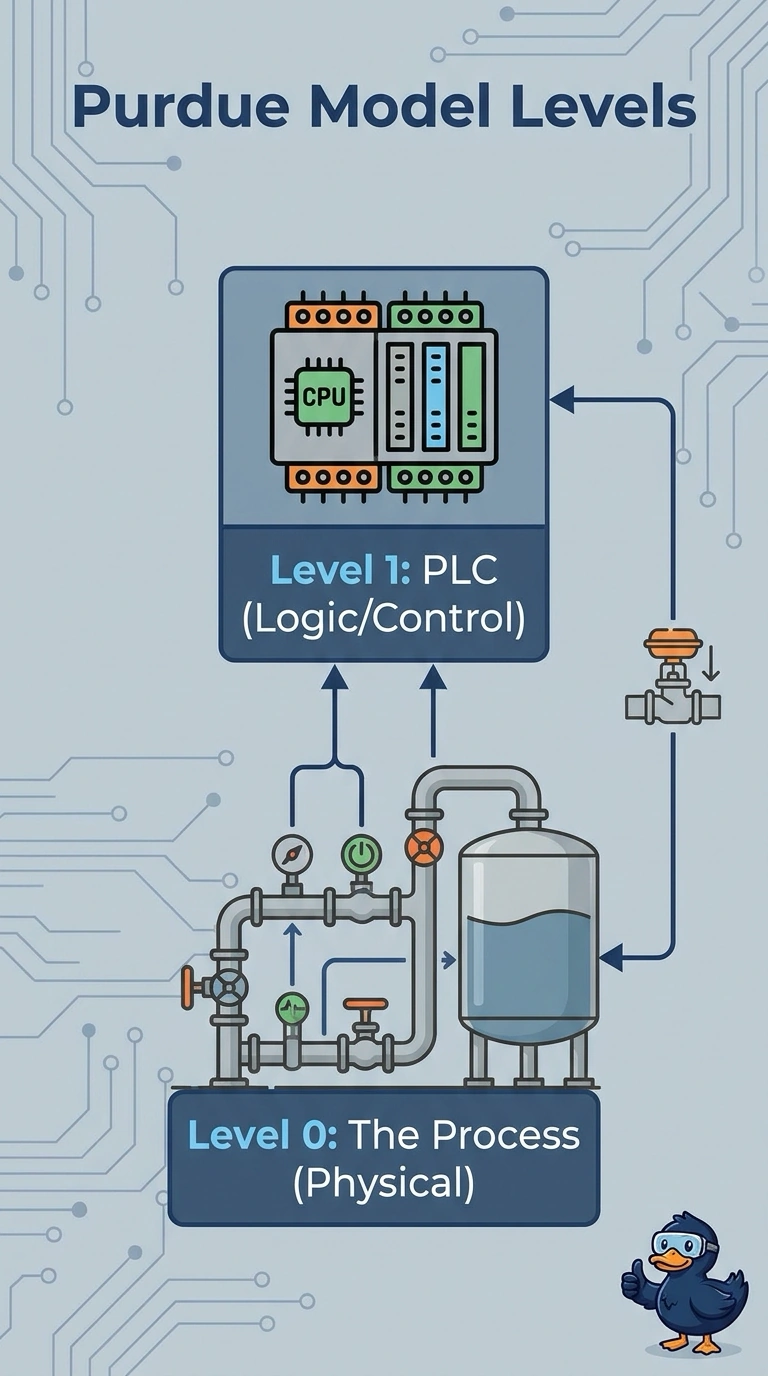
Short Explanation
Probes and valves are the hands in the basin, and the PLC is the supervisor telling those hands what to do. You put the dissolved-oxygen probes and the valves at Level 0 and you leave the logic at Level 1. Enterprise planning systems do not live down in the aeration basin.
Full Explanation
In the Purdue model, Level 0 is the physical process: the sensors and actuators that touch the wastewater, including dissolved-oxygen probes and the basin valves. Level 1 is basic control, where the PLC reads those probes and commands those valves. The probes and valves belong at Level 0, and the PLC that runs the logic stays at Level 1. Level 4 is the enterprise layer, where planning servers live. Watching a probe from an operator screen does not turn the probe into a business system or move it upstairs. The industrial DMZ is a buffer for shared services between the plant and the enterprise. Field instruments do not sit there, and parking every probe in the DMZ would pull the process out of the basin. Level 2 is supervisory, where HMIs and operator stations sit. A numeric reading does not make a probe an HMI. The HMI displays the value. The probe only measures it. Exam caveat: a bad oxygen reading can be operationally serious, and seriousness does not promote the probe to Level 4 or to Level 2. Consequence and Purdue level answer different questions. Operational check: the architecture drawing should show the probes and valves at Level 0 and the aeration PLC at Level 1, not in the enterprise subnet.