
A proposal moves the boiler PLCs into the industrial DMZ so the enterprise patch team can reach them directly. Which placement fits the Purdue model?
Select an answer to reveal the explanation.
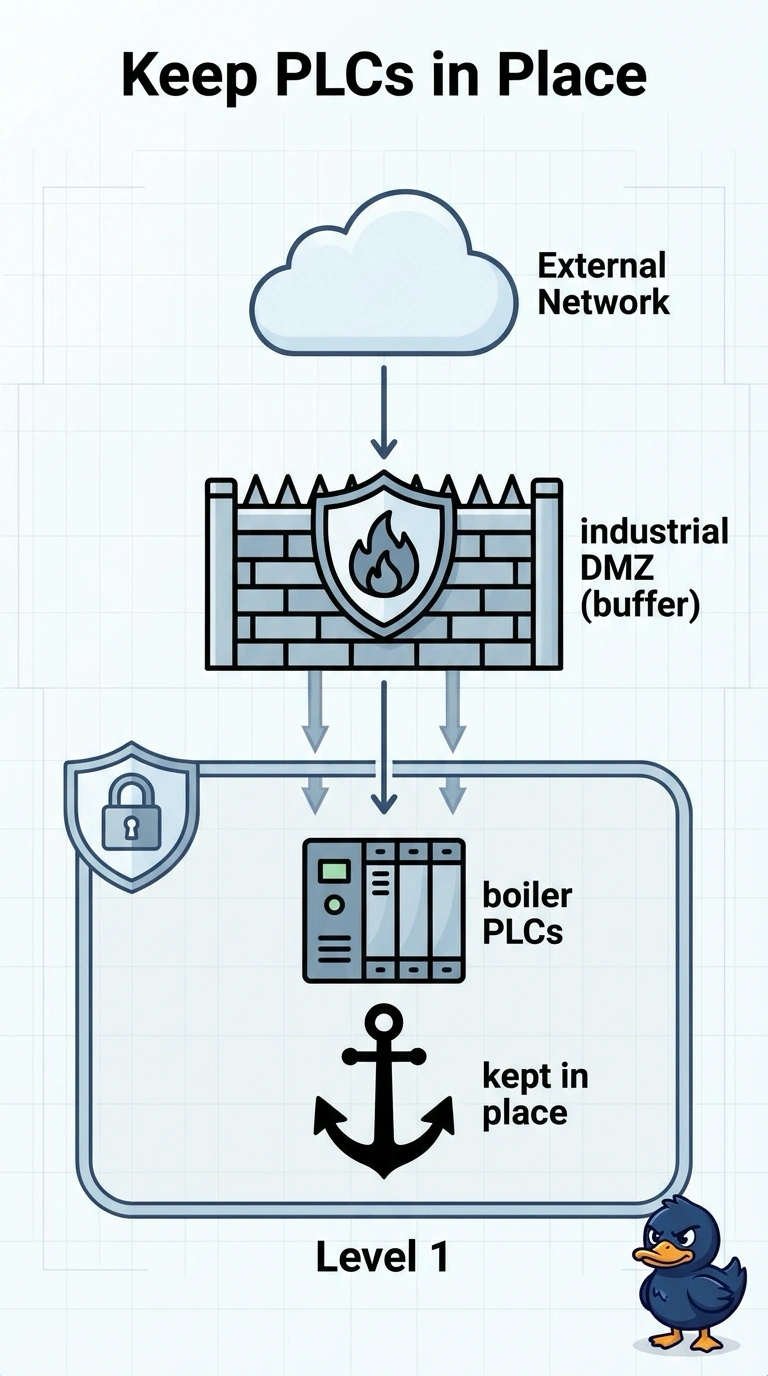
Short Explanation
The DMZ is a lobby between buildings, not a new home for the boilers. You leave those PLCs at Level 1 and keep the DMZ as the buffer. The trap is moving the controllers next to the enterprise because patching would feel easier.
Full Explanation
In the Purdue model, a PLC is basic control at Level 1. The industrial DMZ is the buffer where shared services such as a historian replica or a jump host can sit so the enterprise does not land directly on the cell. Moving the boilers into that buffer puts control devices on the network that faces the enterprise and erases the level the model is for. Parking them at Level 4 with office laptops is a further jump in the wrong direction. Level 0 is the process equipment itself, sensors and actuators, not a name you can hang on the DMZ, and field sensors do not belong on enterprise switches. Patching stays possible through a brokered path and a planned window. It does not require the PLC to change levels. The caveat is that a replica or a patch repository can live in the DMZ. The controller that runs the boiler should not. The check is the PLC's access VLAN: it should be the control VLAN, and the DMZ subnet should not contain the boiler controllers. Walk the boiler PLC back to the control VLAN on the drawing and on the switch, and confirm the DMZ subnet does not list those controllers.