
A dairy batch server and a skid controller use OPC UA with SecurityMode None. The batch record must be signed and encrypted on the wire. Which mode meets that requirement?
Select an answer to reveal the explanation.
Short Explanation
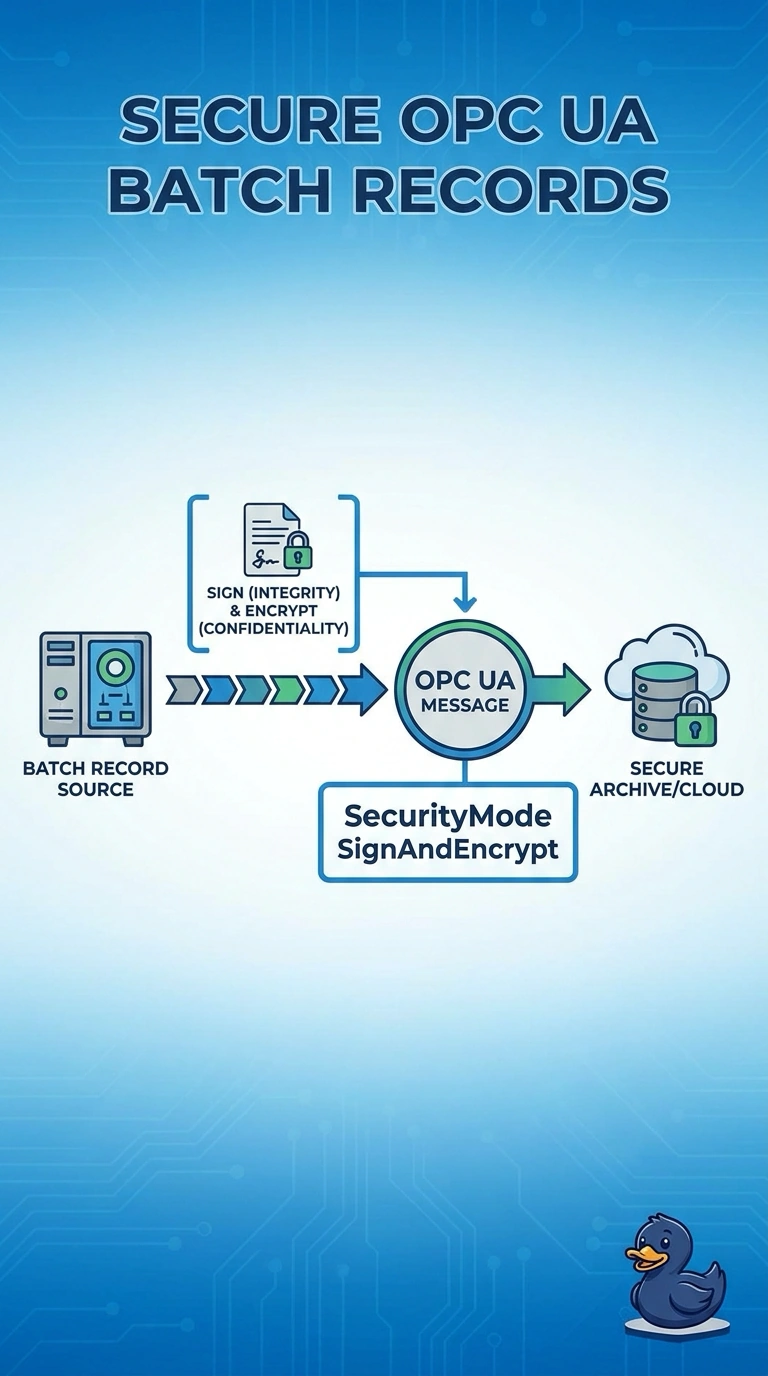
You select SignAndEncrypt to protect OPC UA messages with signing and encryption. Verify the endpoint policy, trust configuration, and negotiated mode on both peers.
Full Explanation
OPC UA SecurityMode is the protection the session itself applies. None applies neither a signature nor encryption, which is how this dairy pair is running. SignAndEncrypt signs the messages and encrypts them, so it is the mode that meets a batch record that must be both signed and encrypted on the wire. Sign provides integrity only. It does not encrypt the payload, and calling it encryption with the signature left off reverses what that mode does. SecurityMode None is not rescued by treating OPC UA as a new name for classic OPC. OPC UA does not ride DCOM, and DCOM-era assumptions do not add a signature or encryption to a session whose mode is None. A CSF tier is an organizational score. A controller does not check a tier label during the OPC UA handshake, and a document does not protect the bytes. Exam caveat: SignAndEncrypt meets the signing and encryption requirement in the stem. It does not segment the dairy network, and it does not turn OPC UA into a safety protocol. Operational check: read the session security mode on the batch server and on the skid and confirm both show SignAndEncrypt rather than None.