
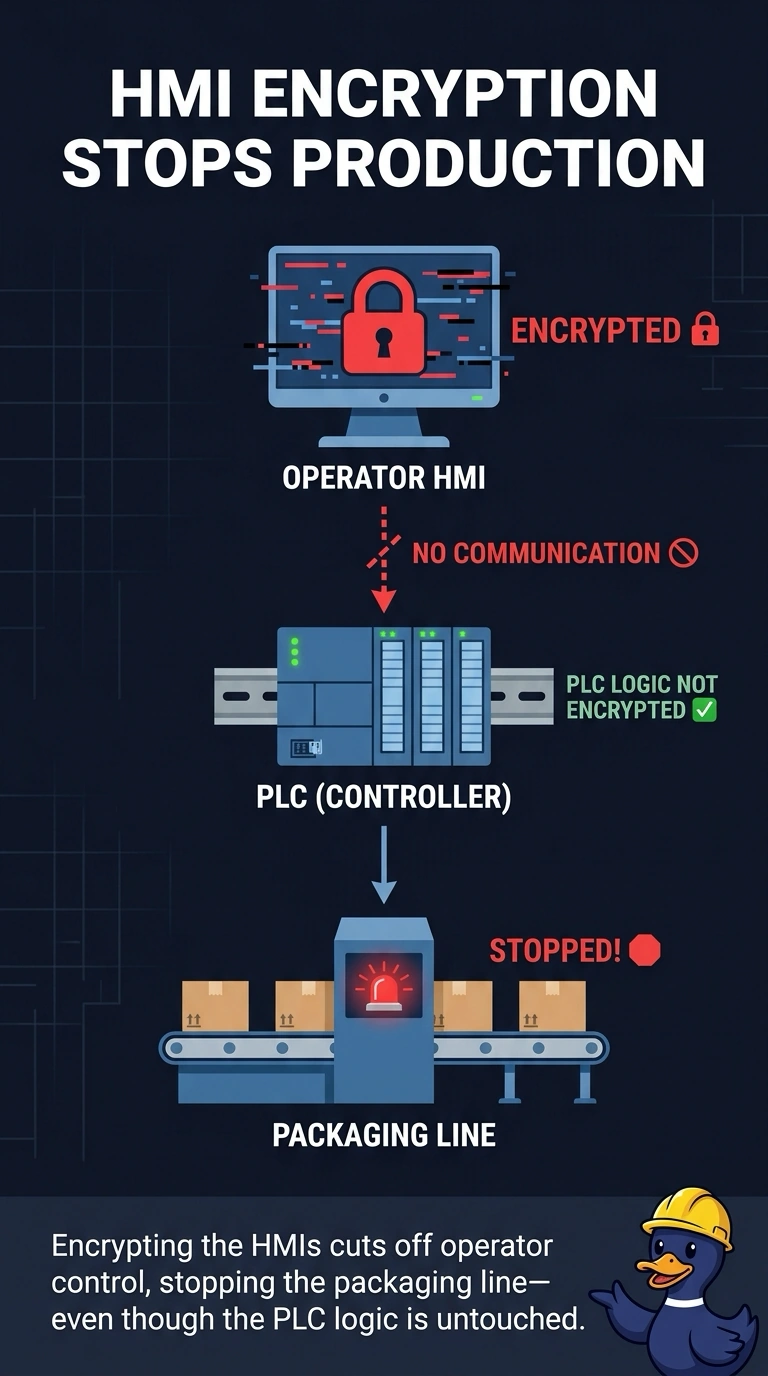
Ransomware encrypts the operator HMIs on a packaging line. The PLC programs are intact, and the line stops because nobody can see or command the machines. Which lesson fits?
Select an answer to reveal the explanation.
Short Explanation
The PLC still knows the recipe, but you’ve lost the operators’ view and control. You can stop a line by encrypting the screens people use to run it, without encrypting the controller. OT impact follows the process, so you don’t need to wait for the PLC itself to be encrypted to recognize a problem.
Full Explanation
OT impact follows the process, not a rule that only the PLC counts. The HMIs let operators see and command the packaging line, so encrypting them can stop production even when the PLC programs remain intact. The claim that the line can keep running because the PLC program is intact treats the HMIs as optional displays, but it ignores that operators need them to run this line. Whether a ransom note names a PLC vendor or firmware build does not determine whether the outage is real; the line is already stopped. An infection on an HMI can affect whether operators can run the line by removing their view and control. It does not have to spread into the PLC to have an operational effect. Exam caveat: an intact PLC program is good news for recovery, but it is not a reason to leave HMIs unsegmented or delay isolating them. Restore from a known image in a planned window, and investigate how the ransomware arrived. Practical check: confirm the PLC program matches the last approved copy. Coordinate HMI containment with operations and the safety plan, preserve evidence, and restore a validated clean operator interface before restarting the line.