
In the Purdue model, where does a pharmaceutical plant's site historian belong when local operations use it to store batch records from the skid PLCs?
Select an answer to reveal the explanation.
Short Explanation
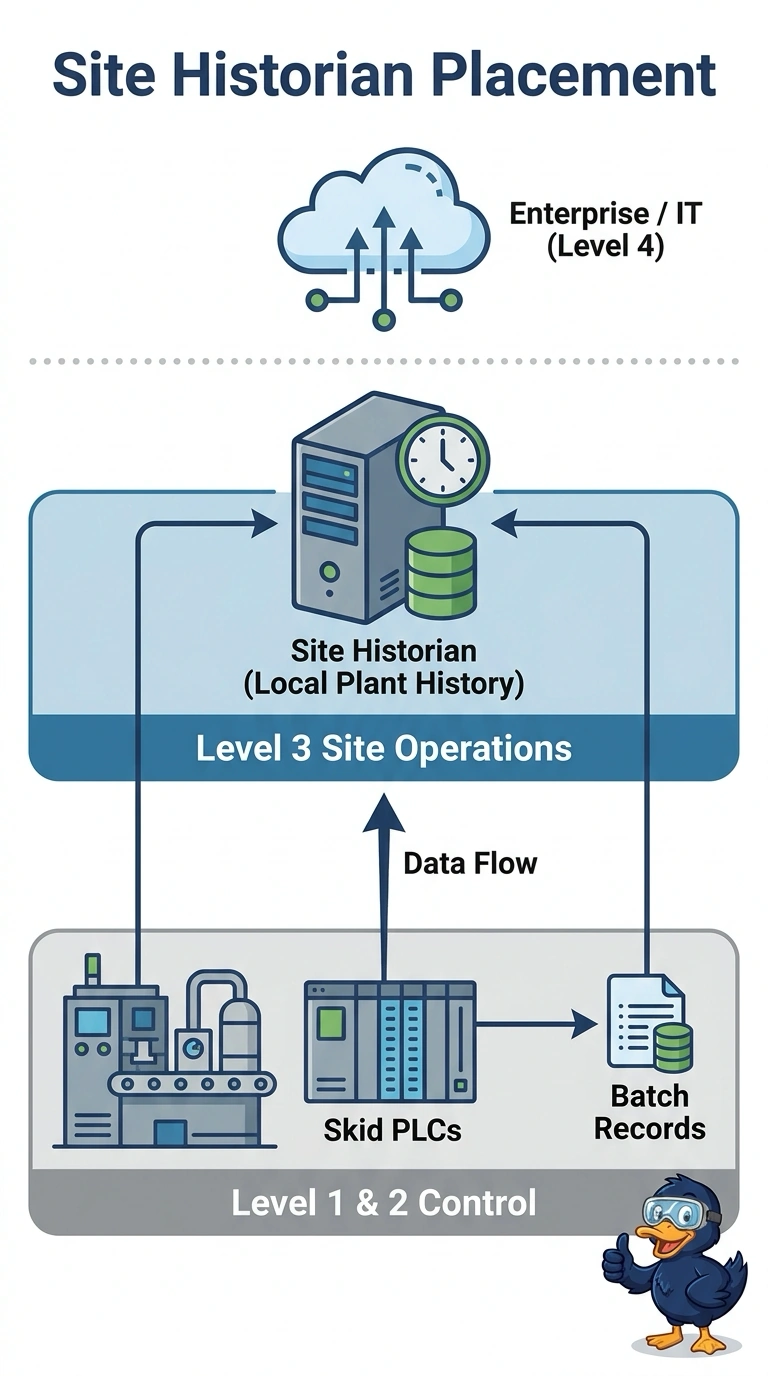
The historian is the plant's diary, kept where operations can read the batch, not down in the valves and not up in the order book. You place that diary at Level 3, site operations. Parking it on the skid or in the enterprise ledger answers a different question than the one your operators ask.
Full Explanation
The Purdue model places site operations, including the historian that stores batch records for the people running the plant, at Level 3. This pharmaceutical historian collects from the skids so local operations can review batches. That is a site-operations role, above the controllers and below the enterprise business systems. Level 1 is basic control, where the skid PLCs execute valves and interlocks. The historian is not that controller and does not belong on the skid VLAN as if it were one. Level 4 is the enterprise tier, where systems that book customer orders live. Keeping a batch history for the plant team is not the same job as booking an order. Level 0 is the physical process, the sensors and the product, and it does not store supervisory history. Exam caveat: Level 3 names the functional home of the site historian local operations use. It does not mean every server that stores a number belongs there. Operational check: on the architecture drawing, the batch historian should sit with site operations, not in the skid PLC subnet and not on the enterprise order-entry VLAN. Operators reviewing a live batch should open that site-operations history, not an order-entry screen.