
A port authority writes a NIST CSF 2.0 organizational profile for its crane network, placing today's practices beside the practices it wants in two years. What is that profile doing?
Select an answer to reveal the explanation.
Short Explanation
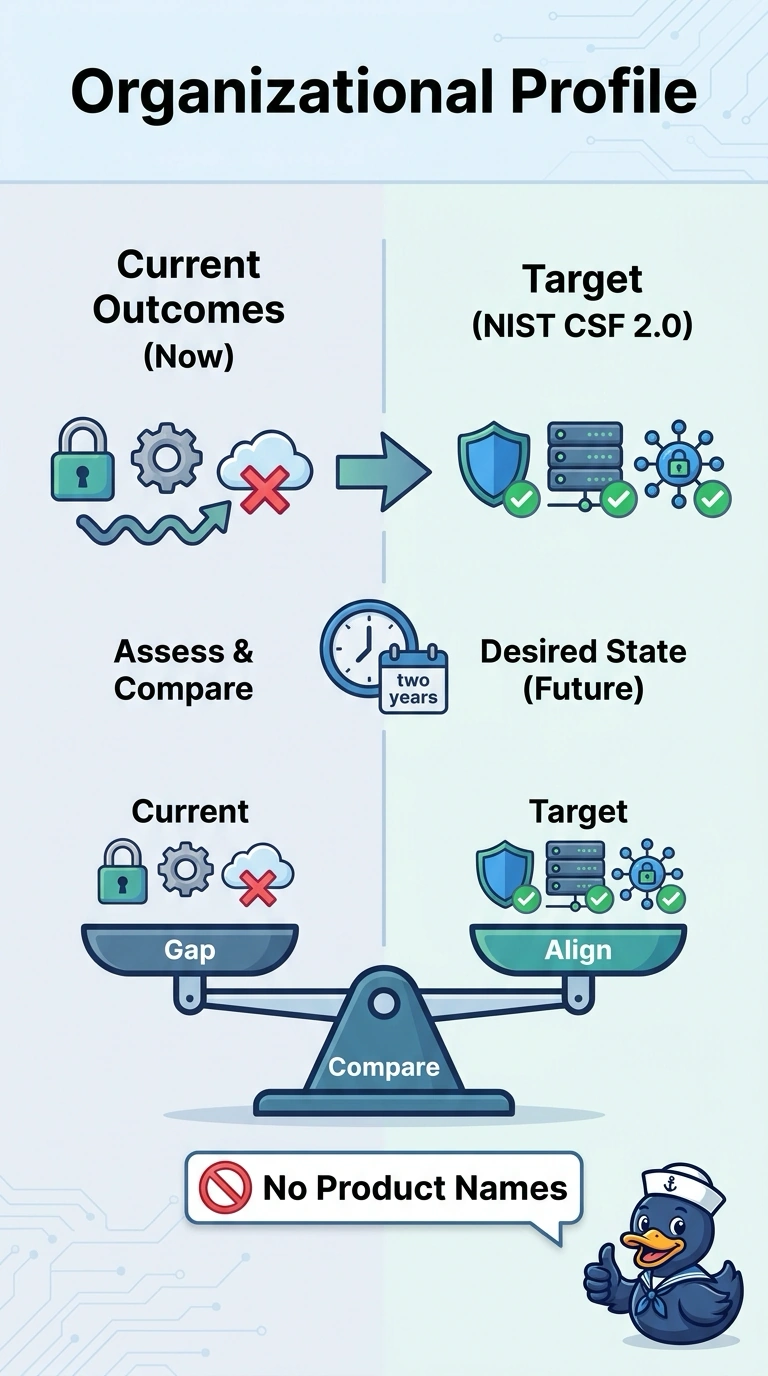
You are building a before-and-after picture for your crane network, comparing where you are today with where you want to be in two years. CSF specifies cybersecurity outcomes rather than mandating a particular vendor product. The organization can document its selected implementations when planning how to meet those outcomes.
Full Explanation
A NIST CSF 2.0 organizational profile describes cybersecurity outcomes an organization is achieving now, outcomes it is aiming for, or both. Writing today's crane practices beside the practices wanted within two years is that current-versus-target comparison. The profile organizes outcomes. CSF specifies cybersecurity outcomes rather than mandating a particular vendor product. The organization can document its selected implementations when planning how to meet those outcomes. IEC 62443 security levels SL1 through SL4 express how resistant a zone should be to a described kind of attacker. They are not what a CSF profile assigns, and filing a profile does not replace a zone and conduit design. Requiring one named firewall model in place of the CSF functions is wrong because the functions remain the language of the outcomes even when an implementation choice is documented separately. Filing a profile also does not set a CSF Tier. Tiers, from Partial through Adaptive, describe how the organization manages risk, and they come from an assessment rather than appearing automatically because a profile exists. Exam caveat: a profile can emphasize the current column, the target column, or both. Operational check: read the profile and confirm the crane rows state outcomes for today and for the two-year target.