
A water utility publishes tank levels to an MQTT broker that allows anonymous clients on TCP 1883. Topic authorization permits anonymous clients to publish and subscribe to the tank-level topics. Which exposure is inherent to that choice?
Select an answer to reveal the explanation.
Short Explanation
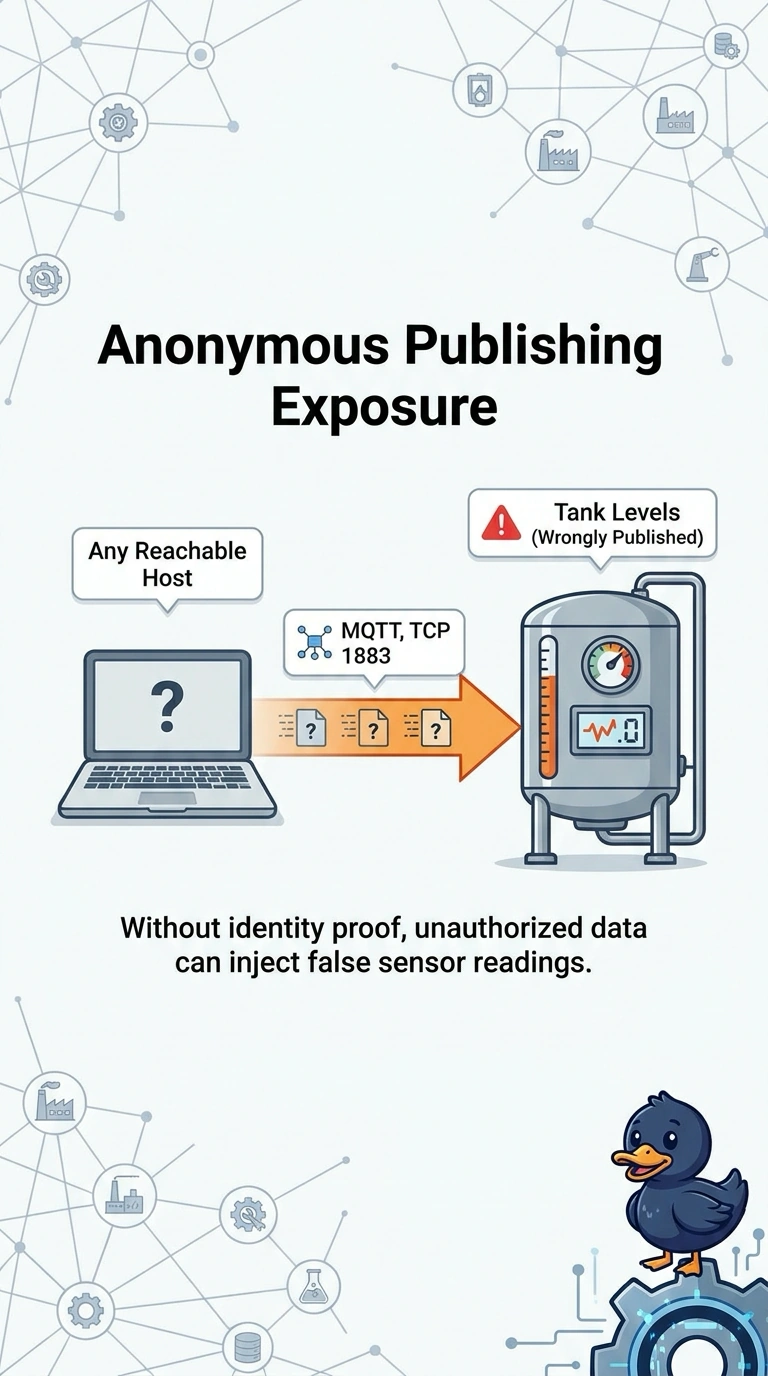
An anonymous broker is a bulletin board that never asks who pinned the note. If you can reach it, you can publish tank levels without an identity. The port number does not turn that board into a certificate check, and it is not how a safety stop should be sent.
Full Explanation
MQTT can be deployed with usernames, passwords, or certificates, but this broker allows anonymous clients on TCP 1883. Anonymous means the broker accepts a publish without an identity. Anonymous connection permission alone does not determine topic authorization. The configured topic policy in this scenario permits unauthenticated reading and writing. Any host that can reach it can publish tank levels, or subscribe to them, and the protocol choice as configured will not say who sent the message. A certificate is not required merely because the port is 1883. That port is the usual cleartext MQTT listener, and this deployment has turned authentication off. Treating the port as proof of identity reverses the configuration the utility actually chose. MQTT is a telemetry publish path. It is not a safety-trip service, and an anonymous publish is a poor way to convey a stop that must be reliable and attributable. The broker is not a GOOSE forwarder. GOOSE is Layer 2 multicast for substation protection, and it is not how this tank-level feed is carried. Exam caveat: the exposure belongs to this broker because it allows anonymous clients. It is not a claim that MQTT itself can never carry an identity when a deployment requires one. Operational check: from a test host that should not publish, confirm the broker accepts an anonymous publish on TCP 1883, which is the exposure inherent to this choice.