
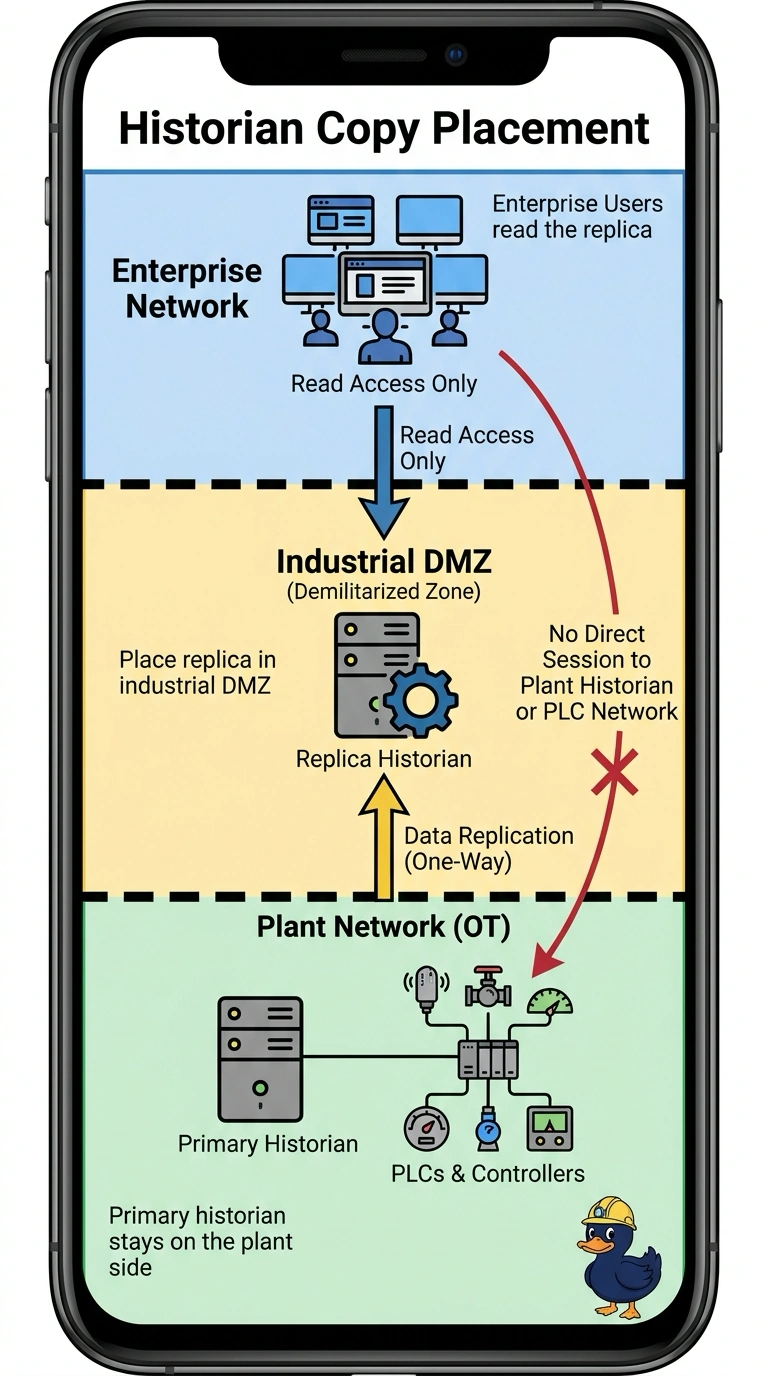
A hydro plant wants enterprise users to read turbine historian tags without a session into the plant historian or the PLC network. Where should the copy those users query sit?
Select an answer to reveal the explanation.
Short Explanation
The office should read a copy in the lobby, not walk onto the turbine deck for every report. You place the replica in the industrial DMZ and leave the primary historian on the plant side. Sitting that copy on the PLC VLAN pulls enterprise users into the control network.
Full Explanation
The industrial DMZ is the buffer where services are shared with the enterprise without giving the office a session into the plant. A historian replica in that DMZ is the copy enterprise users query. The primary historian stays on the plant side, at site operations, and the turbine PLC network is not where those users land. Putting the copy on the turbine PLC VLAN does the thing the plant is trying to avoid: enterprise queries end on the controller network, and skipping a replica removes the buffer. Level 0 is the physical process, sensors and actuators. A historian replica is not a field instrument and does not sit beside the sensors. Level 4 can consume business reports, but making the enterprise the only remaining copy, after the plant historian is removed, takes the operational record out of the plant and still does not describe the shared replica. Exam caveat: the replica can lag the primary. Operators who need the live turbine record use the plant historian, not the enterprise copy. Operational check: from an enterprise workstation, the replica in the DMZ should answer, and that same workstation should have no session to the primary historian or the PLC subnet.