
A water utility sets an IEC 62443 zone target of security level 2. Which adversary does that security level describe?
Select an answer to reveal the explanation.
Short Explanation
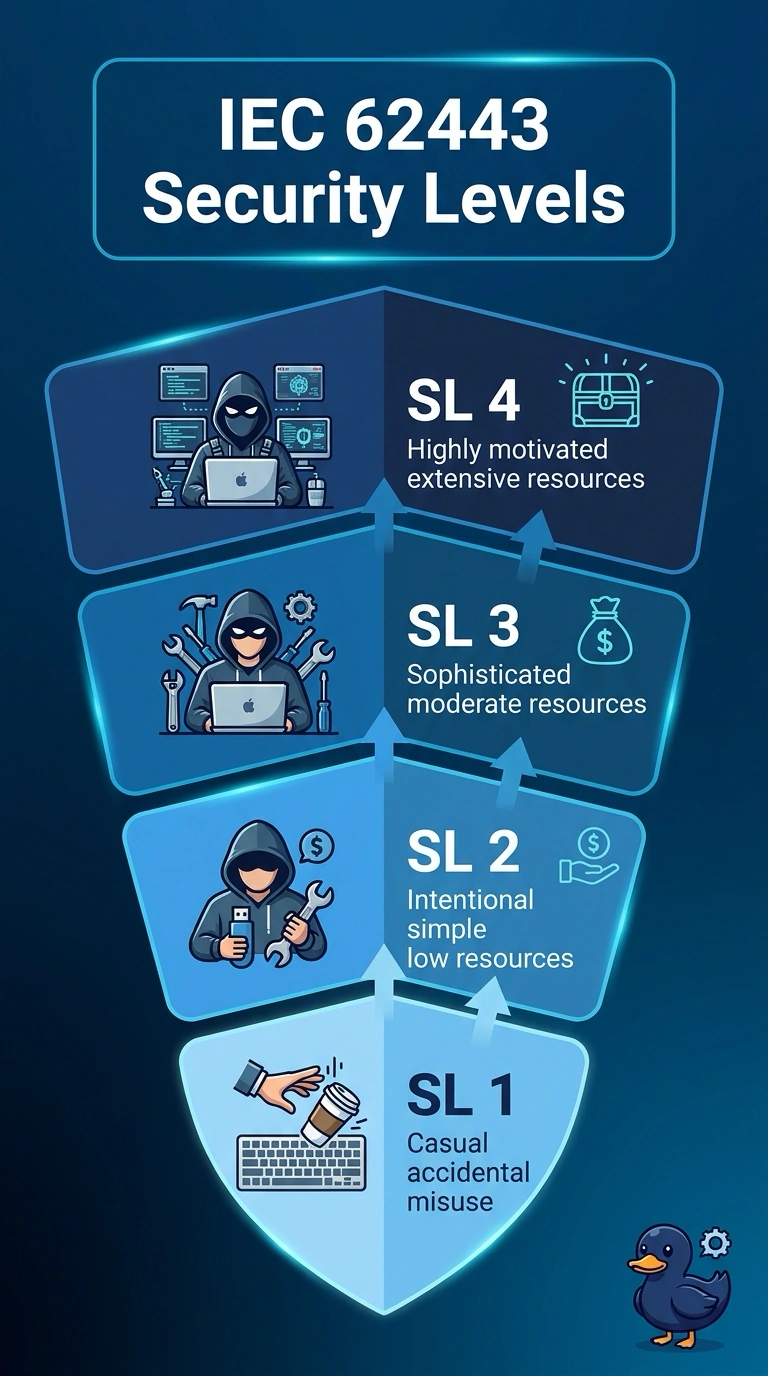
Security level 2 is a lock sized for an intentional attacker with low resources and motivation, not for a bump in the hall and not for a specialist with a full shop. You are describing someone acting on purpose with simple means, generic skills, and low resources. Do not recycle the Purdue level number and pretend it is the same scale.
Full Explanation
IEC 62443 security levels describe the adversary a zone is intended to resist. Security level 2 is protection against someone acting intentionally, using simple means, with generic skills and low resources. Low motivation sits in that same description. It is the first level that assumes a purposeful attacker, and it stops short of a specialist campaign. A casual or coincidental mistake is the lower level, the one aimed at accidents rather than an intentional act. Using that description for level 2 understates the target the utility just set. A highly motivated attacker with sophisticated means, extended resources, and industrial-specific skills is the far end of the scale, not level 2. Designing only for that adversary when the target is level 2 misstates the requirement in the other direction. Purdue Level 2 is a functional layer for supervisory systems such as HMIs. IEC security levels are not those Purdue numbers renamed. A zone can target security level 2 whether or not an HMI is the asset inside it. Exam caveat: a security level does not name a product to buy, and it does not set a Purdue layer. The utility still has to choose controls that meet the level it wrote down. Operational check: the zone file should state security level 2 in words that match simple intentional misuse, and it should not cite a Purdue layer as if it were the security level.