
A plant manager says the OT program is at the NIST CSF 2.0 tier Repeatable and asks which product that tier requires them to buy. Which answer is accurate?
Select an answer to reveal the explanation.
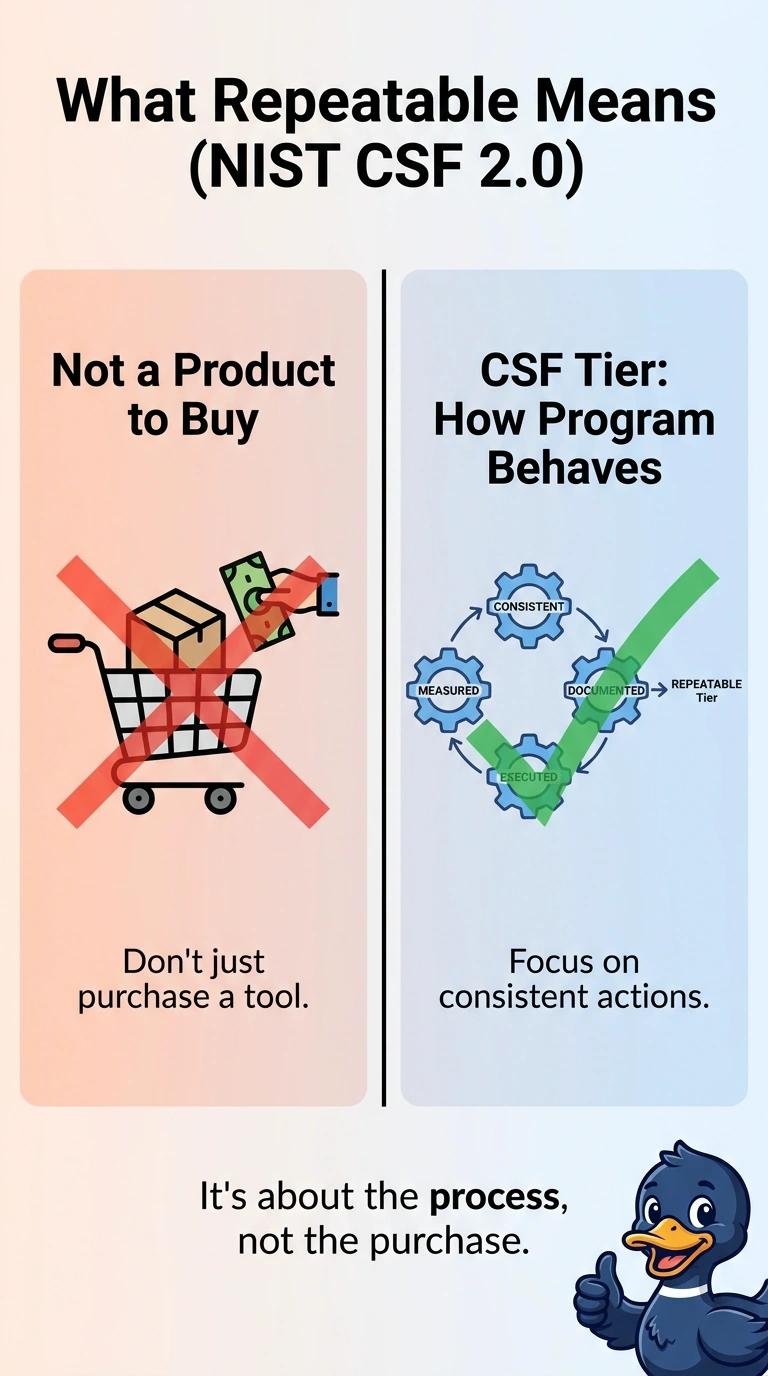
Short Explanation
A tier is a report card, not a shopping list. You can explain that Repeatable describes how your program behaves and does not name a product to buy. The trap is hearing a CSF term and reaching for a purchase order.
Full Explanation
NIST CSF 2.0 tiers are Partial, Risk Informed, Repeatable, and Adaptive. They describe how your organization manages cybersecurity risk, from informal to adaptive; they are not product requirements and do not certify a firewall, sensor, or other SKU. Repeatable therefore does not require a specific vendor’s sensor, nor is it the product name of a firewall required between Level 3 and the enterprise before production resumes. An appliance can support outcomes in a Profile, but the tier itself names no product. IEC 62443 security levels are a different scheme, not CSF tiers, and a level is not a part number. The caveat is that a target Profile can still drive a project that includes tools; the tier label alone does not define that project. As a practical check, consult the CSF document: tier definitions describe practices, not required products. For any resulting change, put before-and-after evidence in the work order, including the interface or account changed, the time, and the approver. On the next shift, confirm the original symptom is gone and the change did not open a second path while closing the first. If the process is inside a live batch, leave the controller running and finish only work that does not restart it. This sequence helps keep a correct fix from becoming an unplanned outage.