
Enterprise staff must publish tested Windows patches for cement-kiln HMIs without a direct session from the enterprise LAN into the controller VLAN. Where should that patch server sit?
Select an answer to reveal the explanation.
Short Explanation
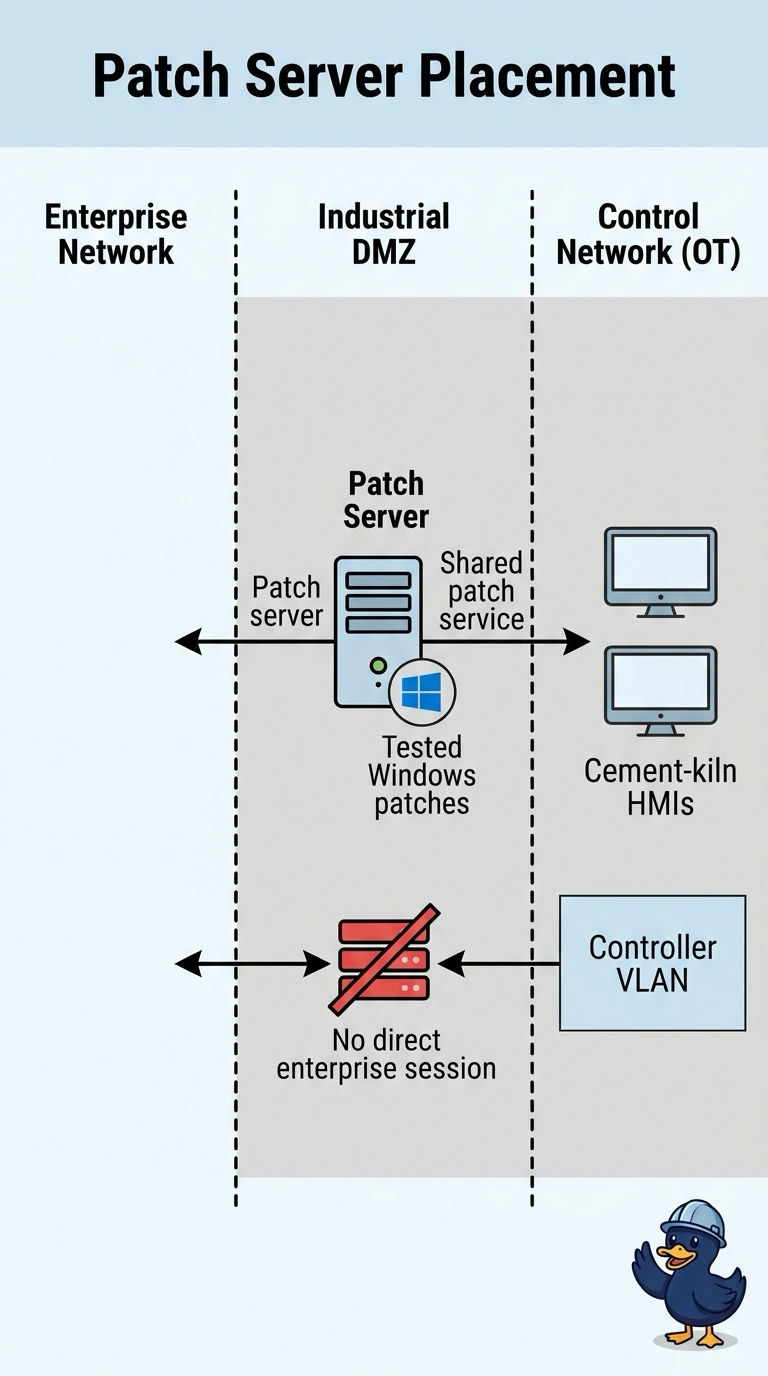
Think of the industrial DMZ as a parcel room between two buildings: you can deliver a package without walking into the other building. Put the Windows patch server for the kiln HMIs in the industrial DMZ, so enterprise staff and HMIs can reach it under firewall rules without opening a direct session from the enterprise LAN into the controller VLAN. Keeping it beside the PLCs or only at Level 4 would bypass that buffer, and Level 0 is for the physical process.
Full Explanation
The industrial DMZ is the buffer for services that both sides must use without joining the networks. A patch server that enterprise staff publish tested Windows patches to, and that the kiln HMIs pull patches from, is such a service. Placing it in the DMZ lets each side reach the server under firewall rules while keeping the enterprise LAN from opening sessions straight into the controller VLAN. Putting the server on the controller VLAN beside the PLCs gives patch traffic a home inside basic control and removes the boundary the question is meant to preserve. Keeping it only on a Level 4 server leaves it in the enterprise tier; having HMIs connect straight to an enterprise patch site over the business WAN creates an unwanted trust dependency rather than using the DMZ buffer. Level 0 is the physical process—sensors, actuators, and material—so a Windows patch server is not a field device and does not belong there. Exam caveat: the server is for the Windows HMIs in the question; this does not justify rebooting kiln PLCs from the same box during a run. Practical check: the architecture drawing should show the patch server in the DMZ, enterprise hosts should not address the controller VLAN, and an HMI should pull a test patch only from that DMZ host.