
A water utility labels its filtration zone SL3 and tells the team that this is the same thing as Purdue Level 3. Which correction is accurate?
Select an answer to reveal the explanation.
Short Explanation
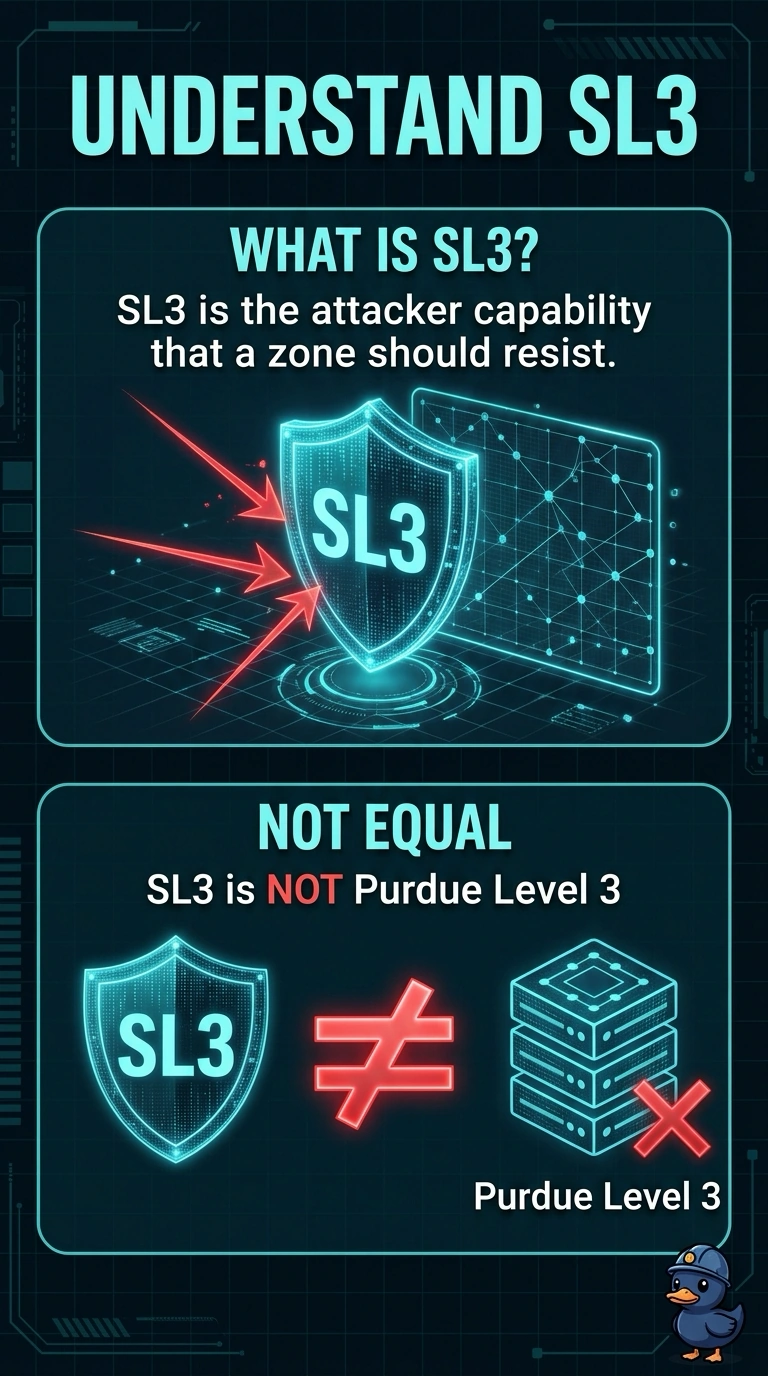
Security levels describe how capable an opponent the zone is built to resist, not which floor of the plant the pipes sit on. You do not rename SL3 as Purdue Level 3 just because both labels use the number three. A product hidden inside a framework profile is a different mix-up from this one.
Full Explanation
IEC 62443 security levels describe the resistance a zone is meant to provide. SL1 is aimed at casual or coincidental violation. SL4 is aimed at an attacker with sophisticated means and extended resources. SL3 sits on that scale of attacker capability. It is not Purdue Level 3, and SL1 through SL4 are not a renaming of the process, control, supervisory, and enterprise layers. Purdue answers where a function sits in the plant. A security level answers what sort of adversary the zone is built to resist. Those drawings can both use the number three and still mean different things. NIST CSF does not name a firewall product the filtration zone must buy. A profile selects outcomes. A product mention inside someone's notes is not a CSF requirement, and it is not the definition of SL3. NIS2 is a legal directive for essential and important entities, including management accountability for risk. Its categories are not the SL numbers on a zone. Exam caveat: a filtration asset can be Purdue Level 1 and still sit in a zone targeted at SL3. Rejecting the rename does not make the security level optional. It keeps the two numbers from being copied onto each other. Operational check: the zone sheet should show SL3 as the security level and, on a separate line, the Purdue function of the filtration assets.