
A power plant keeps its operational historian with site operations. Enterprise analysts need the history without a path into that historian. Where should the replica they query sit in the Purdue model?
Select an answer to reveal the explanation.
Short Explanation
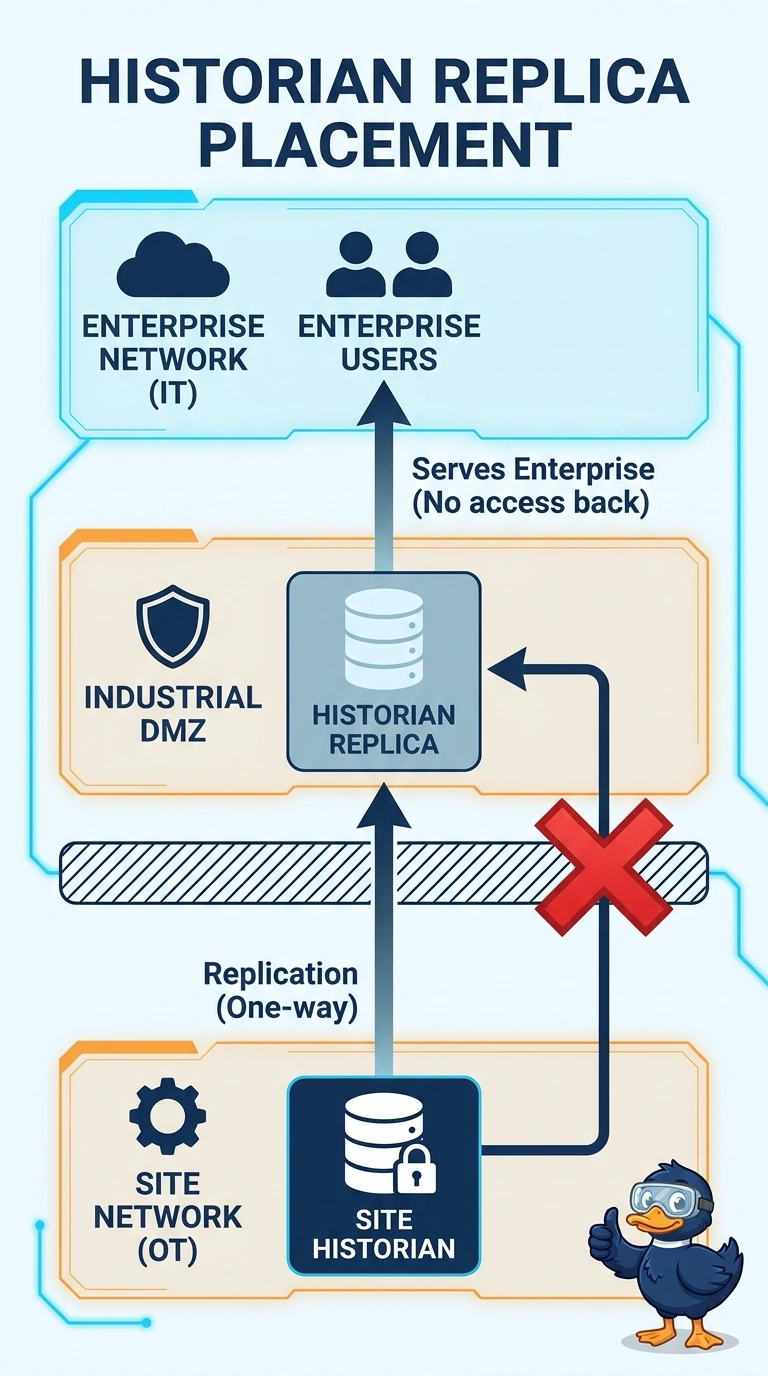
You keep the operational historian with site operations and place the enterprise-readable copy in the industrial DMZ, the buffer between the plant and the enterprise. That lets you give analysts access to the history without a path into the site historian or unit PLCs; putting the replica beside the controllers would draw business users into the control layer.
Full Explanation
The operational historian stays with site operations at Level 3, while the replica enterprise analysts query belongs in the industrial DMZ. The DMZ buffers the plant from the enterprise, letting enterprise users reach the shared history without providing a path onward into the site historian or unit PLCs. Level 1 is the basic-control layer, so placing the replica beside the unit PLCs and having analysts query the controllers directly would pull business users into the control layer. Level 0 represents the physical process—equipment, sensors, and product. A history database is not part of that physical process simply because it stores process values. Level 4 is the enterprise layer, but putting the replica there with a route straight back to every unit PLC would remove the separation the DMZ is meant to provide. Exam caveat: the DMZ replica does not replace the operational historian; the live historian remains at Level 3, and moving it into the DMZ would put site operations in the buffer. Practical check: enterprise users should query the replica, and a connection test from the enterprise toward the Level 3 historian address should fail.