
Ransomware encrypts the HMI on a food-plant filler. The PLC program is intact and the drives still have power, but operators have no graphics and no commands. Which lesson fits?
Select an answer to reveal the explanation.
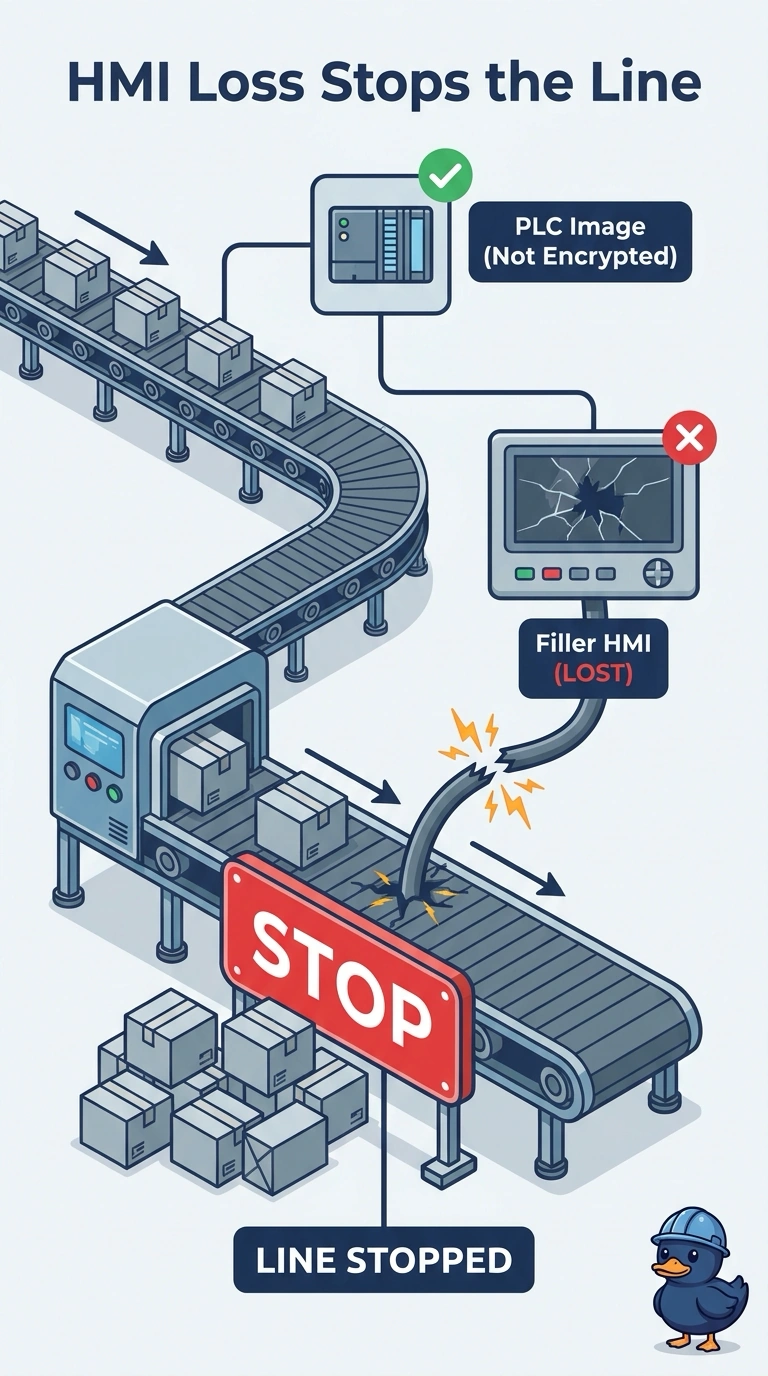
Short Explanation
You can lose the filler’s graphics and commands when ransomware locks the HMI, even while the PLC program remains intact and the drives have power. The HMI is your operator interface, so its loss can stop the line without encrypting the controller image. You don’t need to wait for a logic rewrite to recognize an operational impact.
Full Explanation
The HMI provides the supervisory path for graphics, alarms, and commands. Encrypting it can leave the PLC program intact and the drives powered while still removing the operator’s ability to see and run the filler. That loss can stop the line or force a manual mode nobody planned; OT impact does not depend on the controller image being encrypted. Keeping the line running unattended because the PLC program survived ignores the missing view and commands, and an intact controller does not prove the event stayed outside operations. Requiring ransomware to rewrite both PLC logic and drive parameters sets a bar this attack does not need to cross. A ransom note that names the PLC vendor is also irrelevant to whether the filler can be operated. Exam caveat: the lesson is the operational impact of losing supervision, not a rule that every encrypted display requires the same breaker pull. Local manual control, where the safety case allows it, is a separate operations decision. Practical check: compare the PLC program with the last known backup and confirm that it matches, while the HMI does not boot, so your record shows which asset was actually lost.