
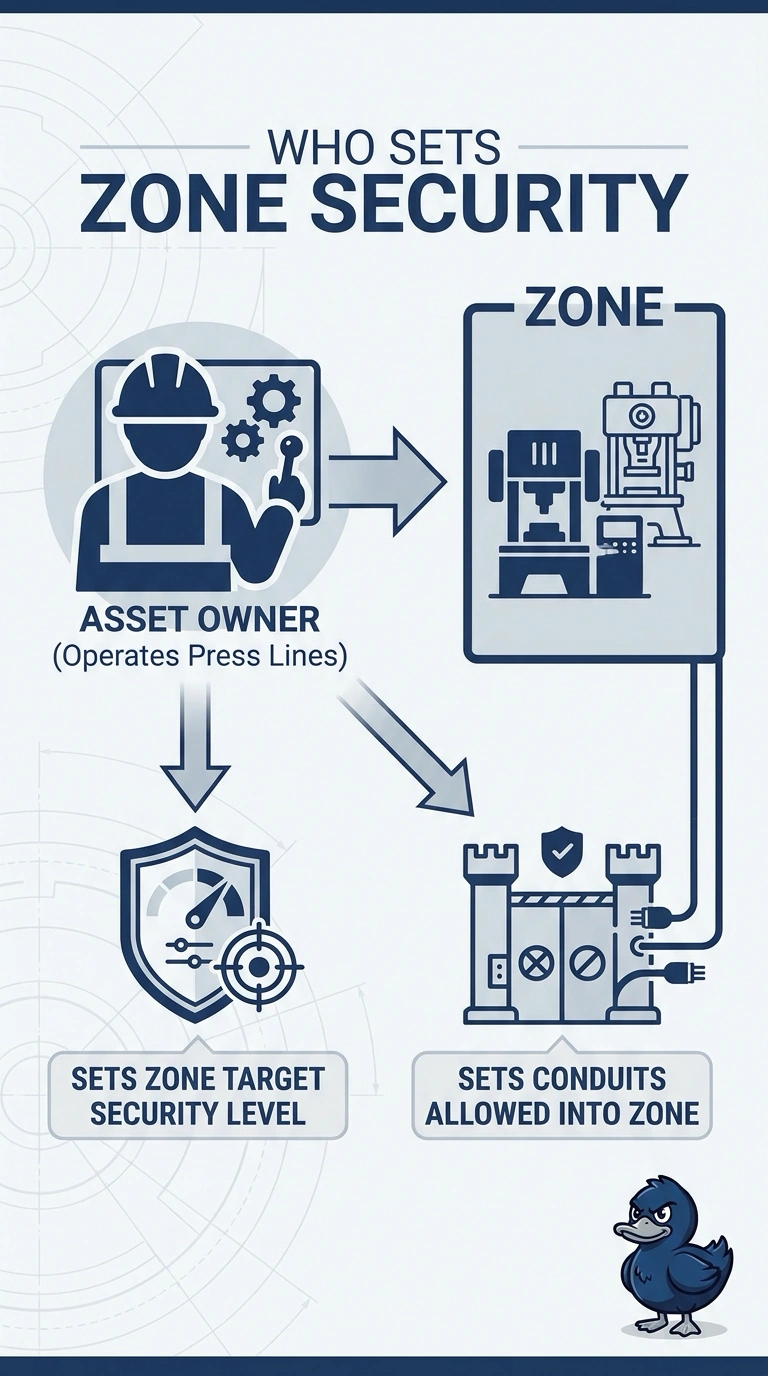
A printing company must choose the target security level for its press-control zone and which communication paths into that zone are permitted. Under IEC 62443, who owns that choice?
Select an answer to reveal the explanation.
Short Explanation
The household that lives with the locks chooses them, not the catalog that sold the hinges. You want the printing company, as asset owner, to set the press-zone target and the paths that may enter. The trap is handing that choice to a PLC brochure or to a framework tier label.
Full Explanation
IEC 62443 places the zone and conduit decisions with the asset owner, the organization that operates the industrial system and carries the risk. Choosing the target security level for the press-control zone, and writing down which paths may enter, is that owner decision. A product supplier can describe what security capability a PLC offers. A brochure claim does not select the target the printing company will live with, and it does not draw the conduits. A directory team linking group policy to computer accounts is managing office identity. A group policy object is not a zone target and does not define industrial conduits. NIST CSF tiers, including Repeatable, describe how formal and adaptive an organization's risk practices are. A tier is not a drawing of allowed paths, and reaching Repeatable does not fill in the press zone for them. Exam caveat: a supplier capability figure can inform the owner, and it still does not assign the target. The owner remains accountable for the level and the conduits they agree to operate. Operational check: the zone record should name the printing company as the owner, state the target security level for the press zone, and list each conduit with its protocol and direction.