
A municipal water plant's filter PLC stops answering its HMI after a burst of connection attempts fills the controller's session table. No files are encrypted and the logic image is unchanged. Which threat does that illustrate?
Select an answer to reveal the explanation.
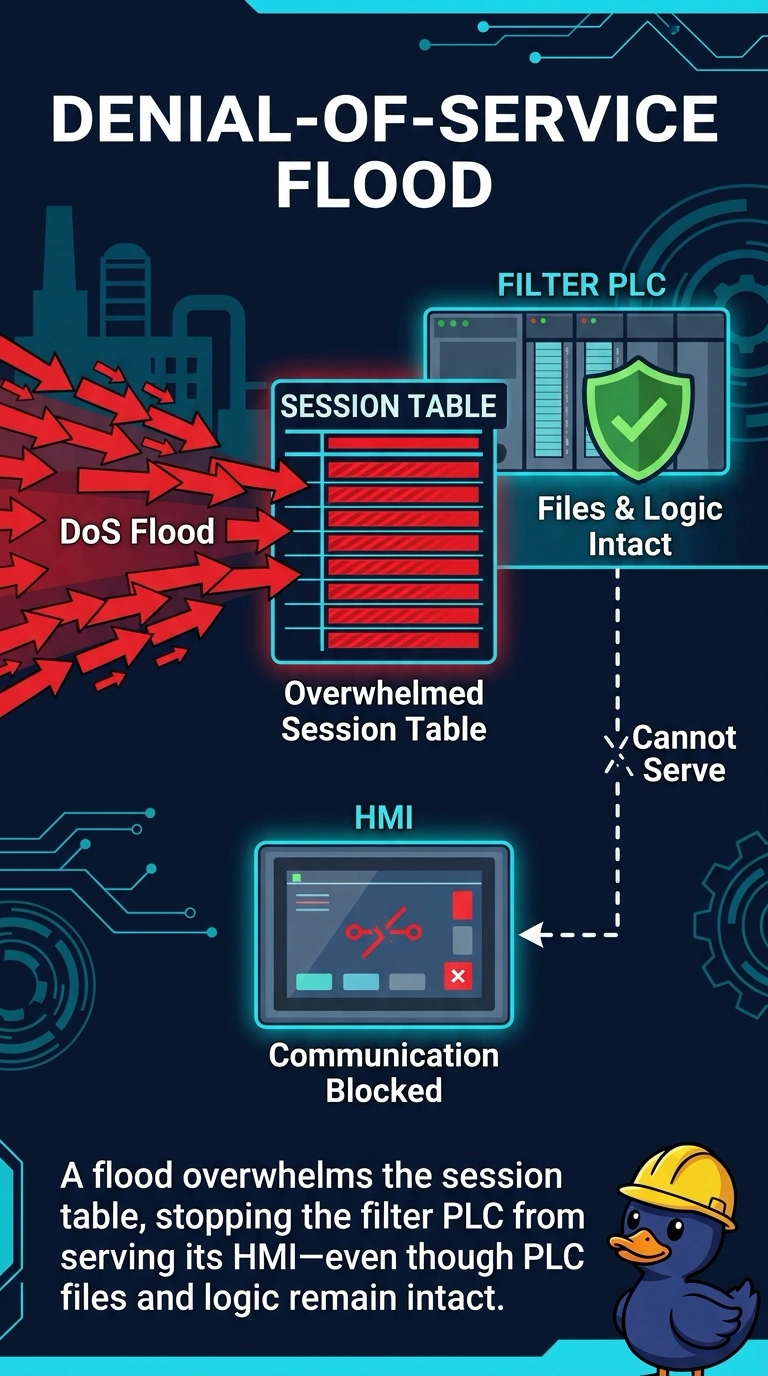
Short Explanation
Filling the PLC's waiting room until the real operator cannot get in is still an attack, even with the locks unchanged. You are looking at a denial of service against the filter controller. Ransomware, a payroll phish, and a stolen spare are different problems from a session table that is already full.
Full Explanation
Availability is part of an OT threat picture. A burst of connection attempts that fills the filter PLC's session table keeps the HMI from getting a session, so the controller stops serving the operator even though the logic file is intact and nothing was encrypted. That is a denial-of-service attack against the controller. The process effect comes from resource exhaustion, not from a rewritten program. Ransomware that has to encrypt PLC storage before it counts would miss this event. The files and the logic image are unchanged, and the plant is already affected. A phishing message aimed at a payroll password is an identity attack on a business mailbox. It does not describe a flood against a session table on the filter PLC. Theft of a spare level sensor removes a part from a storeroom. It does not open a crowd of sessions to the controller or explain why the HMI lost communication while the logic stayed the same. Exam caveat: a misconfigured host that retries too fast can create a similar pile-up without a person trying to attack. You still treat the availability loss as real and find the source before you assume a motive. Operational check: identify the source addresses of the connection burst, confirm the HMI recovers when that source is removed, and compare the PLC logic checksum with the approved copy so you know the image really is unchanged.