
An IT ticket tells a dairy to wipe and reload a running pasteurizer PLC the same way the help desk reimages a laptop, during a live batch. Which response fits OT practice?
Select an answer to reveal the explanation.
Short Explanation
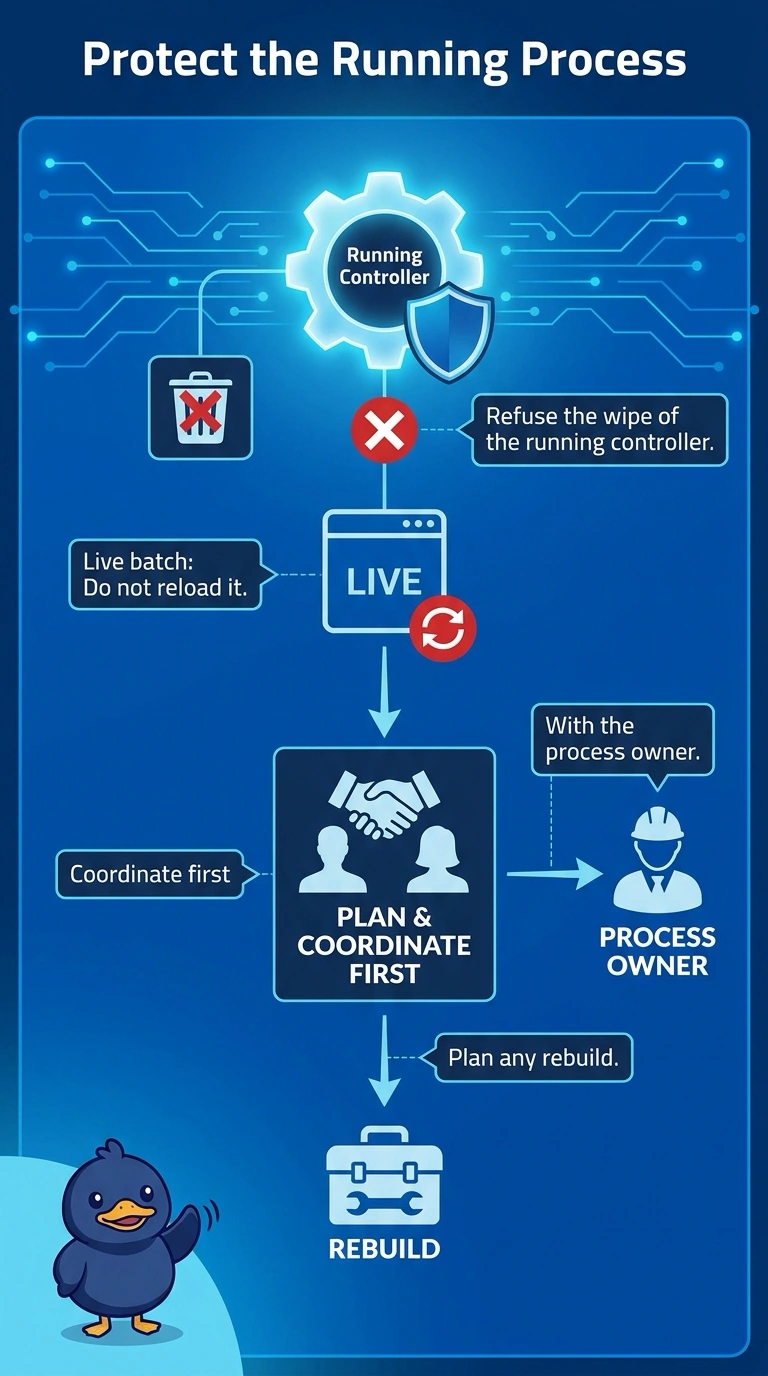
A PLC running a pasteurizer is part of the process, not a spare laptop you can flatten at lunch. You refuse a live wipe and plan any rebuild for a window the process owner accepts. A reimage ticket is not proof that the line can stop.
Full Explanation
OT availability and a safe process outrank a desktop rebuild habit. A pasteurizer PLC is executing the batch, so wiping it immediately to match a laptop standard would cause a process outage, not a hygiene win; the process owner must agree on when the line can stop. Reimaging from the office build server while keeping the batch in automatic still removes the logic keeping the process within its limits. Joining the PLC to the office domain before scheduling a wipe is not a maintenance prerequisite and would add an identity dependency the cell does not need. The appropriate response is to refuse the wipe of the running controller and plan any rebuild with the process owner. The caveat is that a failed controller may truly need replacement or rebuilding, but not as a surprise during a live batch. Before proceeding, verify there is a written maintenance window, a known-good program, and approval from the process owner that the line can stop. Record before-and-after evidence in the work order, including the interface or account changed, the time, and who approved it. On the next shift, confirm the original symptom is gone and the change did not open a second path while closing the first. If the batch is still running, leave the controller in service and do only work that does not restart it. This sequence prevents a correct fix from becoming an unplanned outage.