
An IT group wants to reclaim a building-automation controller because it showed up in an inventory export. The controller runs the campus chiller plant. Who should decide whether that controller is changed?
Select an answer to reveal the explanation.
Short Explanation
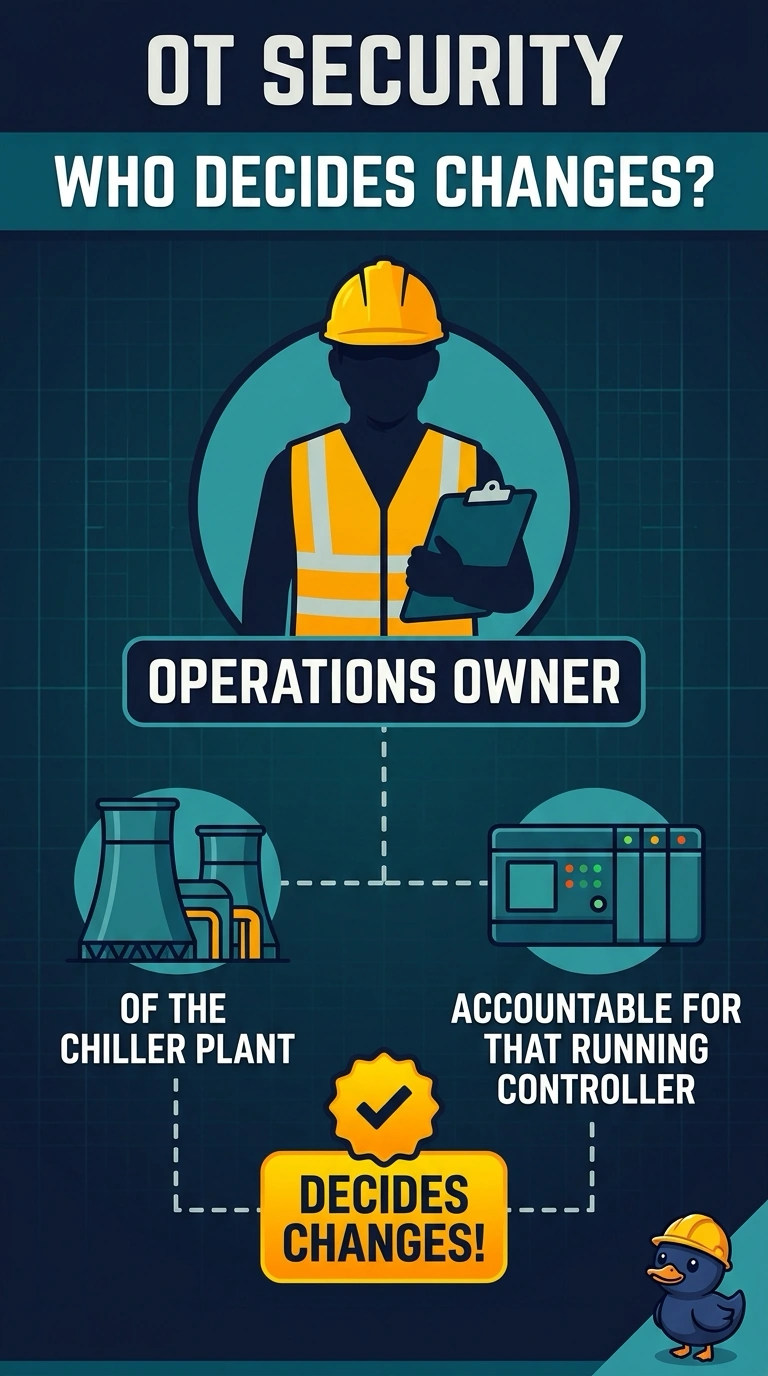
The people who keep the chillers running own that machine, and a spreadsheet that noticed it does not inherit the keys. You leave the decision to change the controller with the operations owner of the plant. An inventory export is a sighting, not a handover of the asset.
Full Explanation
OT asset ownership follows the process, not the inventory tool that happened to list the box. The controller runs the campus chiller plant, so the decision to change it belongs to the operations owner who is accountable for that plant staying in service. An export that made the device visible to IT is a sighting. It does not move authority. The commissioning vendor from a decade ago may still know the equipment, and absence from site since then is the opposite of current ownership. A vendor can be brought in under operations. The vendor does not decide alone because of an old invoice. Badge access to the mechanical room lets an electrician stand near the panel. It is not authorization to change a running controller, and it skips the operations role the plant needs on the decision. The IT team that maintains the export owns the quality of that list. A row in the list does not transfer change authority, and treating the export as a deed confuses visibility with ownership. Exam caveat: IT can still advise when an enterprise dependency touches the project, and the decision on this running controller stays with operations. Operational check: the change ticket for the chiller controller should name the operations owner as the approver before any configuration on that controller is altered.