
A municipal water SCADA master must collect timestamped events from outstations at remote wells over a wide-area network. Which protocol characteristic matches that job?
Select an answer to reveal the explanation.
Short Explanation
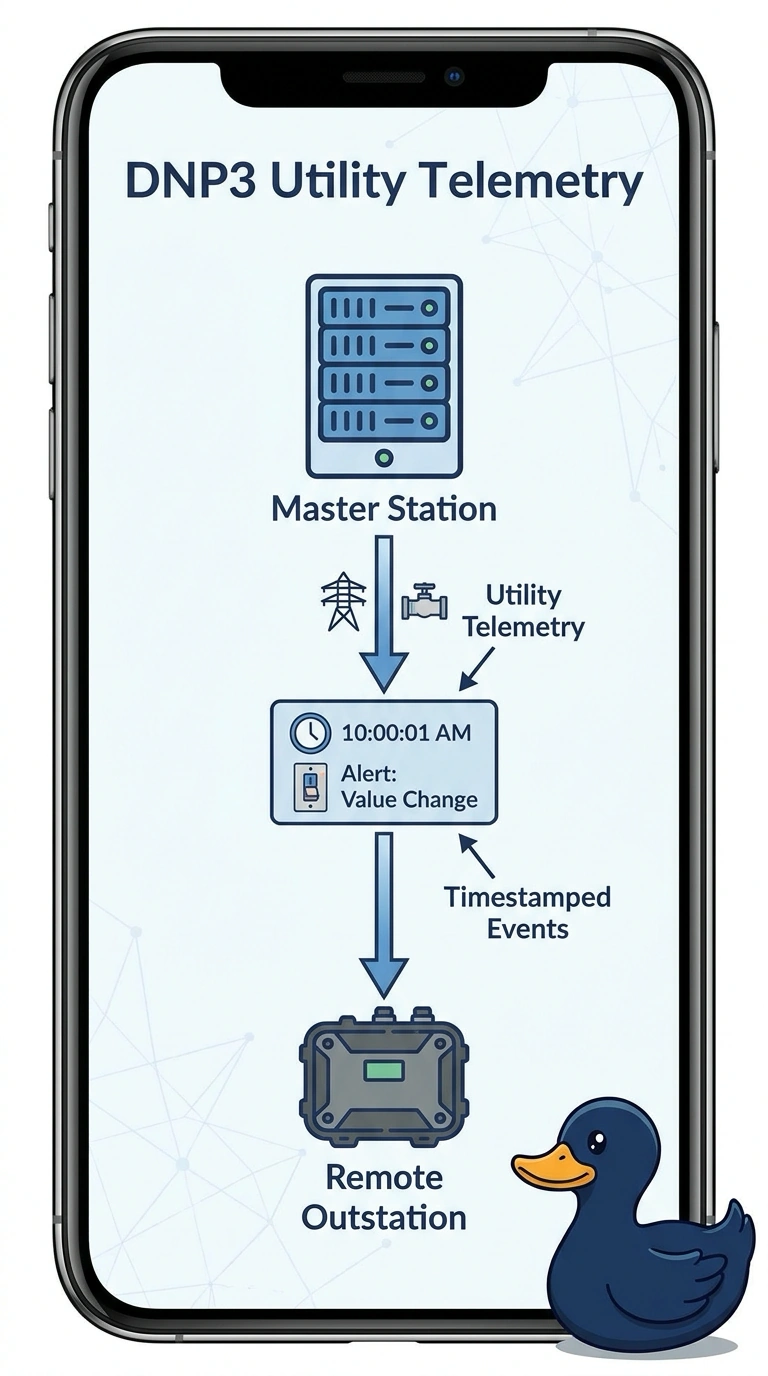
The wells are far apart and the control center wants events with a time on them, not a motion loop on a local machine network. You want DNP3 for that master-and-outstation job. A Layer 2 trip message inside one substation will not poll a well field across a wide-area network.
Full Explanation
DNP3 is a SCADA protocol used heavily by electric and water utilities. A master communicates with outstations, and outstations can buffer events with timestamps and report them, including over wide-area links. TCP port 20000 is the registered DNP port. That characteristic matches a municipal master collecting timestamped well events. PROFINET isochronous real time is a Layer 2 mechanism for tight cyclic motion and I/O inside a local cell. It is not the protocol you run across a wide-area well field to a SCADA master. GOOSE is an IEC 61850 Layer 2 multicast used for fast peer-to-peer messages such as trips inside a substation. It is not routable polling of distant wells. A publish-subscribe broker without a master or outstation can move telemetry in an IIoT design, but it is not the characteristic of the utility SCADA pattern this stem describes, and it does not by itself give you DNP3's event model. Exam caveat: classic DNP3 does not encrypt or authenticate by itself. Secure authentication is an addition. Choosing DNP3 for the job does not mean the wide-area link is safe without segmentation. Operational check: confirm the master and the well outstations are using DNP3, note whether secure authentication is actually enabled, and limit which addresses can reach port 20000.