
An IT analyst wants to run an unsolicited vulnerability scan against every controller in a weld cell during production, the way office laptops are scanned. Which OT constraint should stop that plan?
Select an answer to reveal the explanation.
Short Explanation
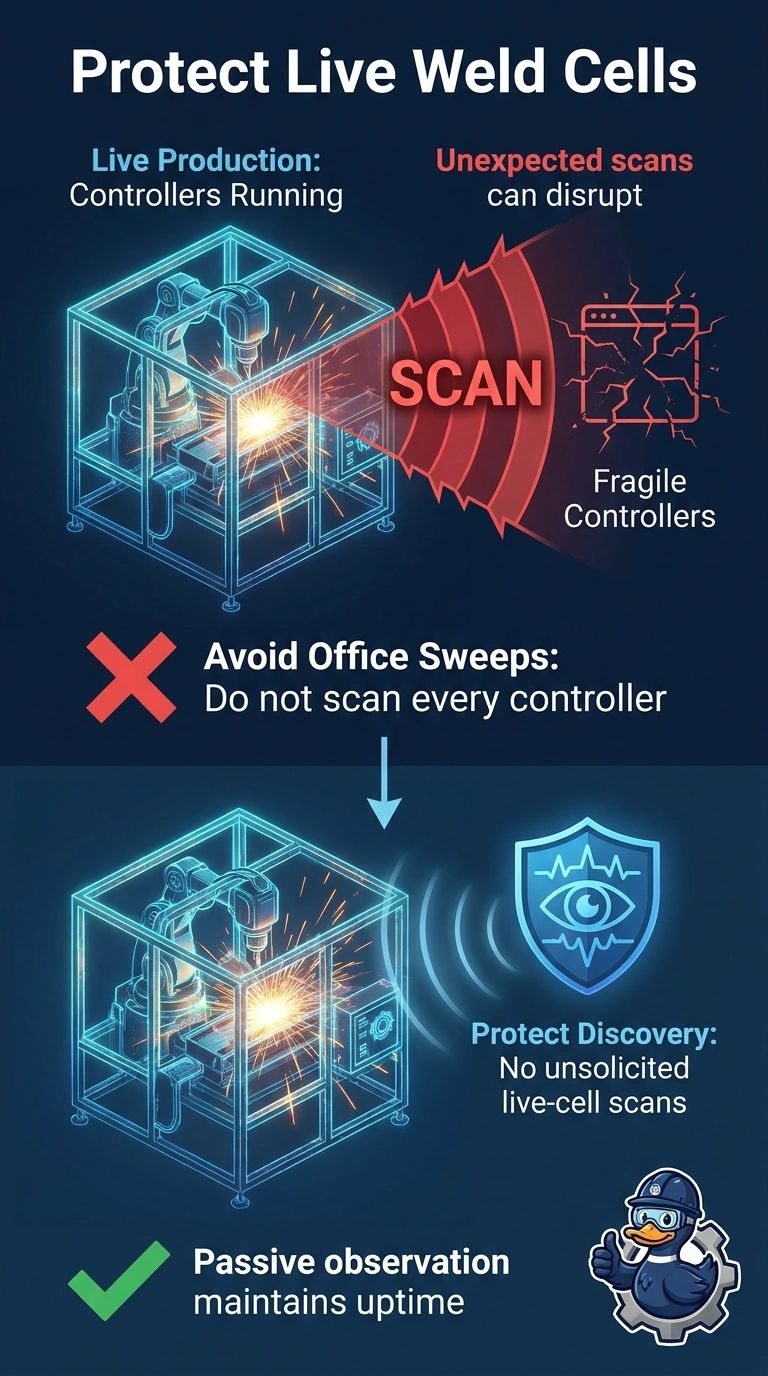
Office laptops are built to be poked, and a weld controller is built to repeat a cycle that an unexpected conversation can shove. You do not import the laptop scan calendar into the cell. Ping is not a magic safe packet just because it is small.
Full Explanation
OT devices are often fragile in the face of traffic they were not engineered to answer. An unsolicited vulnerability scan opens many sessions, probes odd ports, and may crash, stall, or reset a controller that an office laptop would shrug off. The weld cell is in production, so the OT constraint is to refuse that office habit and keep discovery passive, or schedule a carefully limited probe in a window with operations watching. Claiming controllers ignore unexpected sessions is the misconception that causes the outage. A confidentiality policy does not require a daily intrusive scan of live controllers, and confidentiality is not the priority that outranks a weld cycle. Ping is not automatically safe. Even a simple reachability sweep can be the wrong traffic for some devices, and a vulnerability scan is much more than ping. The safe claim is the narrower one: do not run the unsolicited scan against the live cell. Exam caveat: passive traffic capture is the default inventory method. If a vendor truly needs an active probe, it is named, limited, and done with the line owner, not launched from the IT scanner's default policy. Operational check: confirm the vulnerability scanner's target list excludes controller subnets, and that any exception has a change ticket and a maintenance window.