
A food-plant analyst wants to reboot a batching-line HMI at noon for a routine patch because office laptops reboot on that schedule. The line is in production. Which priority should set the timing?
Select an answer to reveal the explanation.
Short Explanation
An office laptop can reboot at lunch and the worst result is a grumpy user. A batching HMI is more like the brake pedal on a moving line: you do not pull it because a calendar said so. Your timing follows the process window, and the trap is treating the HMI as just another PC.
Full Explanation
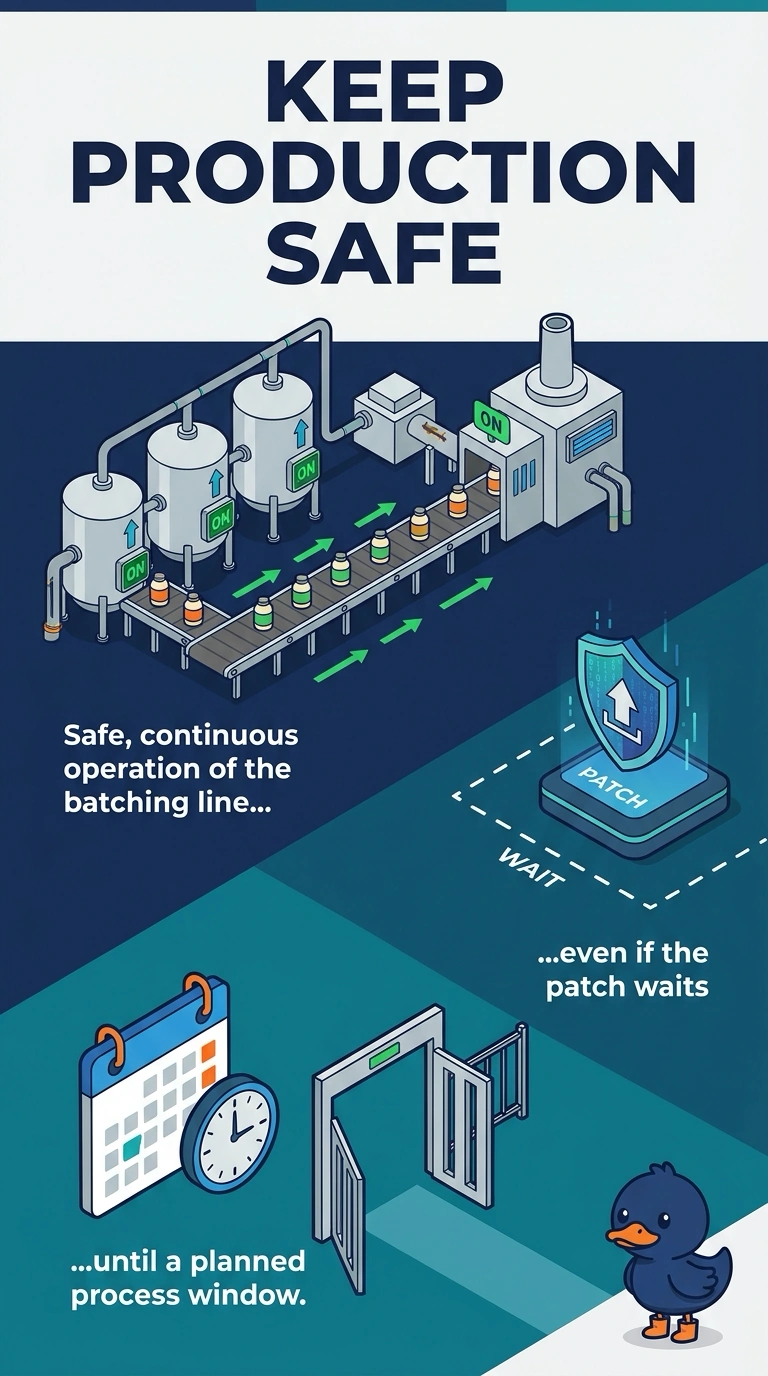
OT security still includes patching, but the order of priorities puts safe, continuous operation ahead of an office-style compliance clock. The HMI is in the supervisory path of a line that is making food right now. A noon reboot can halt the batch, spoil product, or force a manual workaround operators did not plan. The sound decision is to keep the line running and take the tested patch in a maintenance window the process owner schedules. Putting recipe confidentiality above continuity reverses the usual OT order. Confidentiality matters, and it does not by itself justify an unplanned reboot of a live HMI. A scorecard that demands same-day patching imports an IT metric into a cell that measures success by safe batches, not by how fast a dashboard turns green. Disk encryption is a separate control question. Proving it is enabled does not decide whether this reboot is safe, and it is not a prerequisite for deferring a patch. Exam caveat: emergencies differ. An active compromise of a supervisory host can justify an immediate, operations-led isolation. That is not a routine calendar patch. Operational check: tie the HMI patch to a change ticket with a line-down window, a tested image, and a back-out step before anyone reboots it.