
Engineers at a steel mill type the historian collector password into PLC programming software because it is the credential everyone remembers. Which correction fits?
Select an answer to reveal the explanation.
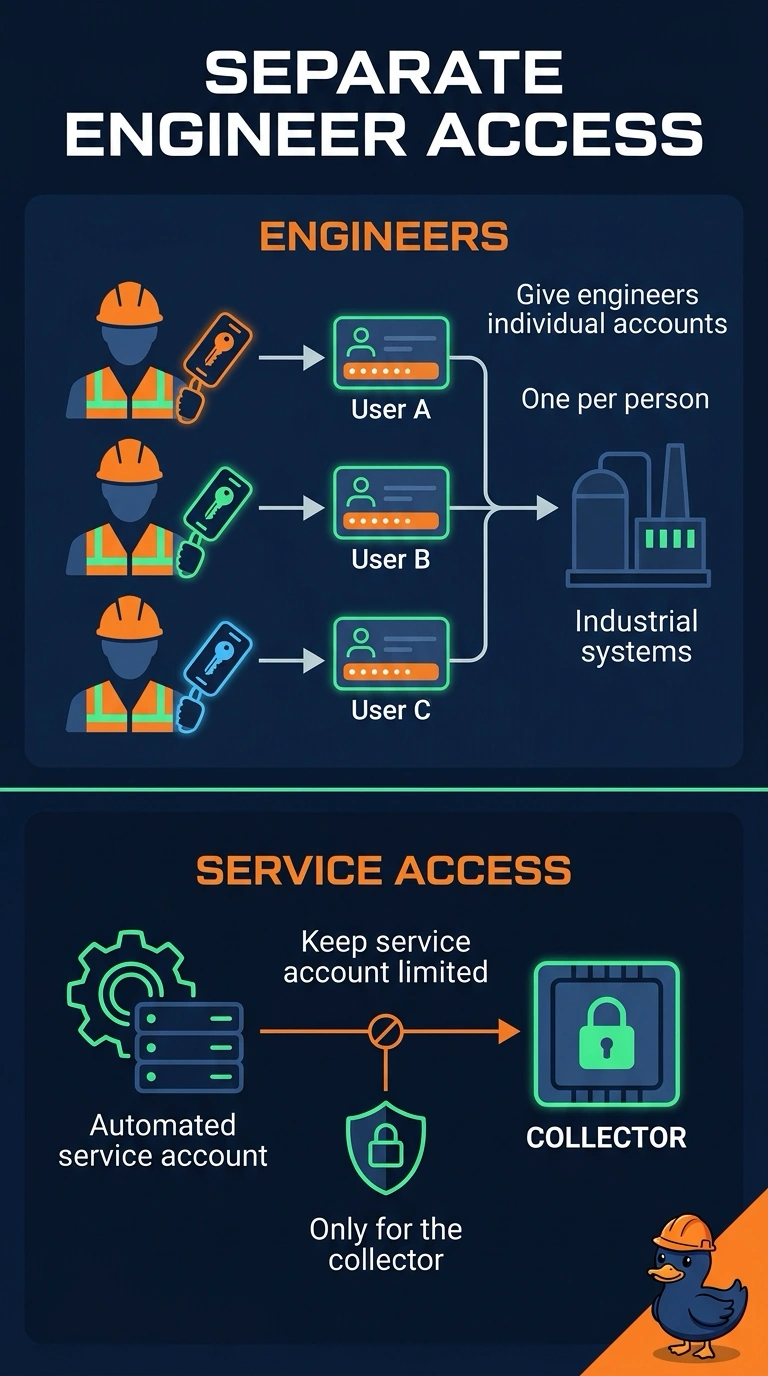
Short Explanation
A service account is a machine badge, not a spare key the whole crew carries. You give engineers their own accounts and leave the collector credential on the collector. A password in a binder turns one service into a shared human login.
Full Explanation
A service account exists so the historian collector can run as a service, not so a person can type it into programming software. Engineers need individual accounts that attribute a logic change to a person. The collector credential stays limited to the collector. Printing that password in a control-room binder and letting every engineer program with it turns the service account into a shared human login. A download can no longer be tied to one person, and anyone who can read the binder holds the collector rights. Deleting the collector account and sharing one HMI login for history removes the service identity and the personal identity together. The collector still needs a credential of its own, and the engineers still need theirs. Giving the service account the same interactive rights as every human login widens a machine identity into a general user. A collector does not need to download PLC logic. Exam caveat: the collector has to keep writing history, so the fix is not to delete the only account that service uses. Split the human logins away from it, and do not reuse its password in the programming software. Operational check: sign in as an engineer on a personal account, confirm the programming software does not store the collector password, and confirm the collector service still runs under its own account.