
An engineer was approved to download logic to one chemical-feed PLC at a water plant, then asks to program every other PLC on site during the same VPN session. Which decision fits a zero-trust rule?
Select an answer to reveal the explanation.
Short Explanation
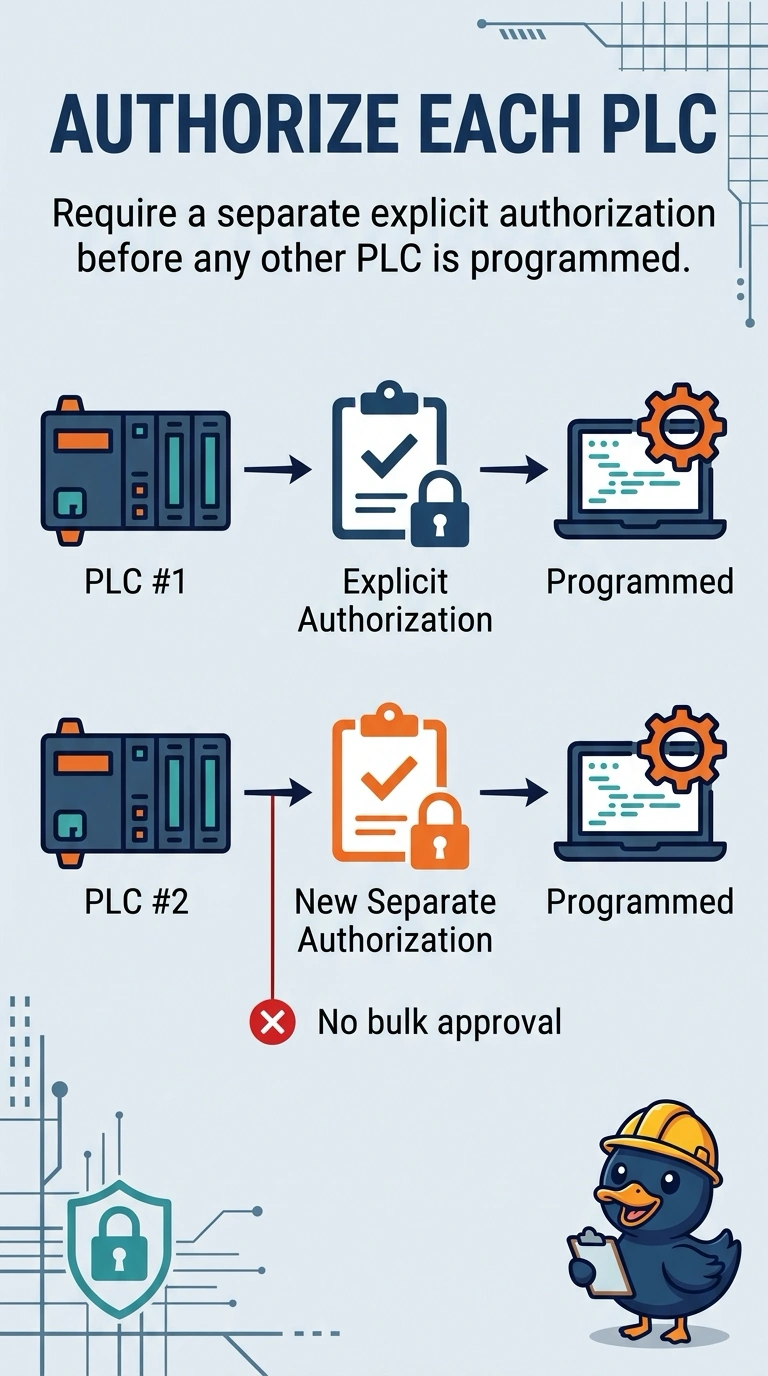
One work permit covers one machine, not every machine on the site. You need explicit authorization before programming each other PLC, even while you’re already on the VPN. Being in the control room doesn’t grant permission to download to every PLC.
Full Explanation
Zero trust treats each asset as a separate authorization decision. Approval to download logic to one chemical-feed PLC covers that PLC, not every other controller on site; each additional PLC needs its own explicit authorization before programming. Requiring separate authorization for any other PLC preserves that scope. Stretching the approval across every safety controller exceeds the approved scope and ignores the higher consequences associated with those controllers. Allowing every PLC because one VPN approval is treated as full trust for the plant restores the implicit network trust that zero trust is meant to avoid. Allowing downloads with no new approval because the laptop is in the control room confuses physical location with authorization; being there does not grant rights to every PLC. Exam caveat: if the identity service is down, a monitored break-glass path for a named engineer may be appropriate, but open permission for every PLC is not. Practical check: a test download to a second PLC without new approval should be denied and logged, while the named engineer should still be able to download to the approved chemical-feed PLC.