
A crane vendor asks a port authority to forward the PLC programming port from the public internet into a quay-crane cabinet for the weekend. Which design should replace that request?
Select an answer to reveal the explanation.
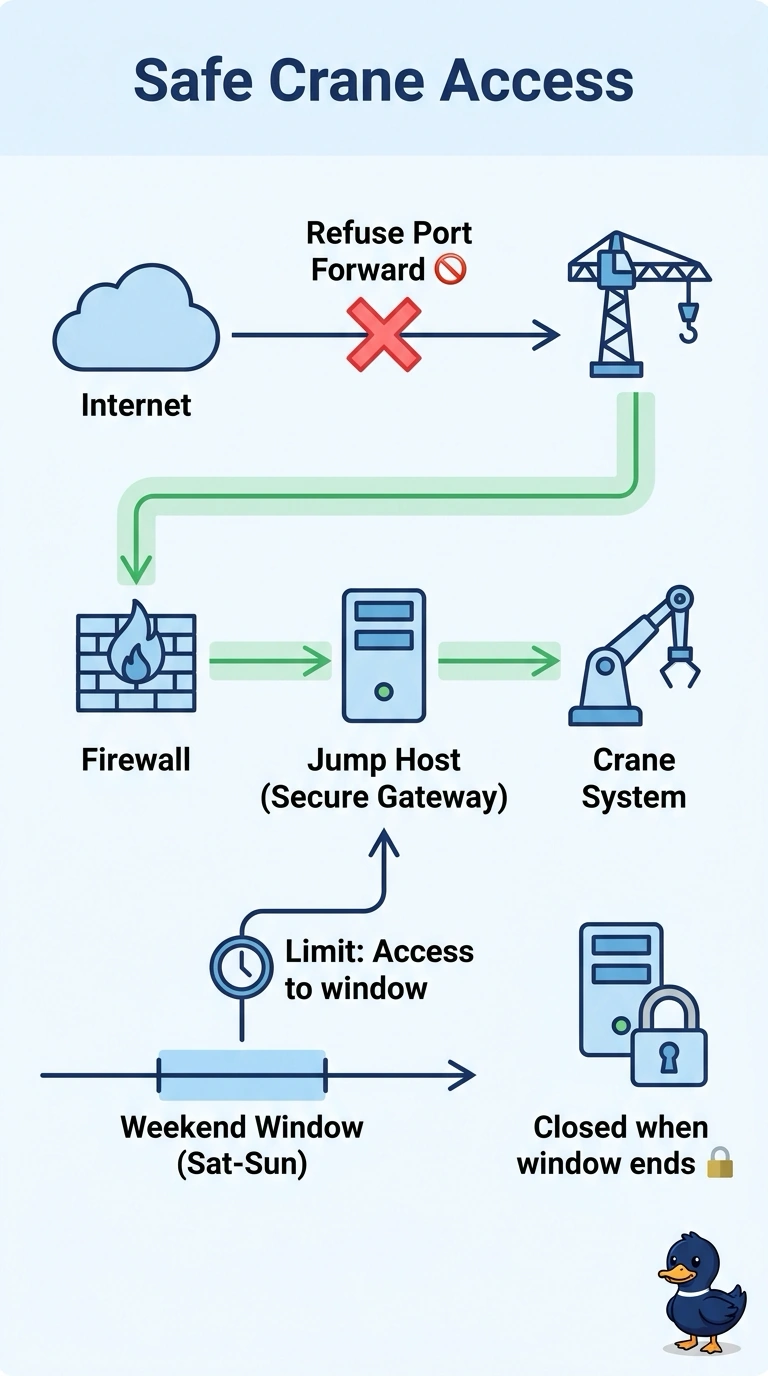
Short Explanation
You can give the vendor controlled access without exposing the crane controller: refuse the internet port forward and use a jump host that closes when the window ends. Publishing the programming port, leaving a standing internet permit, or emailing the password without recording the work each leaves an avoidable security gap.
Full Explanation
A port forward from the public internet to a PLC programming port exposes the crane controller to anyone who finds the socket for as long as the forward stays in place. Refuse that request and have the vendor connect through a jump host for the authorized weekend window; close the path when the window ends so Monday does not inherit an open door. Forwarding and publishing the programming port creates the same exposure to a wider audience. Leaving a standing permit from any internet host into the crane VLAN removes the time limit and lets the whole network be scanned. Emailing the PLC password and skipping recording gives away the credential and leaves no evidence of what the vendor changed, the opposite of a controlled remote session. Exam caveat: a jump host left available after the weekend becomes a standing door of its own; closing the window is part of the design, not a courtesy to add later. Practical check: scan the public address to confirm the programming port is not visible, then test that a session through the jump host ends when the window closes.