
A port-crane vendor turns on split tunneling so a laptop stays on the public internet while its remote session reaches the crane PLC. Which concern should shape the design?
Select an answer to reveal the explanation.
Short Explanation
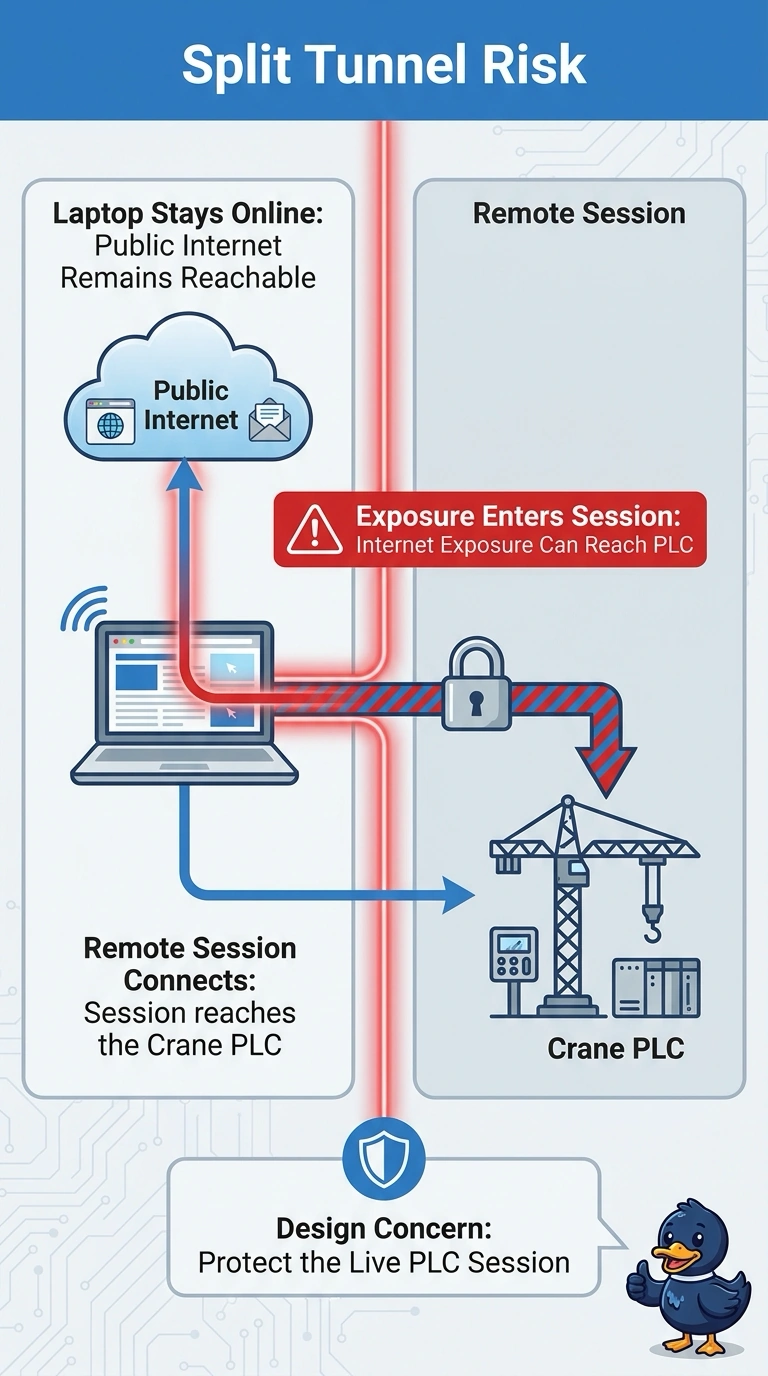
Split tunneling leaves the vendor laptop with one foot in the crane session and one foot on the public internet. You do not want that posture on a live programming path. A one-way device cannot carry the interactive work, and skipping the recording does not fix the split.
Full Explanation
Split tunneling keeps some of the laptop's traffic on the public internet while the remote session still reaches the crane PLC. The laptop is therefore exposed to the internet at the same time it holds a live plant session, and a compromise of that laptop can ride into the session. That is the concern that should shape the design. The crane PLC does not need to learn public internet routes from the vendor laptop. Teaching it those routes would widen the controller's view of the internet, which is not a requirement of remote maintenance. Recording stays necessary. The vendor's choice of laptop does not replace an audit of what happened in the session. A data diode cannot carry an interactive programming session, because that work needs replies, and using a diode as an excuse to leave the split path up solves neither problem. Exam caveat: split tunneling is sometimes chosen on an ordinary enterprise VPN to save bandwidth. A session that reaches a crane PLC is not that case, and the endpoint should not sit on the public internet while it does. Operational check: the vendor session should show the laptop's non-plant traffic forced through the controlled path, the session recorded, and no direct internet path left up for the duration.