
A vendor wants a VPN into a packaging cell while their laptop keeps a direct path to the internet. Which decision fits?
Select an answer to reveal the explanation.
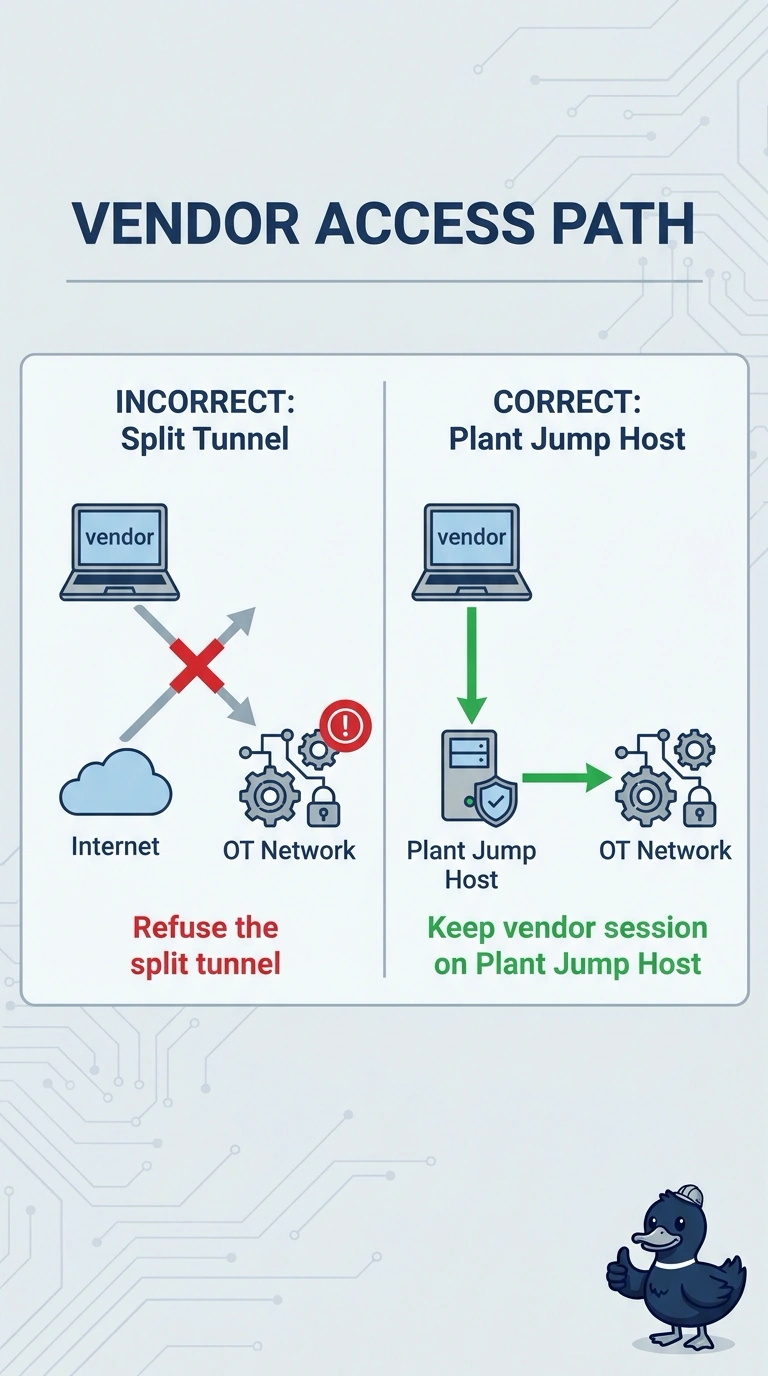
Short Explanation
A split tunnel is a laptop with one foot in the plant and one foot on the public sidewalk. You refuse that design and keep the vendor on the jump host. The trap is calling internet browsing a harmless extra.
Full Explanation
A split-tunnel VPN lets the vendor laptop talk to the cell and to the internet at the same time. Anything that compromises that laptop then has a path inward without passing a plant-controlled desktop. The jump host is the broker: the vendor sees a screen, and their own laptop never sits on the cell. Allowing the split, or aiming it at the PLC VLAN, is the exposure you are refusing. Publishing the programming port removes the broker and the tunnel together. The caveat is that a fully tunneled, time-boxed path to the jump host can still be approved. The check is the remote-access policy and the live session: the vendor address should be on the jump host, not on a PLC subnet. Put the before-and-after evidence in the work order, including the interface or account you changed, the time, and the person who approved it. On the next shift, confirm the original symptom is gone and that the change did not open a second path while closing the first. If the process is still inside a live batch, leave the controller running and finish only the part of this work that does not restart it. That sequence keeps a correct fix from turning into an unplanned outage.