
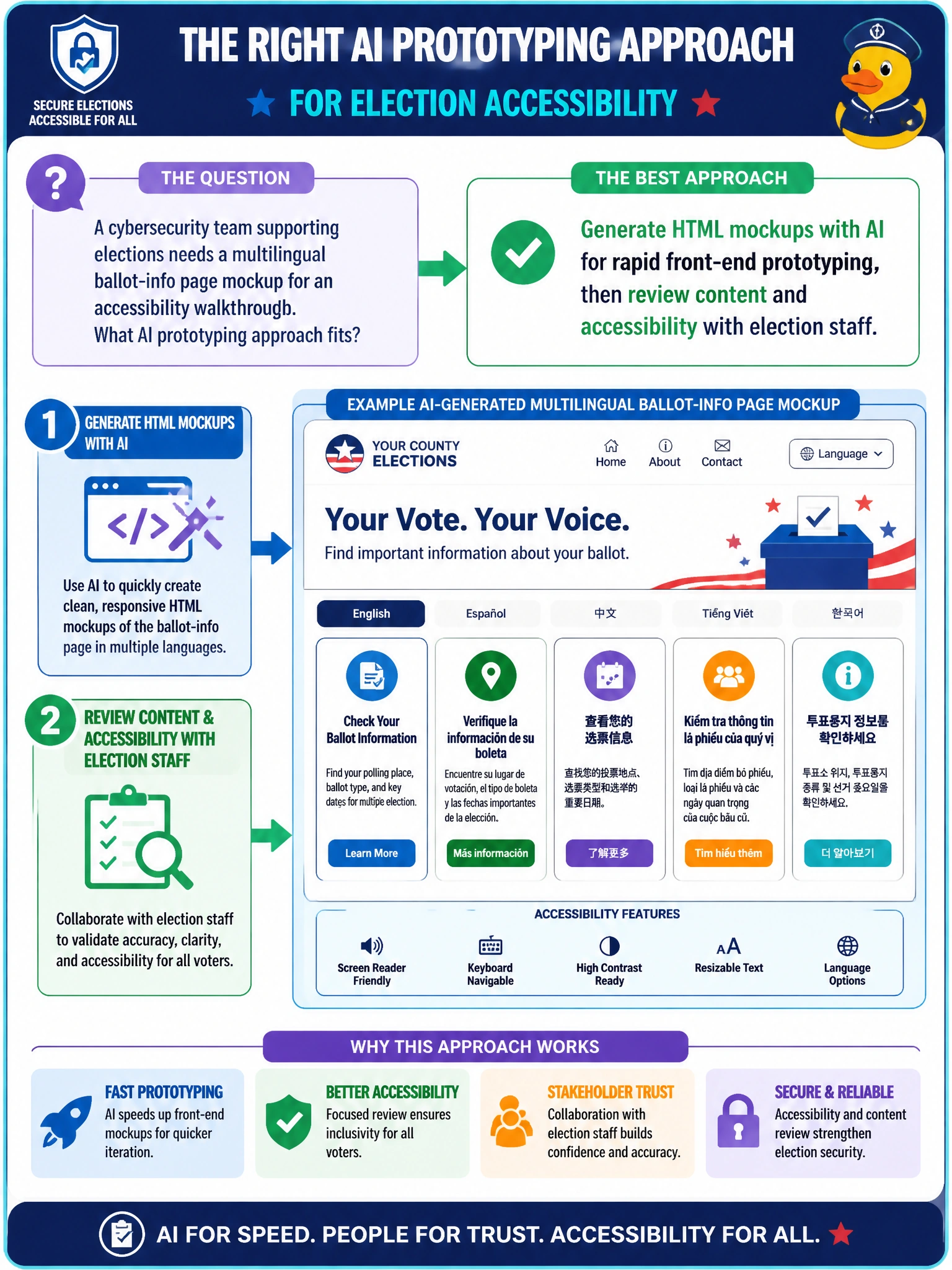
A cybersecurity team supporting elections needs a multilingual ballot-info page mockup for an accessibility walkthrough. What AI prototyping approach fits?
Select an answer to reveal the explanation.
Short Explanation
Need a multilingual ballot-info mockup for a walkthrough? Generate the HTML shell, then election staff and accessibility reviewers own the content—mockups are not the certified ballot site.
Full Explanation
For elections cybersecurity supporting a multilingual ballot-info page, AI prototyping should generate HTML mockups for rapid front-end review, then election staff must review content and accessibility before any official use. Mockups accelerate walkthroughs of language toggles, layout, and accessibility paths without waiting on full CMS procurement. The correct approach keeps the mockup in review land—election officials own ballot-related content accuracy, and a mockup is never the certified public ballot information site.
Waiting for a full CMS procurement before any HTML mockup can exist fails because early accessibility walkthroughs need disposable artifacts, not completed procurements. Claiming AI cannot generate static HTML mockups fails by concept: static HTML generation is a common and suitable assist for rapid front-end prototyping. Deploying the mockup as the official ballot site without election official review fails on election integrity and content authority—unreviewed generative content must not become official voter information.
Exam caveat: multilingual mockups can look complete while mistranslating election dates, precinct rules, or eligibility language. Accessibility review must include language switching and screen-reader behavior, not only visual layout.
Operational check: generate the HTML mockup with AI, label it non-official, review every language string with election staff, run accessibility checks, and only then decide whether to rebuild the approved content in the official CMS—never promote the mockup itself to the certified ballot-info URL.