
A records retention office has a clerk’s spreadsheet macro idea for folder naming and wants a first script draft. How should AI help?
Select an answer to reveal the explanation.
Short Explanation
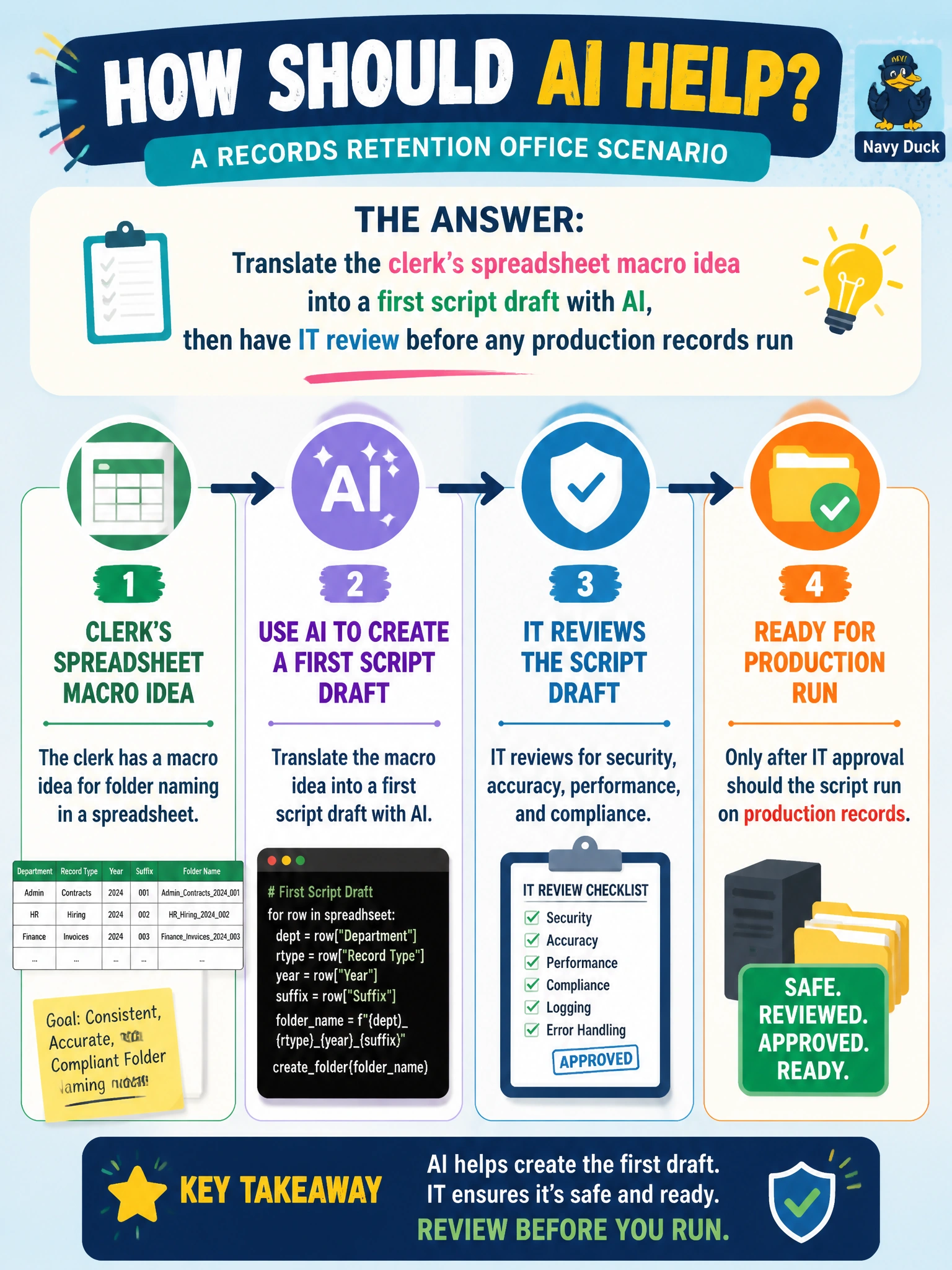
Clerks know the naming pain; AI can turn that macro idea into a first script. IT still reviews before anything touches the real archive—first drafts are not overnight archive jobs.
Full Explanation
AI helps a records retention office when it translates a clerk’s spreadsheet macro idea for folder naming into a first script draft that IT reviews before any production records run. Clerks understand naming pain and retention folder conventions; AI accelerates turning that process knowledge into runnable sketch code. The correct sequence honors frontline expertise, generates a draft, and requires IT review—because first drafts are not overnight jobs against the historical archive.
Running the first unreviewed draft against the entire historical records archive overnight fails because bulk renaming or filing scripts can irreversibly misfile records, break retention clocks, or destroy audit trails. Ignoring the clerk’s process knowledge and inventing an unrelated renaming scheme fails by concept: generative convenience must not discard the operational expertise that makes retention schemes workable. Emailing generated scripts with embedded archive credentials to a public listserv fails on security—credentials and privileged automation must never ride in public distribution channels.
Exam caveat: even “simple” naming scripts can collide with legal holds, sealed records, or department-specific retention series. IT review should include a dry run on a small disposable sample set and a rollback plan before touching production archives.
Operational check: generate the script from the clerk’s macro idea, remove any embedded credentials, peer-review with records and IT, test on a sample folder tree, confirm logging of renames, and only then schedule a controlled production window—not an unattended overnight archive sweep.