
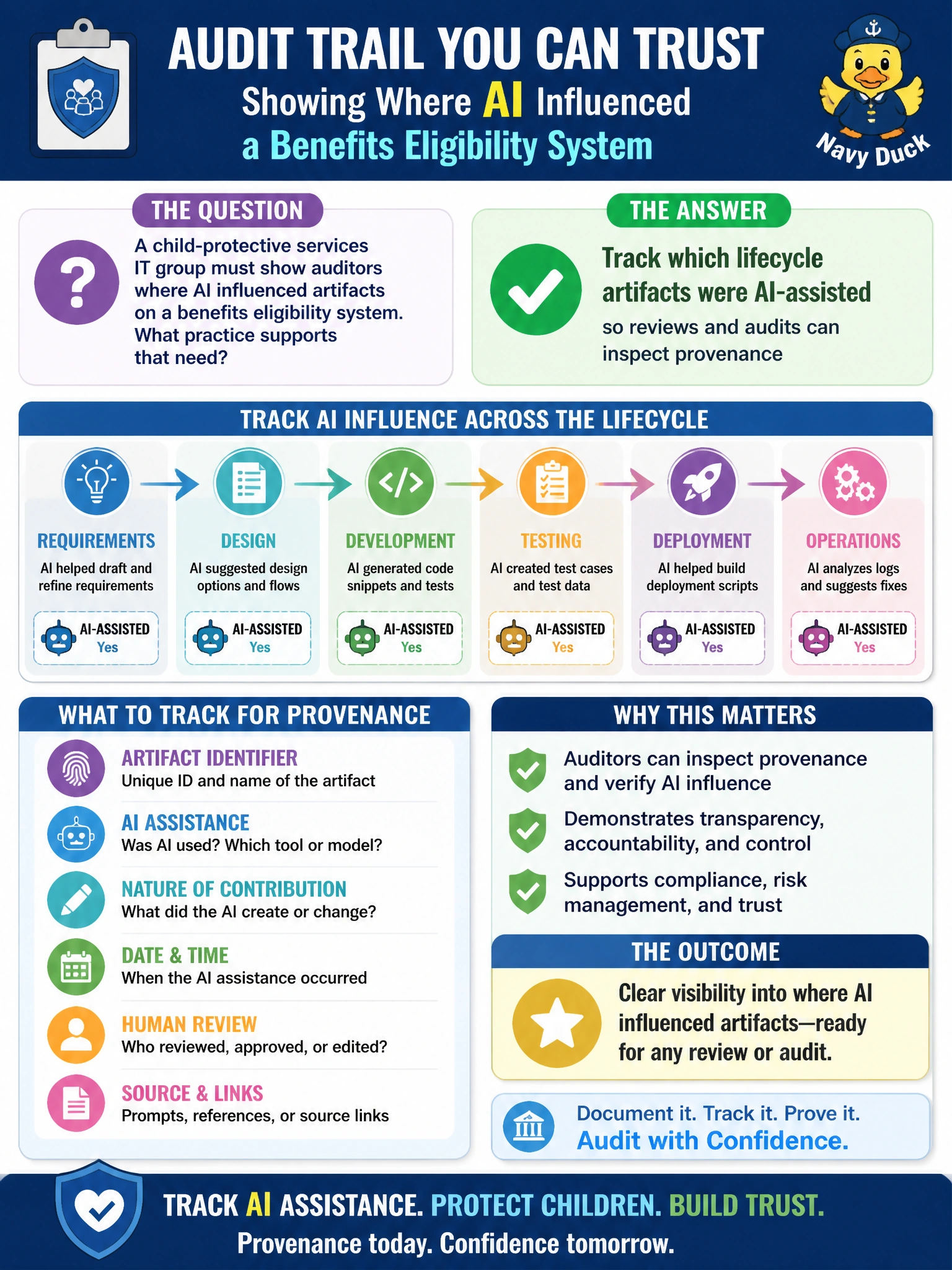
A child-protective services IT group must show auditors where AI influenced artifacts on a benefits eligibility system. What practice supports that need?
Select an answer to reveal the explanation.
Short Explanation
Auditors ask ‘who touched this?’ including the model. Tag AI-assisted requirements, code, and tests so provenance is honest—not a mystery novel.
Full Explanation
A child-protective services IT group supporting a benefits eligibility system should track which lifecycle artifacts were AI-assisted so reviews and audits can inspect provenance. Auditors ask who and what influenced requirements, code, tests, and documentation—including generative tools. The correct practice records assistive use at artifact level so humans can re-examine high-risk outputs, reproduce decisions, and demonstrate governance rather than implying every line was purely human-authored when it was not.
Hiding AI involvement so auditors assume full human authorship fails because concealment destroys trust and can constitute an audit finding when assistive use is material. Allowing AI to rewrite audit logs after the fact fails by concept: logs are evidence; generative alteration of evidence is a control failure, not a documentation convenience. Claiming SDLC tools cannot store provenance and therefore storing none fails because even lightweight tags, PR labels, or template fields can record assistive use—perfection is not required to start honest tracking.
Exam caveat: provenance tracking should be risk-proportionate—deep detail on authentication and eligibility logic, lighter notes on purely cosmetic copy—so the program remains sustainable. Also distinguish AI-assisted drafts from AI-approved decisions; recording assist is not the same as granting the model authority.
Operational check: add an AI-assist flag to requirements, code reviews, and test artifacts; retain prompts or summaries for high-risk changes where feasible; and brief auditors on how to query which eligibility-system artifacts used generative help.