
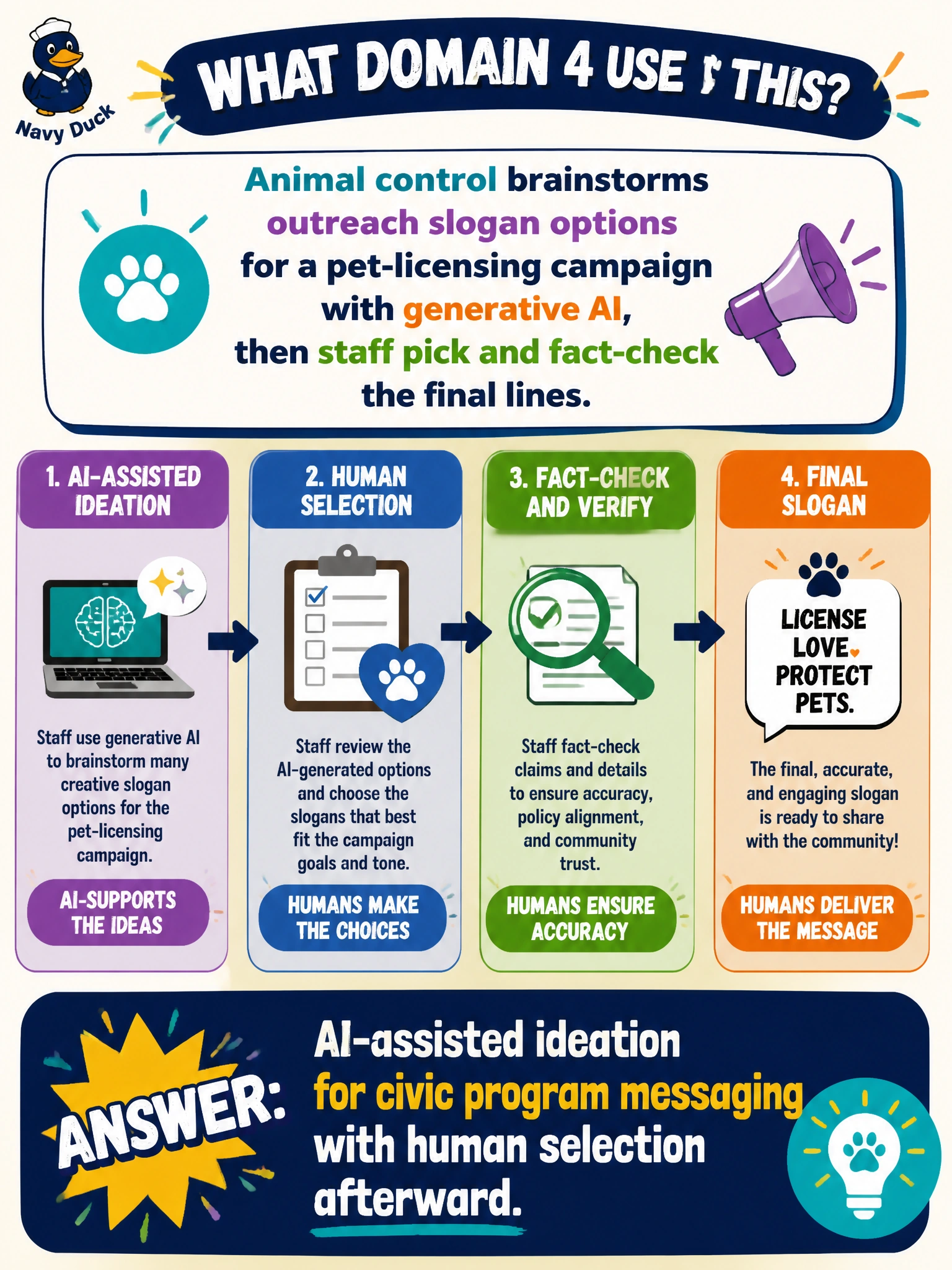
Animal control brainstorms outreach slogan options for a pet-licensing campaign with generative AI, then staff pick and fact-check the final lines. What Domain 4 use is this?
Select an answer to reveal the explanation.
Short Explanation
You can let AI fill the sticky-note wall with pet-licensing slogans, then have staff choose and fact-check what goes on the van—that’s ideation with people in control. Keep citation decisions, legal review, and confidential case photos out of that process.
Full Explanation
Using generative AI to brainstorm pet-licensing slogans, then having staff select and fact-check the final lines, is AI-assisted ideation for civic program messaging: the model expands the option space while people retain editorial, legal, and brand control. This is an appropriate way to support campaign messaging, provided staff review the output before publication. Autonomous issuance of citations based on slogan sentiment fails because citations are legal acts requiring authorized processes, not marketing-model sentiment scores. Replacing the city attorney with an unedited slogan model fails because legal review of claims, fees, and ordinances cannot be outsourced to an unreviewed draft. Using confidential bite-report photos to train a diffusion model for campaign ads without consent fails because confidential case imagery is not an advertising training corpus and creates privacy and evidentiary risks. Exam caveat: generated slogans can fabricate program rules, including fees, deadlines, and breed policies, so fact-check them against adopted ordinances before publishing; multilingual campaigns need qualified review rather than raw model translation alone. Practical check: Generate candidates in an approved tool without confidential case photos, have program and communications staff shortlist them, verify claims against licensing rules, and publish only after review. Keep citation systems entirely separate from marketing ideation workflows.