
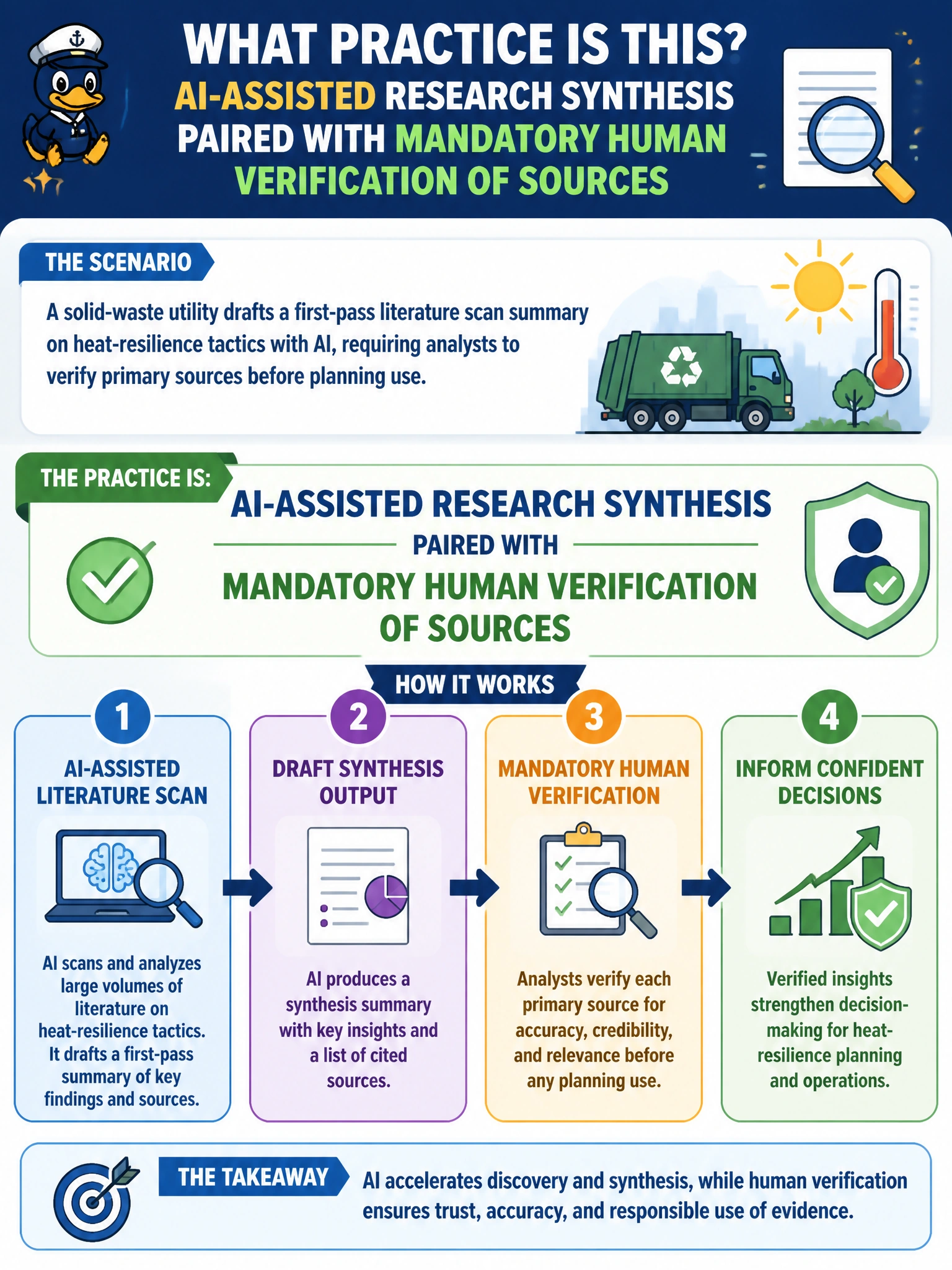
A solid-waste utility drafts a first-pass literature scan summary on heat-resilience tactics with AI, requiring analysts to verify primary sources before planning use. What practice is this?
Select an answer to reveal the explanation.
Short Explanation
A first-pass literature scan is a trail map, not the summit photo. AI can draft the summary; analysts still open the real sources before anything becomes a plan. Confident tone is not a footnote.
Full Explanation
Drafting a first-pass literature scan on heat-resilience tactics with AI while requiring analysts to verify primary sources before planning use is AI-assisted research synthesis paired with mandatory human verification. Solid-waste and other municipal utilities can accelerate horizon scanning for climate-resilience practices, but adopted plans and board materials must rest on checked sources—not on confident uncited model prose. The practice preserves speed without surrendering evidence standards.
Accepting every citation the model invents without checking fails because generative models commonly fabricate references and misattribute findings. Skipping peer or expert review because the summary sounded confident fails by concept: tone is not evidence; heat-resilience tactics implicate safety, equity, and budget. Publishing the raw AI scan as adopted board policy the same day fails because policy adoption requires governance, verification, and often public process—not same-day paste from a draft synthesis.
Exam caveat: Literature scans may skew toward English web-prominent sources and miss local climate, labor, or regulatory constraints. Verification means opening primary documents, not merely asking the model to “confirm” its own footnotes.
Operational check: Treat the AI scan as a lead list, retrieve and read primary sources, capture verified citations in the agency knowledge base, run subject-matter review, and only then draft planning options for leadership. Reject any workflow that promotes raw model text directly to board policy.