
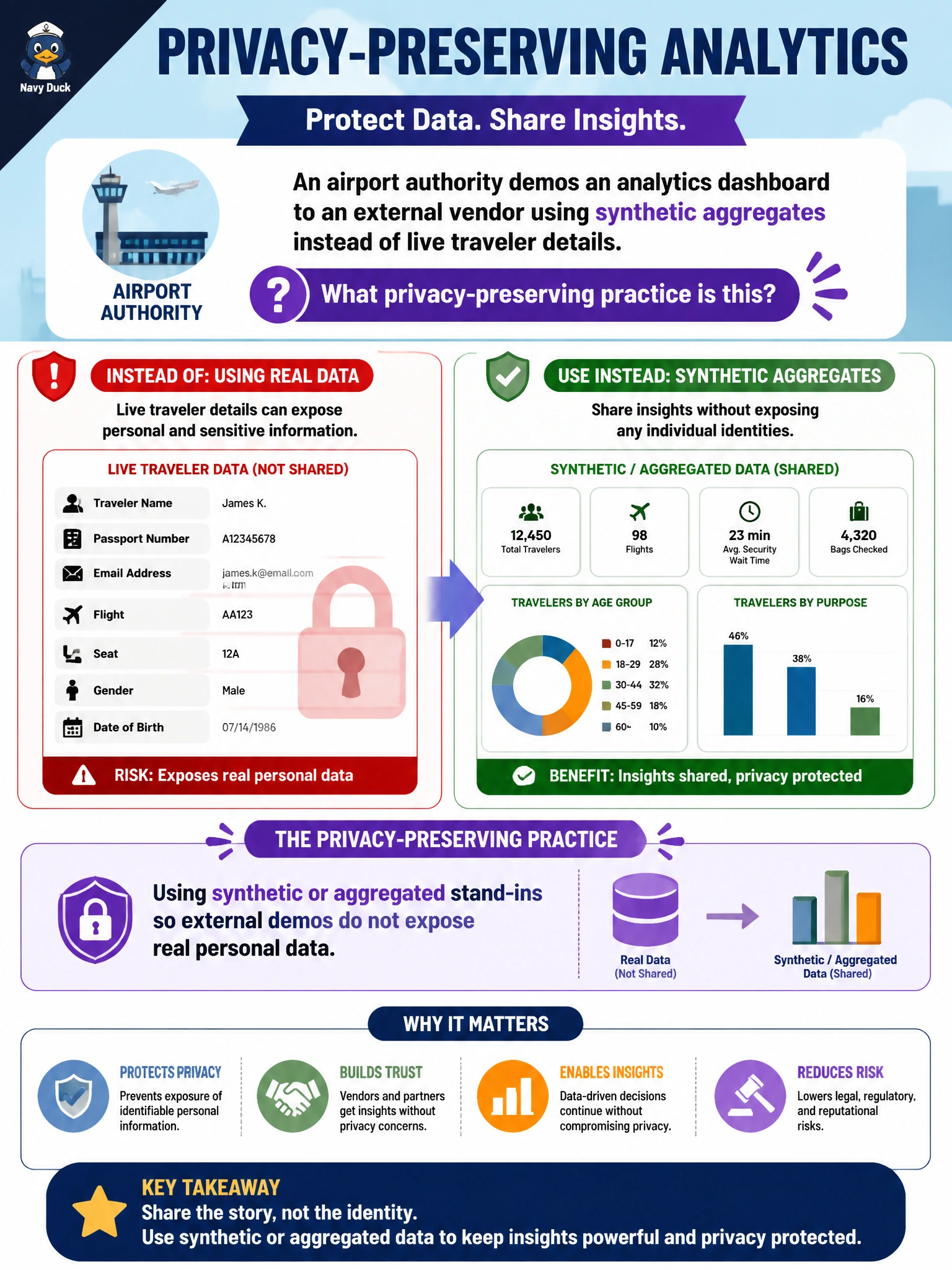
An airport authority demos an analytics dashboard to an external vendor using synthetic aggregates instead of live traveler details. What privacy-preserving practice is this?
Select an answer to reveal the explanation.
Short Explanation
External demos are show-and-tell, not a data dump. Synthetic aggregates let the dashboard look real without handing vendors actual traveler lives. Realism never requires shipping the passenger file.
Full Explanation
Demoing an analytics dashboard to an external vendor with synthetic aggregates instead of live traveler details is a privacy-preserving practice: stand-in data lets the airport authority show functionality without exposing real personal data. Synthetic or aggregated demo datasets reduce breach and contract risk during procurement and integration discussions. External showcases should default to non-live personal data whenever realism does not require it.
Sharing full passenger name records to make the demo realistic fails because PNRs are highly sensitive and unnecessary for most UI walkthroughs. Turning off vendor NDAs because synthetic data needs no controls fails by concept: demos still involve systems architecture, credentials, and sometimes residual risk—contracts and access controls remain relevant. Exporting raw badge logs into the vendor’s unmanaged laptop folder fails as an exposure anti-pattern even when the meeting topic is analytics visualization.
Exam caveat: Synthetic data can still overfit rare real patterns if poorly generated; validate that demo sets lack recoverable live traveler identity. Aggregates with small cells may need suppression. NDAs complement—but do not replace—technical minimization.
Operational check: Maintain a labeled synthetic/aggregate demo environment, prohibit live PNR or badge exports to unmanaged devices, keep NDAs and least-privilege access for vendors, and scrub screenshots before external sharing. Confirm the demo narrative never requires opening production traveler tables.