
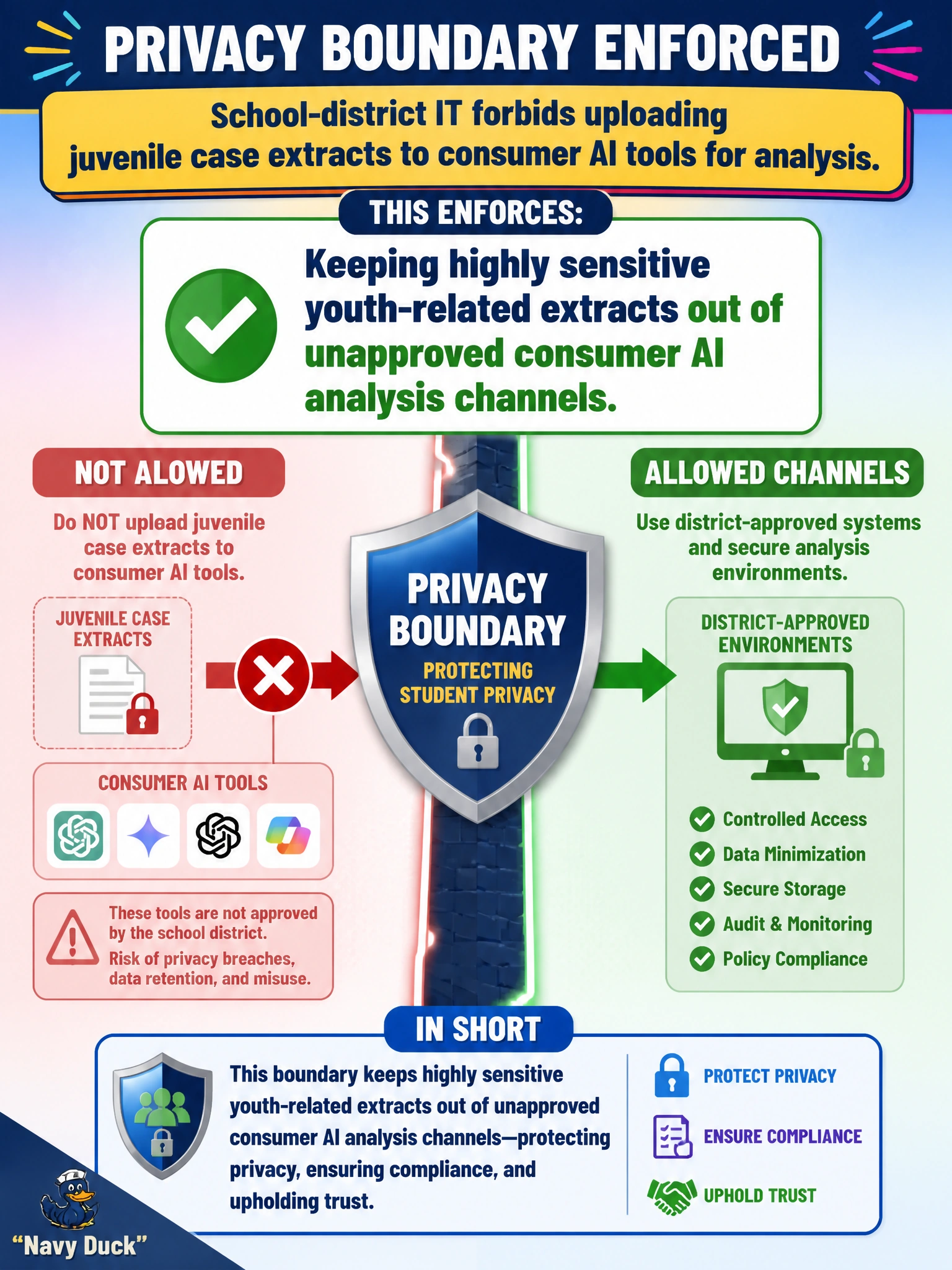
School-district IT forbids uploading juvenile case extracts to consumer AI tools for analysis. What privacy boundary is this enforcing?
Select an answer to reveal the explanation.
Short Explanation
You’re right to treat juvenile case extracts as too sensitive for unapproved consumer AI tools. Blocking those uploads protects a privacy boundary; it isn’t red tape, and free web chatbots aren’t a FERPA program office.
Full Explanation
Forbidding uploads of juvenile case extracts to consumer AI tools enforces a hard privacy boundary: highly sensitive youth-related education or justice data must stay out of unapproved consumer analysis channels. The concern is the channel and custody of the data, not a ban on all analytics in approved systems. Requiring all juvenile records to be posted publicly for transparency fails because youth privacy law and ethics prioritize confidentiality over indiscriminate disclosure. Allowing any teacher to paste case files into free web chatbots fails because it creates uncontrolled third-party processing of sensitive minors’ data. Assuming a consumer AI provider’s terms of service offer safeguards equivalent to district FERPA controls fails because consumer terms do not replace an institutional education-privacy compliance program. Exam caveat: “Consumer AI” can include browser plugins and personal mobile apps staff use off-network, so policy must address practical bypasses; an approved enterprise tool with contractual safeguards is a different control path. Practical check: Block consumer AI domains on district networks where feasible, train staff with concrete examples, provide an approved analytics environment for legitimate research, and audit data-loss-prevention alerts for juvenile-data pastes. Document that transparency goals never require publicly posting juvenile case extracts.