
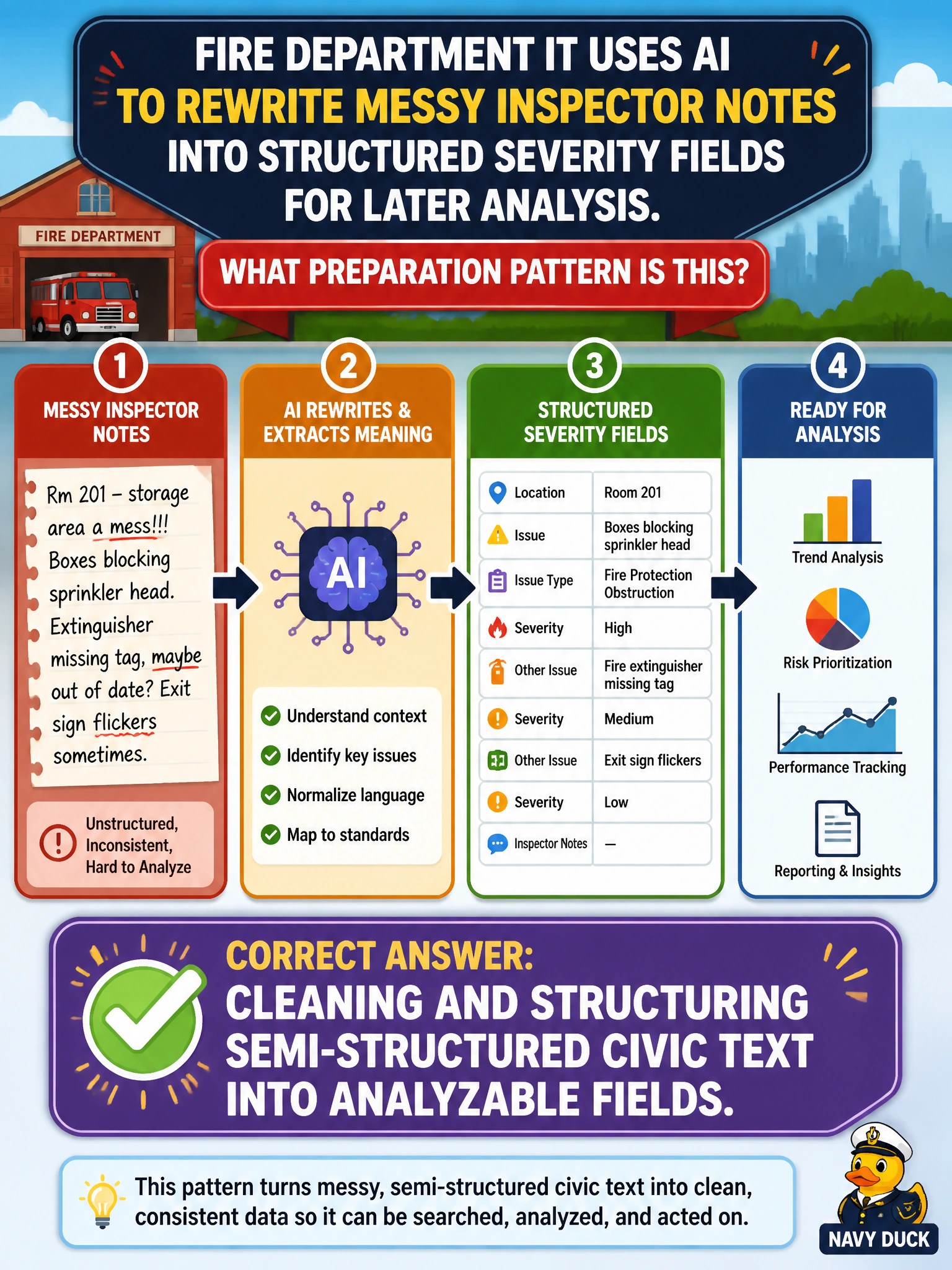
Fire department IT uses AI to rewrite messy inspector notes into structured severity fields for later analysis. What preparation pattern is this?
Select an answer to reveal the explanation.
Short Explanation
Inspector notes are often a novel; severity fields are the index card. AI can help pull structured severity out of messy prose so trends are countable. Structure the data—do not outsource guilt findings or leak notes to random chat tools.
Full Explanation
Rewriting messy inspector notes into structured severity fields is a cleaning-and-structuring preparation pattern: semi-structured civic text is transformed into analyzable coded fields so fire-department trends, workload, and risk summaries become countable. AI assists extraction and mapping into an approved severity schema while source notes remain available for audit. The goal is analytical structure, not legal adjudication inside the prep job.
Deleting inspector notes so only photos remain fails because narrative context supports appeals, training, and quality review; structuring should not destroy source text. Letting the model assign legal guilt in each note fails by concept: guilt and liability are legal determinations outside automated prep field extraction. Publishing raw notes to a consumer chatbot for fun fails on confidentiality—inspection narratives often contain sensitive property and personal details and must stay in approved systems.
Exam caveat: Severity extraction can inherit inspector bias or model hallucination; keep human override and retention of original notes. Structured fields enable analysis but are not a substitute for full investigative files when stakes are high.
Operational check: Extract severity into staging with confidence scores, sample against original notes, retain raw text under access control, block consumer-tool uploads, and forbid any prep output labeled as a legal guilt finding. Promote only validated mappings to the analytics warehouse.