
Fleet management wants departments to stop spinning up shadow GenAI pilots without review. What governance mechanism helps?
Select an answer to reveal the explanation.
Short Explanation
An intake checklist is the city’s on-ramp: purpose, data, tools, risks—then a yes before anyone floors it. Personal credit-card chatbots are how shadow AI becomes a fleet of problems.
Full Explanation
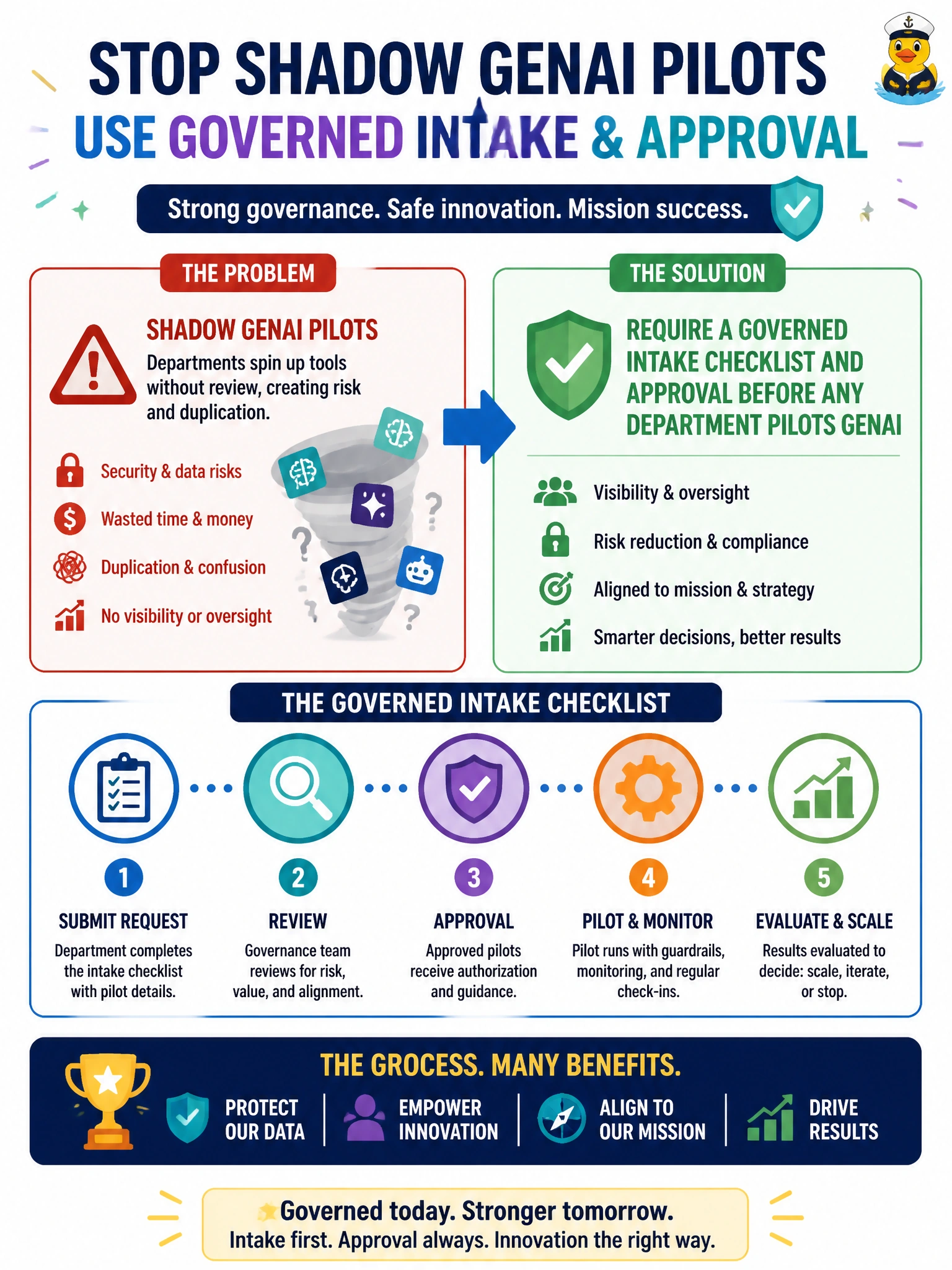
Fleet management can curb shadow GenAI pilots by requiring a governed intake checklist and approval before any department pilots GenAI. Intake standardizes purpose, data sensitivity, tool selection, vendor terms, risks, and owners so leadership can approve, condition, or deny before resident or employee data is exposed. That mechanism converts ad-hoc experimentation into a governed pipeline without banning useful civic innovation across shops and yards.
Encouraging each shop to buy a different consumer chatbot with a personal credit card maximizes shadow IT, weakens contracts, and scatters sensitive civic data across unmanaged vendors. Hiding the AI policy on an unlinked intranet page undermines awareness and compliance. Approving pilots only after a public failure has already occurred is reactive governance that accepts preventable harm as the entry ticket to oversight.
Exam caveat: intake and approval is a gate before pilot—not a claim that every GenAI idea must be rejected. Operational check: publish a short checklist covering purpose, data, tool, risks, and owner; route it through a named approver; inventory existing shadow tools for remediation; and track cycle time so intake does not become an informal veto by delay.