
A budget office is preparing to launch a resident benefits chatbot. What compliance step should governance require before go-live?
Select an answer to reveal the explanation.
Short Explanation
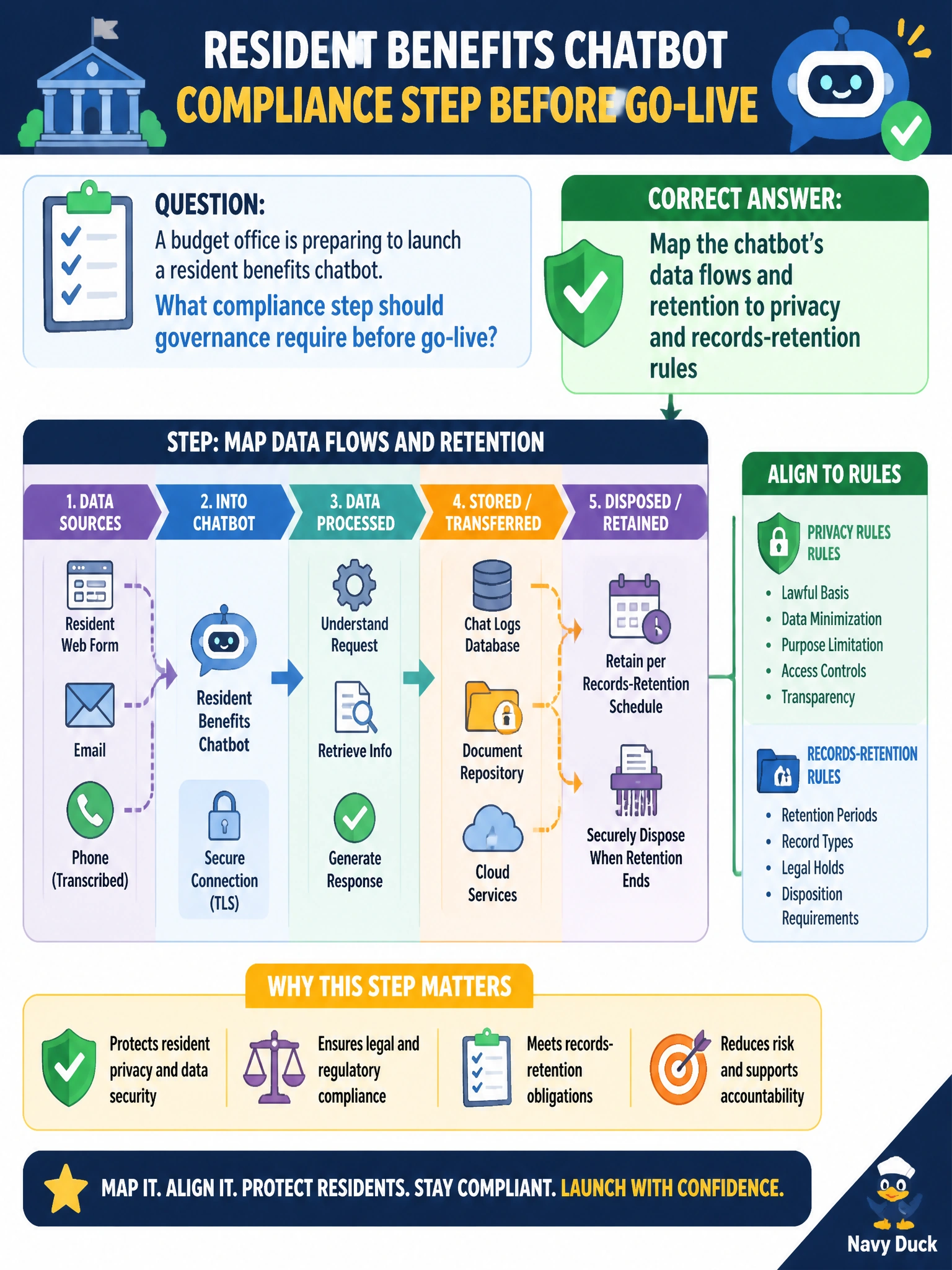
Before the chatbot answers a benefits question, map where the words go and how long they stick around. Privacy and records rules still apply when the clerk is silicon.
Full Explanation
Before a budget office launches a resident benefits chatbot, governance should require mapping the chatbot’s data flows and retention to privacy and records-retention rules. Prompts, retrieved case snippets, transcripts, and logs can contain resident PII and may constitute records under municipal retention schedules. Mapping sources, processors, storage locations, retention periods, and deletion paths demonstrates that the silicon clerk still obeys the same privacy and records obligations as a human benefits window.
Skipping retention review because chat transcripts are never records is a false assumption; many jurisdictions treat substantive citizen–agency interactions as records regardless of channel. Storing every prompt forever in an unsecured shared drive maximizes exposure and retention violations for convenience. Assuming privacy law does not apply to municipal chatbots has no sound basis when the bot processes resident data for government services.
Exam caveat: compliance mapping is a pre-go-live governance step; it complements security testing and content accuracy checks rather than replacing them. Operational check: diagram data flows end to end, classify transcript retention, confirm vendor processing and training-use terms, obtain privacy and records sign-off, and re-validate the map after any major model or logging change.