
A fire department IT team is asked to let an AI deny resident assistance benefits with no human review. What responsible deployment boundary should they set?
Select an answer to reveal the explanation.
Short Explanation
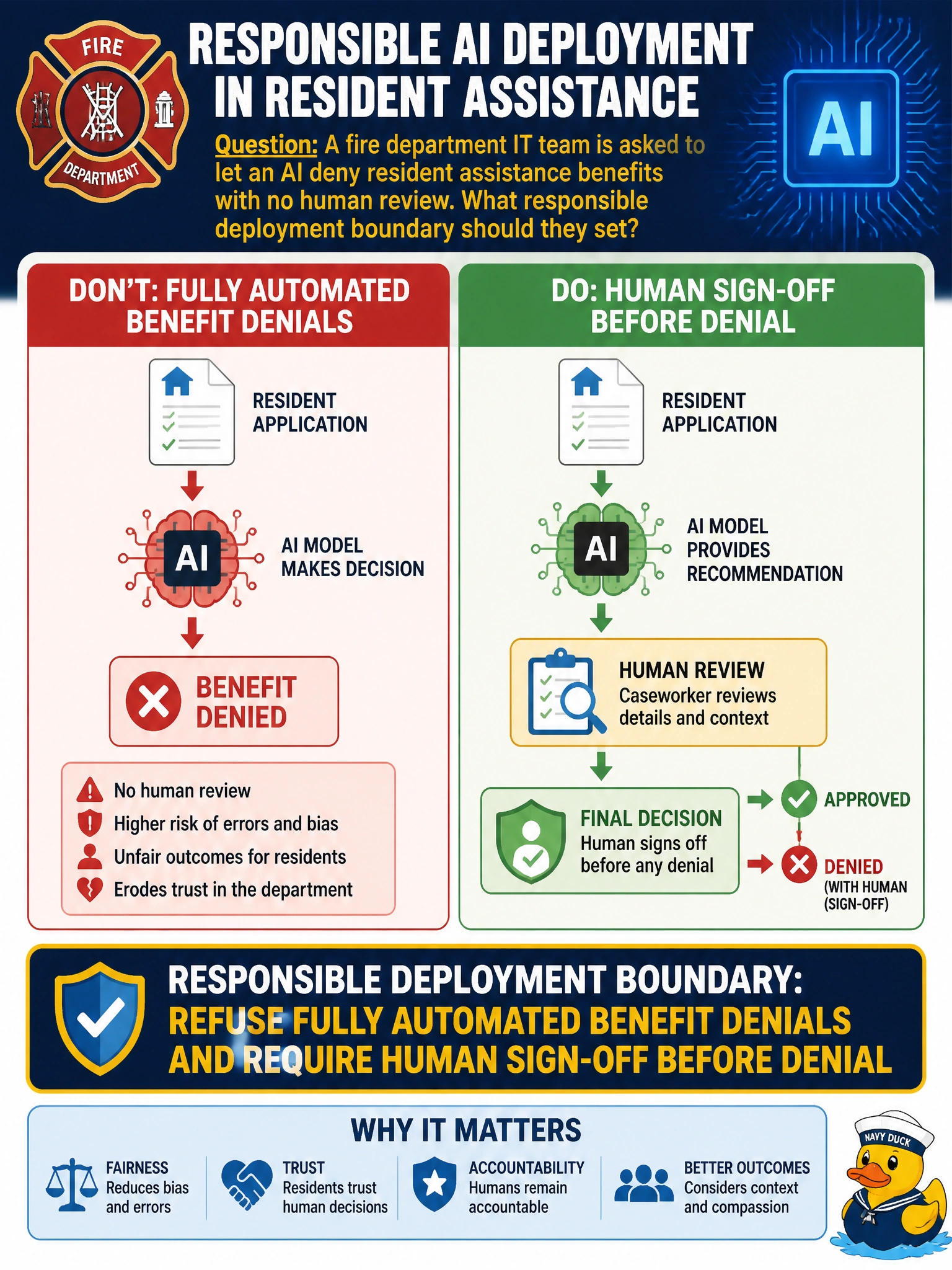
Denying someone’s benefits is not a place for autopilot. Keep a human hand on the stamp—AI can draft, but a person signs the denial.
Full Explanation
Denying resident assistance benefits is a high-impact adverse action with due-process and equity consequences. Responsible deployment boundaries refuse fully automated denials and require human sign-off before a denial is issued, even if an AI system ranks cases or drafts a recommendation. That control protects residents from model error, biased training signal, and unreviewable automation while still allowing AI for triage, checklist support, or paperwork under staff authority in the fire department’s assisted programs.
Allowing fully automated denials whenever confidence exceeds a threshold treats a score as a rights decision and invites brittle cutoff gaming. Publishing denials under the model’s name with no staff contact blocks accountability and appeal. Outsourcing denials to an unmonitored public chatbot abandons municipal duty of care, privacy, and records controls.
Exam caveat: "human in the loop" fails if reviewers lack time, training, or authority and merely rubber-stamp every model suggestion. Meaningful human control requires the ability and incentive to disagree.
Operational check: define denial workflows where the UI requires an authenticated staff decision, log the human actor and rationale, and audit a sample of denials for meaningful review—not mere clicks through a default "agree with model" path—before expanding automation.