
A police records bureau is drafting AI use principles for internal summarization tools. How should those principles connect to existing city policy?
Select an answer to reveal the explanation.
Short Explanation
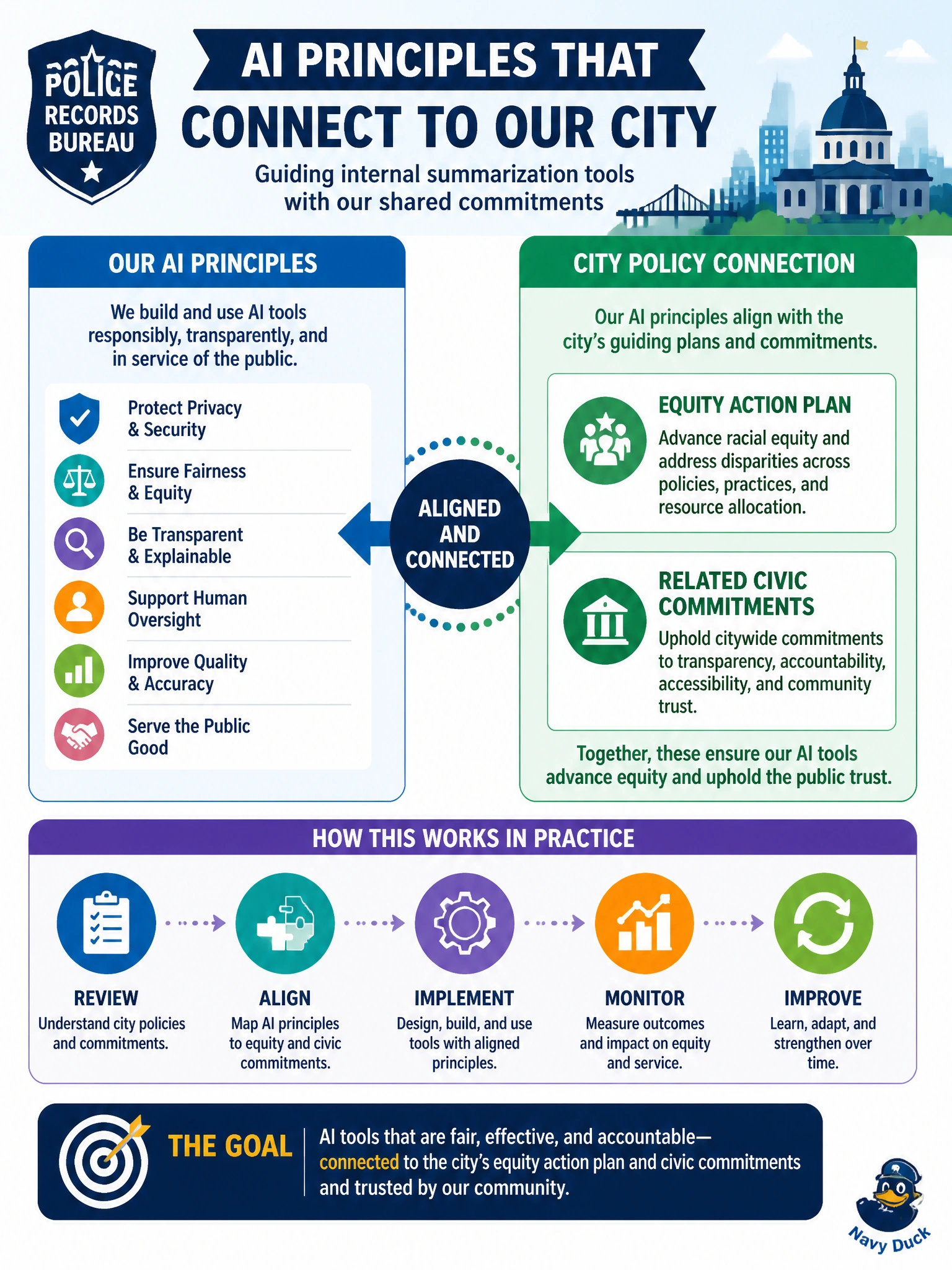
AI principles shouldn’t live on a lonely shelf. Tie them to the city’s equity action plan so the bureau’s tools and the city’s fairness promises pull in the same direction.
Full Explanation
AI use principles for a police records bureau’s internal summarization tools should not float as isolated ethics posters disconnected from city hall. Responsible practice aligns those principles with the city’s equity action plan and related civic commitments—privacy, nondiscrimination, records retention, discovery obligations, and public-service standards—so tool rules reinforce existing policy instead of competing with it. Alignment makes principles actionable in procurement, training, access control, and audit for records workflows.
Writing AI rules that deliberately conflict with the equity action plan creates governance collision and selective compliance. Treating AI ethics as optional wallpaper unrelated to city goals yields noncompliance when operational pressure rises. Deferring all equity questions until after tools are permanently live bakes harm and retrofit cost into production.
Exam caveat: alignment on paper still fails without mapped controls, owners, and metrics tied to each principle. Principles that cannot be tested in an acceptance checklist will not survive deployment tradeoffs.
Operational check: crosswalk each AI principle to a concrete city policy clause, assign an owner, and verify a summarization pilot’s acceptance criteria include the equity plan’s measurable requirements—and a go/no-go review—before production go-live.