
A public library system uses AI to flag possible code violations in reserved meeting spaces. Which accountability practice keeps residents able to contest those flags?
Select an answer to reveal the explanation.
Short Explanation
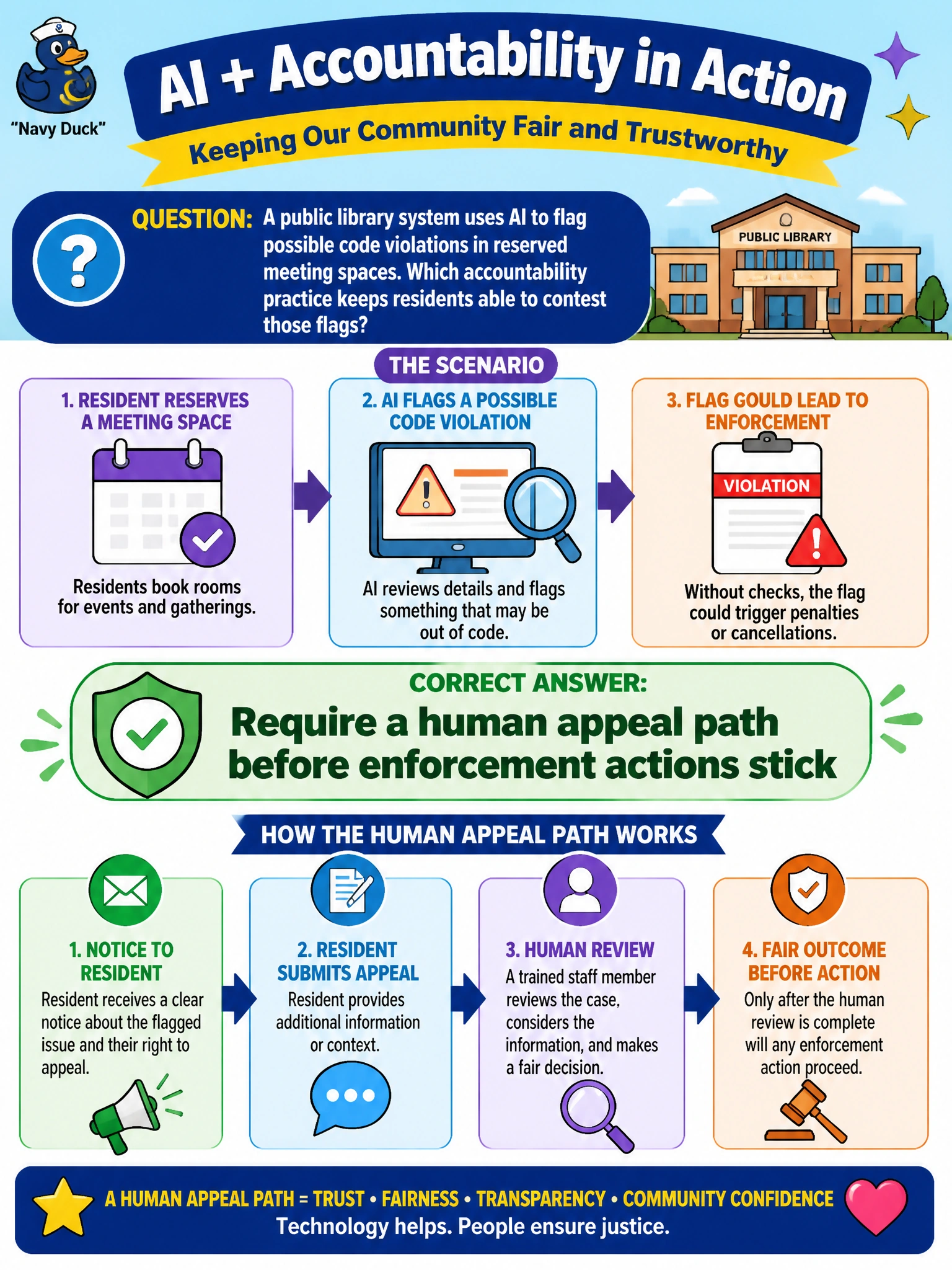
You keep residents able to challenge a flag when you provide a human appeal before enforcement takes effect. Making flags final, hiding them until privileges are revoked, or auto-banning people based on confidence scores leaves you without a fair chance to contest an error.
Full Explanation
When a public library uses AI to flag possible code violations in reserved meeting spaces, residents need a meaningful way to contest a flag before enforcement takes effect. Requiring a human appeal path lets organizers challenge a false positive with a person who can review the case and prevent or reverse an unjustified action; the AI can flag concerns, but should not make an unappealable decision about access to civic spaces. Making AI flags final with no path to a human reviewer removes meaningful contestability. Hiding a flag until after privileges are revoked prevents residents from responding in time and can compound the harm. Automatically banning organizers based solely on model confidence scores treats a probabilistic score as a final judgment and skips human review. An appeal process is not sufficient if it is slow, opaque, unavailable, or biased; residents need understandable notice and realistic timelines. As a practical check, test a known false-positive flag and verify that the organizer receives timely notice, can reach a human reviewer, and is not subject to final enforcement before the applicable appeal window or human sign-off. Record the human decision in the case history.