
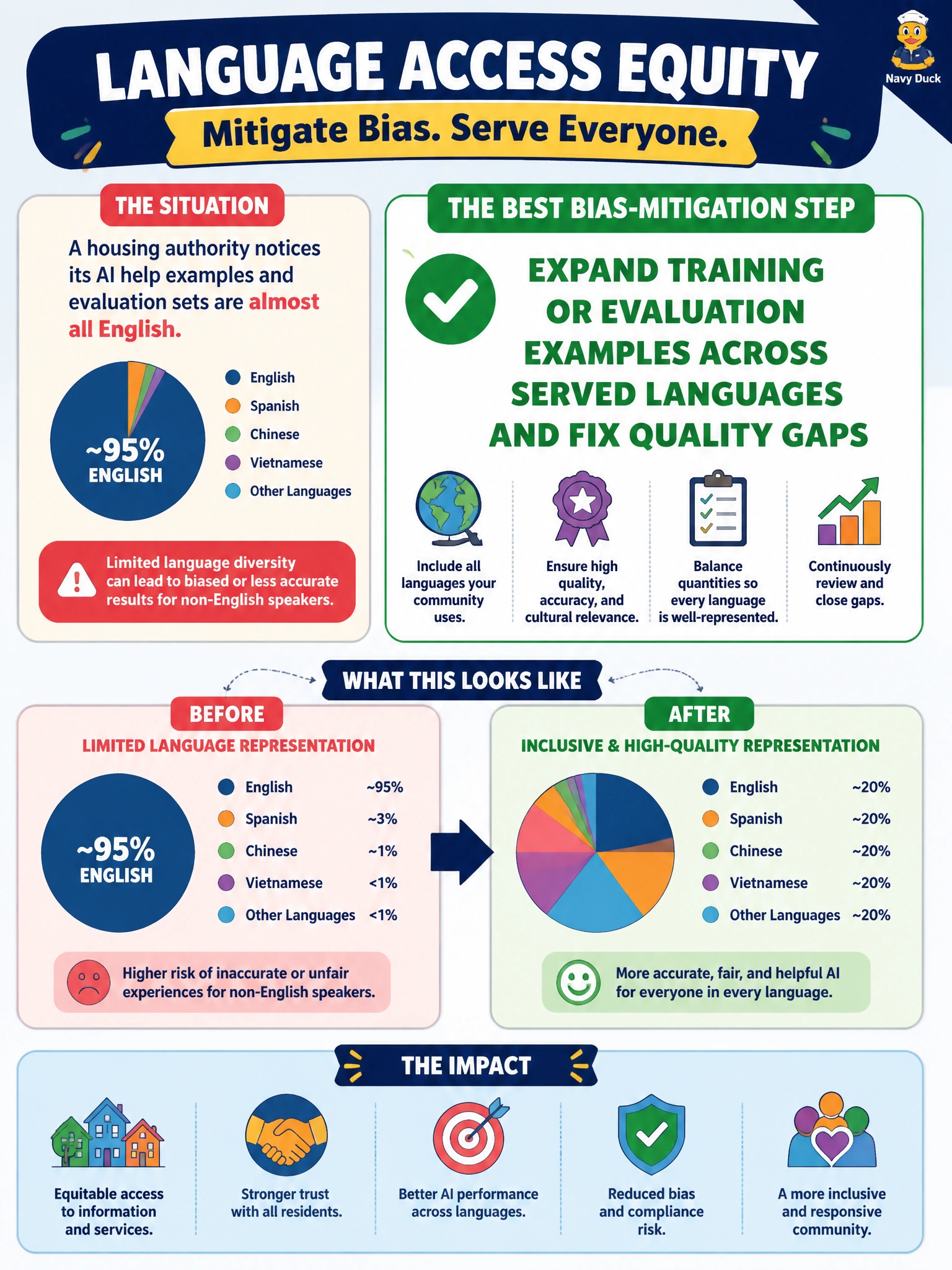
A housing authority notices its AI help examples and evaluation sets are almost all English. What bias-mitigation step best improves language-access equity?
Select an answer to reveal the explanation.
Short Explanation
When your examples and tests speak only English, you can miss where residents using other languages get weaker help. Expand examples and evaluations across the languages you serve, then fix the quality gaps you find.
Full Explanation
Language-access equity is undermined when AI help examples and evaluation sets are almost entirely English, even though a housing authority serves multilingual residents. Expanding training or evaluation examples across served languages lets the authority measure quality gaps by language and remediate weak performance instead of assuming parity from an English-centric test set. Representative evaluation can reveal under-service before residents bear the cost through missed housing help. Keeping English-only examples and assuming other languages perform equally hides systematic bias behind a narrow sample. Permanently disabling the assistant for non-English inquiries denies service instead of addressing quality and can conflict with language-access commitments. Machine-translating every answer into random languages without checking quality can introduce harmful errors, break program names, and create false confidence. Exam caveat: adding a few translated strings is not enough if evaluation still scores only English answers or retrieval sources lack non-English documents; translation quality and culturally appropriate phrasing matter too. Practical check: create parallel test items in each priority language the authority serves, compare task success and harmful-error rates, involve bilingual reviewers, and do not promote language modes that fall below the equity bar until they are mitigated and retested.