
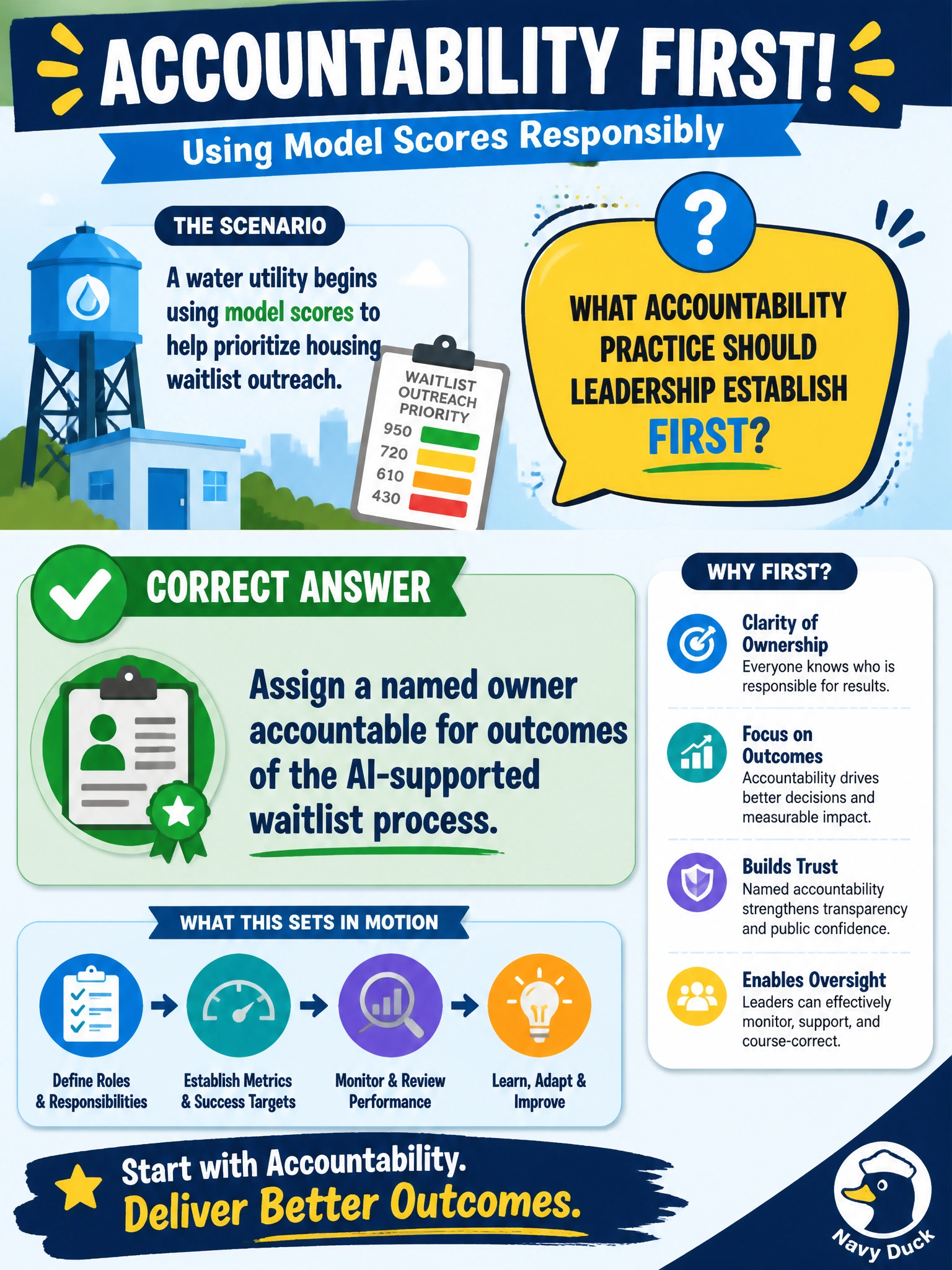
A water utility begins using model scores to help prioritize housing waitlist outreach. What accountability practice should leadership establish first?
Select an answer to reveal the explanation.
Short Explanation
Somebody’s name has to sit on the waitlist process—not “the model.” Named ownership means when outreach goes sideways, residents and auditors know which office answers for it.
Full Explanation
When a water utility uses model scores to help prioritize housing waitlist outreach, outcomes still affect real residents—so accountability requires a named human owner for the AI-supported process. That owner is answerable for monitoring disparate impact, handling escalations and complaints, approving changes to how scores are used, and remediating harm when outreach goes wrong. Models do not hold office hours or sign affidavits; leadership must assign ownership before scale-up of scoring in housing workflows.
Declaring that no human is responsible because the model scored the list attempts to launder accountability through automation and fails basic responsible-AI governance. Hiding who operates the system blocks complaints, audits, and media or oversight inquiries. Rotating ownership daily with no documented duties creates diffusion of responsibility so nobody can answer for outcomes.
Exam caveat: putting a name on an org chart is insufficient without authority, metrics, budget, and escalation paths tied to that role. Ownership without power to pause the system is symbolic only.
Operational check: document the accountable owner, backup, review cadence, and pause criteria; simulate a biased outreach complaint and verify the owner can freeze scoring use, investigate with data, and report remediation to leadership within an agreed SLA.