
A transit authority launches an eligibility assistant for reduced fares and wants riders to understand how it works. Which responsible-AI practice best supports transparency?
Select an answer to reveal the explanation.
Short Explanation
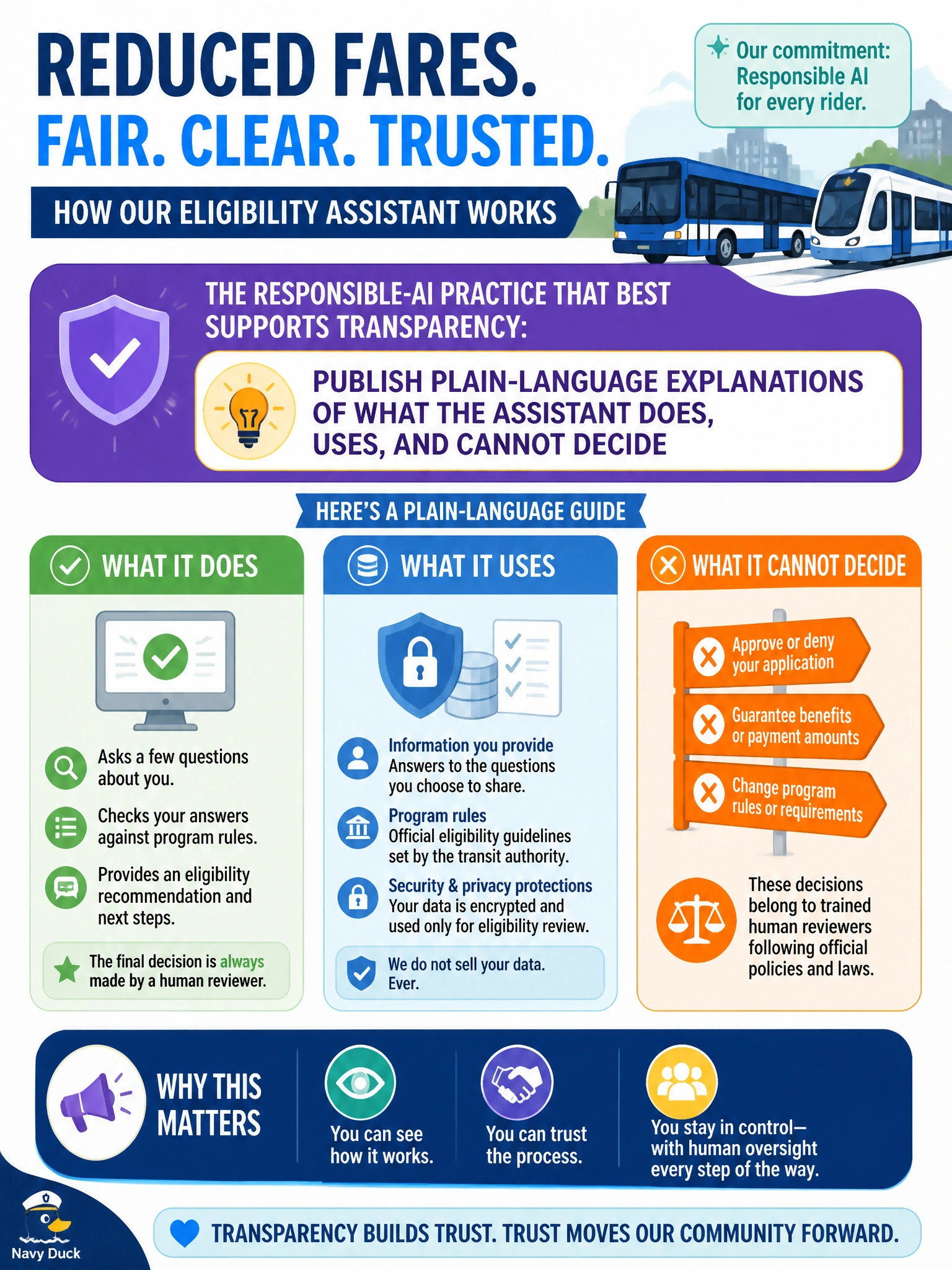
You deserve a plain-language explanation of what the assistant does, what information it uses, and what it cannot decide. That transparency helps you know what to expect and when a person must make the decision.
Full Explanation
For a transit reduced-fare eligibility assistant, transparency means riders can understand in plain language what the assistant does, what information it uses, and what it cannot decide. Explain what the assistant helps with, which program documents it draws from, what it stores, and that it does not itself approve applications; a human still makes the eligibility determination. Keeping the assistant’s purpose and limits secret leaves riders unable to understand how their data is used or when to ask staff for help. Claiming the system is infallible encourages over-reliance and conceals the possibility of model error. Publishing upbeat campaign messages while omitting details about data or decision logic may sound friendly, but it is marketing rather than transparency. In public services, clear communication is an operational responsibility that supports informed trust and realistic expectations; it is not a claim that the assistant replaces human judgment. Exam caveat: transparency statements must match actual system behavior. Inaccurate claims about data storage or eligibility decisions can create compliance, FOIA, and trust failures when practice differs from the notice. Practical check: compare the public explanation with the system’s retrieval sources, retention practices, human approval step, and known limits. Then use a rider-facing focus group or plain-language test to check whether people can correctly explain what the assistant can and cannot decide before launch.