
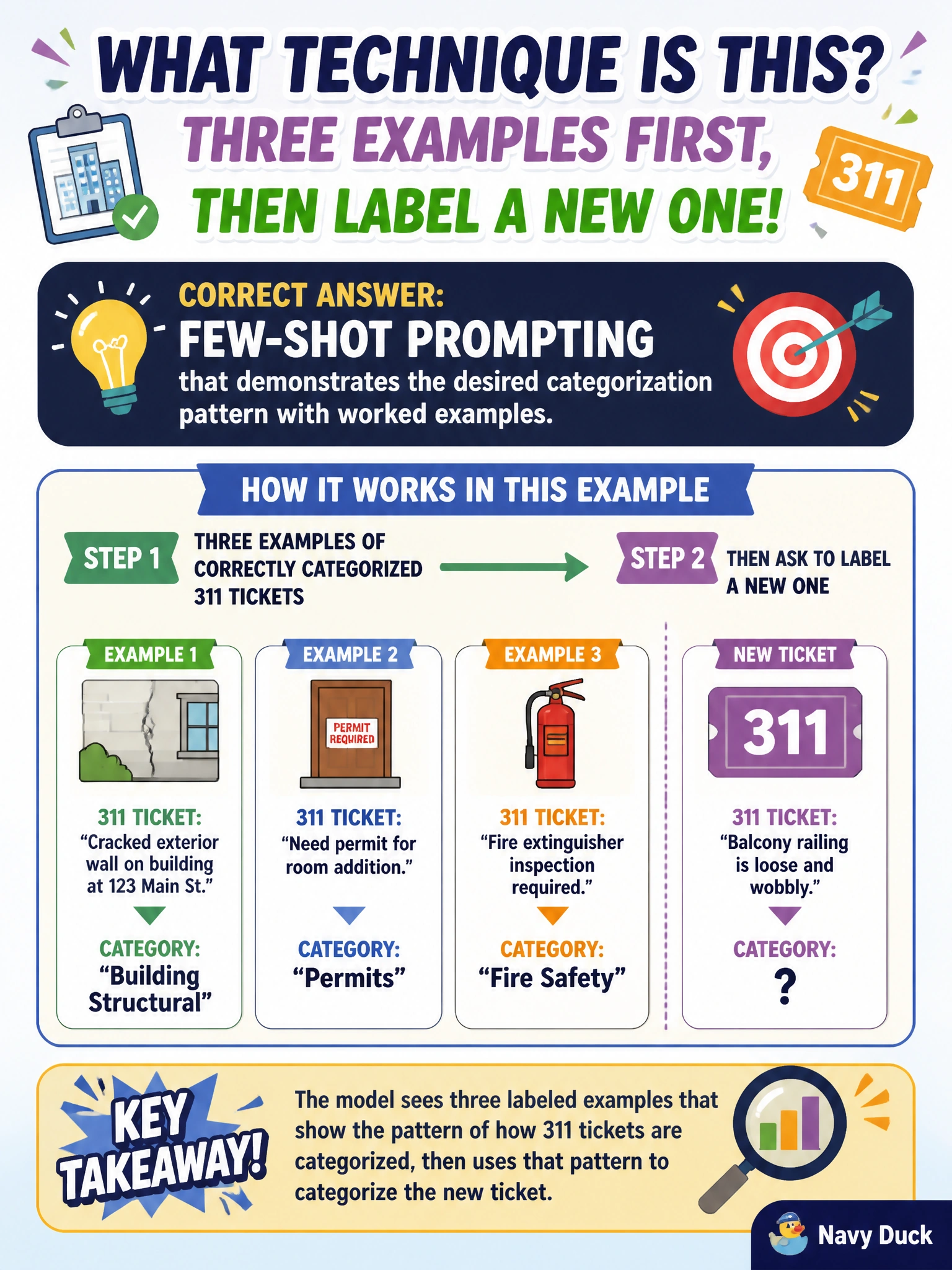
A building inspection division includes three examples of correctly categorized 311 tickets before asking the model to label a new one. What technique is that?
Select an answer to reveal the explanation.
Short Explanation
Show three good ticket sorts, then ask for the fourth—that’s few-shot. Examples teach the pattern faster than a vague “please categorize somehow.”
Full Explanation
Including three examples of correctly categorized 311 tickets before asking the model to label a new one is few-shot prompting: demonstrating the desired categorization pattern with worked examples so the model can imitate the mapping from ticket text to category. Building-inspection divisions use examples because they teach decision boundaries—what belongs in “structural,” “plumbing,” or “permit status”—faster than a vague instruction to categorize somehow.
System prompt deletion that removes all prior policy so examples become the only memory is unnecessary and drops durable safety and scope rules. Temperature maximization so each category is chosen uniformly at random destroys accuracy and auditability. Context-window compression that drops the examples before the new ticket is scored removes the few-shot signal that makes the technique work.
Exam caveat: few-shot examples must be representative and unbiased; skewed examples teach skewed labels and can encode inspector habits that do not match the official taxonomy. Prefer clear, diverse tickets, keep label names stable, and watch context-window limits when examples are long.
Operational check: hold out a labeled ticket set, prompt with three gold examples plus each holdout, measure agreement with inspector gold labels, and refresh the example set when new ticket types appear in the 311 queue.